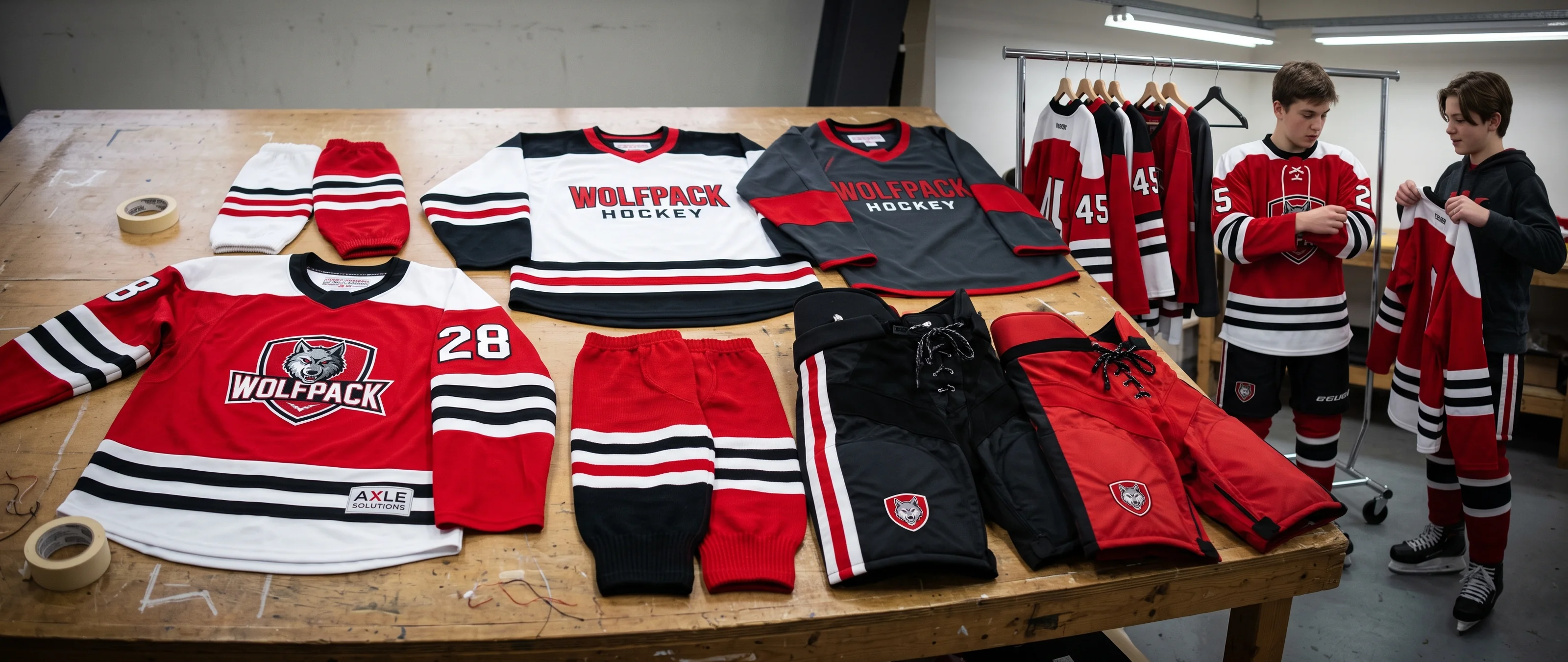
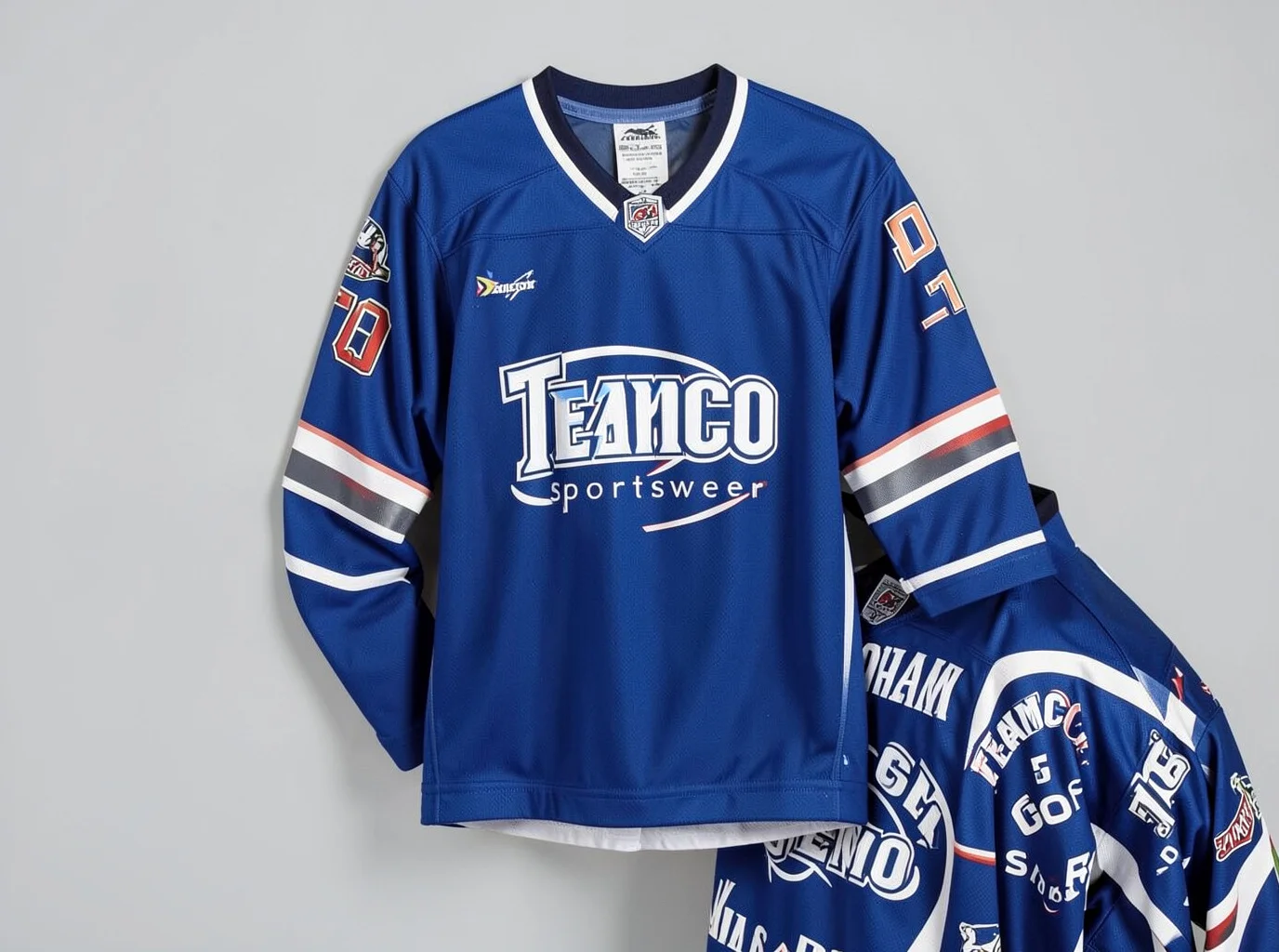
A Custom Hockey Jerseys supplier quotes you "140 GSM Air Knit" and the sample feels right — light, slightly stretchy, breathable. You place a 500-piece order. Three weeks later, half the jerseys pill after two washes and the sublimation print looks washed out under the arena lights. Sound familiar?
GSM claims on Air Knit hockey jersey fabric are almost never verified before purchase. That single oversight accounts for a huge chunk of the 15-20% rework costs teams and dealers eat every season. The 110-180 GSM range determines how a moisture wicking hockey jersey fabric performs under sweat, how crisp your sublimation comes out, and whether goalie-specific stretch demands hold up over a full season.
This guide breaks that range into decision-ready bands, gives you a procurement table for 120/140/160 GSM options, and shows you exactly how to test a sample in 30 seconds — before you sign off on a quote you'll regret.
Confirm the Hockey Jersey Use Case Before Comparing GSM
Jerseys don't all need the same fabric weight. That's where most buyers make their first mistake.
Start by asking what the jersey will be worn for, not what GSM to pick. Hockey jerseys fall into three sourcing hockey jersey categories, each with its own GSM target:
Practice jerseys sit around 180 GSM with single-layer polyester mesh. Light, breathable, built for daily rotation, not heavy contact.
Reversible practice jerseys also run about 180 GSM, but use one-method sublimation to prevent color bleed-through between sides.
Game jerseys use 220-240 GSM air-mesh polyester with reinforced flatlock seams and a loose, pad-compatible cut. Pads, checks, and stick contacts demand that thicker material.
Pro-style or heavy-duty jerseys land at 250-280 GSM. Premium feel, maximum abrasion resistance.
The fast rule of thumb we use with clients: If it's worn over pads in real games, start at 220-240 GSM. For practice rotations, start around 180 GSM. For a heavier, more premium feel, compare 250-280 GSM options.
Construction matters as much as weight. Air-mesh or bird-eye mesh maximizes breathability for skating and sprinting. Interlock polyester gives a smoother surface for sharp sublimation graphics. Match the weave to the wear, not just the number on the spec sheet.
Divide Air Knit Hockey Jersey Fabric Into the 110–180 GSM Industry Bands
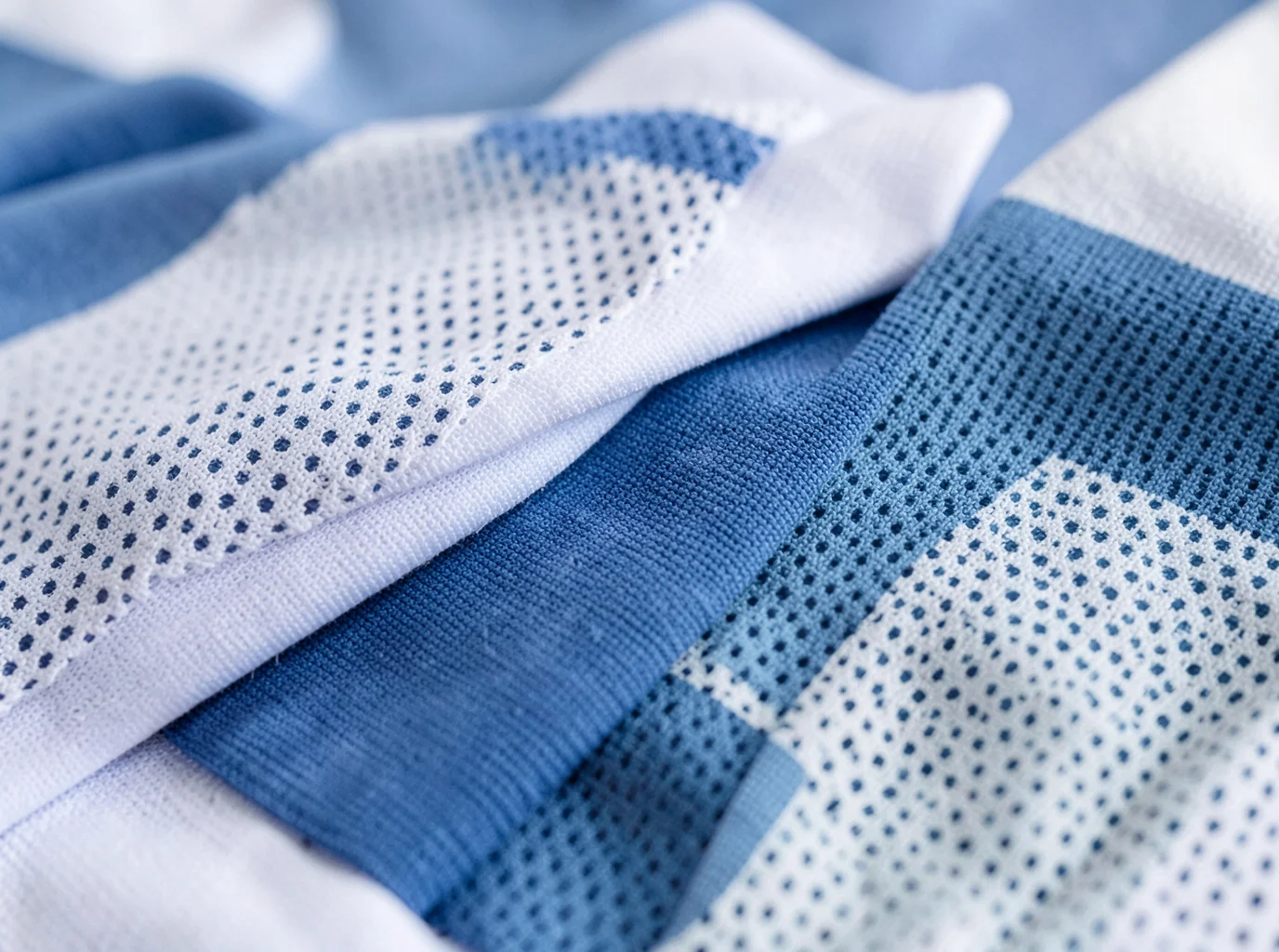
Not every "Air Knit" quote means the same thing. Suppliers use the term loosely, so the GSM number is the only real signal you have. Break the 110-180 GSM range into four working bands, and you'll know exactly what you're paying for.
110-130 GSM is ultra-light training weight. Think perforated knit at 130 GSM or sun-protection filament knit around 140 GSM. Best for warm-weather practice, not for anything that touches contact.
131-150 GSM is the mainstream entry-level band. Most public hockey jersey fabric specs cluster right here — 150 GSM, 4.5 oz/yd², 60-62 inch width, 100% polyester perforated knit. Multiple hockey jersey suppliers list this exact spec as their standard offering. It's durable enough for regular play, breathable enough for skating drills.
151-170 GSM upgrades durability without adding much handfeel weight. This is your bridge band — moving a team from practice jerseys to something that survives a full competitive season.
171-180 GSM is the ceiling for this range. Suppliers describe it as medium-weight knit with ultra-fine pinhole mesh, often used for reversible practice jerseys because the tighter knit resists color bleed-through during sublimation.
Above 180 GSM, you're leaving Air Knit territory and entering air-mesh or interlock builds — a different fabric conversation entirely.
Compare 120, 140 and 160 GSM Options in the Procurement Table
The three numbers that separate a good enough Air Knit hockey jersey fabric from a rework nightmare are 120, 140, and 160 GSM. Each maps to a different thickness, hand feel, and use case. Your quote should show a different price for each GSM. A flat rate that a hockey jersey supplier hopes you won't question doesn't reflect the differences.
Before any bulk order, we walk clients through this procurement table:
GSM | Thickness Reference | Best For | Expected Lifespan (Washes) | Price Positioning |
|---|---|---|---|---|
120 GSM | ~0.14 mm | Youth practice jerseys, high-volume orders, warm-weather drills | 30-40 washes | Lowest cost tier |
140 GSM | ~0.16 mm | Balanced pick: training plus light competitive play | 50-60 washes | Mid-range, best value |
160 GSM | ~0.18 mm | Competitive game jerseys, goalie cuts, high-contact use | 70-90 washes | Premium tier, roughly 15-20% above 140 GSM |
120 GSM is the volume play. It is the lightest and most breathable of the three, and the cheapest per unit for large practice orders. The tradeoff is faster pilling and quicker sublimation fade once contact and washing cycles pile up.
140 GSM is the safest default when you are not sure what to quote. It holds ink density better than 120 GSM under sublimation without picking up the stiffness of 160 GSM. Most mid-tier custom sportswear fabric selection lands here.
160 GSM earns its premium through tear resistance and body. Goalie jerseys and full-contact game sets benefit most. The added structure resists stick snags and checking abrasion that would tear through a 120 GSM knit well before season's end.
Choose the GSM that matches the wash cycle your buyer actually expects.
Match GSM to Training, Game and Goalie Jersey Requirements
Every jersey category has its own GSM ceiling and floor. Mixing them up is where most procurement mistakes start.
Training jerseys perform best at 140-160 GSM. This band shows up repeatedly across supplier catalogs as the go-to standard for team wear. It has enough structure to survive daily drills and is light enough to keep skaters cool through a two-hour practice block. Heavier practice sets built for repeated washing push closer to 180 GSM.
Game jerseys narrow that window slightly to 135-160 GSM. One golie hockey jersey kit manufacturer even calls its 135 GSM micro interlock a "workhorse" match fabric because it is durable under contact and light enough for full-speed shifts. If your team plays warmer rinks or outdoor tournaments, drop to 130-150 GSM polyester mesh or bird-eye knit. That range maximizes airflow and lowers opacity without sacrificing sublimation clarity under lights.
Goalie jerseys sit in a different tier, 160-180 GSM, with several hockey jersey suppliers defaulting straight to 180 GSM. Goalies dive, block, and drag their bodies across ice on nearly every save. The fabric needs padded elbow zones, reinforced flatlock seams, a relaxed shoulder cut, and a dropped-tail hem for coverage during lateral movement. A 140 GSM knit won't survive that kind of abuse for a full season, let alone the wash count goalie gear demands.
Ventilation panels along the sides or collar run lighter still, typically 80-120 GSM, sometimes up to 160 GSM in stretch-panel builds. Specify each zone separately in your quote.
Verify How GSM Changes Airflow, Stretch and Hockey Jersey Durability
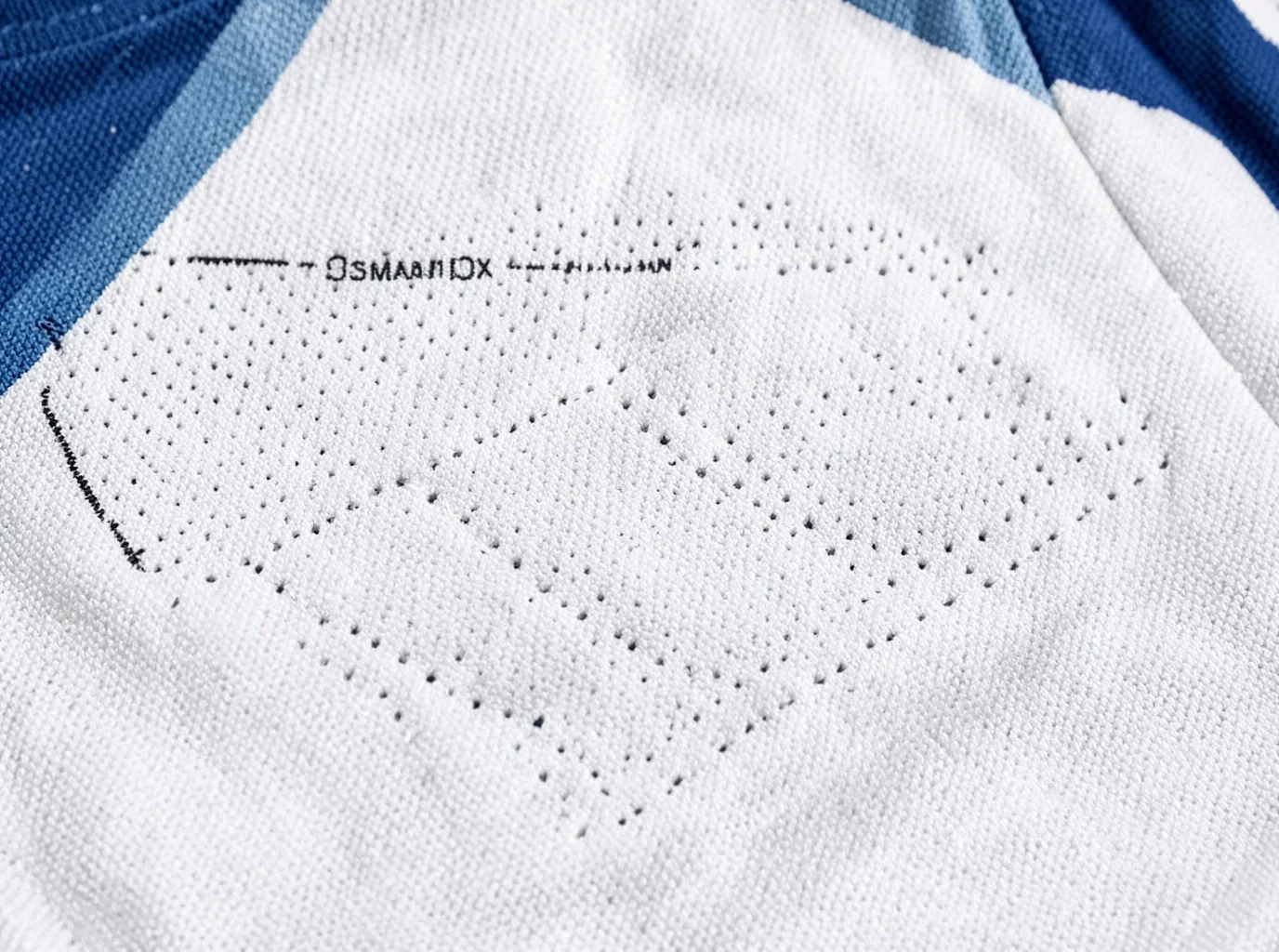
Numbers don't lie, but suppliers sometimes do. Here's how to check GSM claims against real performance data instead of trusting a spec sheet.
Airflow drops as GSM climbs, but knit structure matters more than weight alone. A solid knit at 150 GSM traps heat that an open-mesh knit at the same weight releases instantly. Quality sports mesh tests between 500-2000 L/m²/s in air permeability, while solid knits sit at just 100-300 L/m²/s. That's a 5-10x difference in how much air moves through the fabric, and it's a bigger factor than GSM alone when you're evaluating breathable hockey jersey fabric for summer tournaments.
Stretch comes from either the knit construction or the spandex content. Pure polyester knit relies on mechanical stretch built into the weave. Poly-spandex blends deliver true 4-way stretch, typically at 180-270 GSM, with better shape retention through repeated washes. If your goalie jersey needs to move in every direction without distorting, ask for poly-spandex construction. A higher GSM number alone won't get you that.
Durability comes down to yarn density more than weight. More yarn per square inch resists abrasion, tearing, and pilling better. Performance mesh should survive 50+ industrial wash cycles at 60°C without visible degradation. Ask your supplier for this exact number before ordering.
Three Tests Before You Sign Off
Stretch test: pull the fabric diagonally. It should snap back within 2 seconds with zero visible distortion.
Permeability check: hold the sample against a light source. Uneven light spots signal inconsistent knit density.
Wash sample request: ask for a fabric swatch pre-washed 20+ times. Compare pilling and color retention against a fresh sample side by side.
Check the Relationship Between GSM, Air Holes and Sublimation Results
Air permeability data tells a story GSM alone can't. Mesh fabric lets 200-400 CFM of air through its structure, while solid jersey at the same weight only manages 40-100 CFM . That's why a 140 GSM mesh can feel as breathable as a 110 GSM solid knit — open air pockets account for 15-30% of what you're actually weighing.
That same open structure works against you at the print stage. Standard mesh lets sublimation dye and gas escape through the holes, so you get washed-out, blurry graphics every time. Tight micro-mesh under heavy pressure can take a print, but it still won't match solid fabric clarity.
Micro-mesh polyester at 150-180 GSM is the sweet spot for sublimation hockey jersey fabric. Done correctly, the pores stay clean and rounded after transfer. If the edges look filled or blurred, pressure or dwell time ran too high.
GSM also changes heat behavior. A 120 GSM knit absorbs heat fast and needs shorter press time. A 180 GSM knit holds structure longer, so it needs more pressure to set the same print.
Three QC checks before approving a print run:
- Backlit inspection: pores should stay sharply defined, not smeared
- Low-pressure airflow test: air should pass through printed panels with minimal resistance
- Sweat/drying comparison: printed and unprinted zones should dry at similar rates
Lock your GSM tolerance into the contract too. ±5 GSM is standard. A 140 GSM order should land between 135-145 GSM , nothing wider.
Write the RFQ With a Fixed GSM Tolerance and Test Method
Most RFQs never specify a tolerance. That's the gap suppliers exploit.
Put this exact line item in your RFQ: "Fabric GSM: target 140 g/m², tolerance ±5% (acceptable range 133-147 g/m²). Test method: ASTM D3776 or ISO 3801 on conditioned fabric at 20°C and 65% RH for 24 hours." That single clause makes the supplier accountable before production starts.
±5% of target is the industry-standard benchmark. Tighter programs, especially technical or performance fabrics, push to ±3%. If a supplier won't commit to either, walk away.
Require this testing method in writing: cut a 100 cm² specimen with a GSM cutter, staying at least 10 cm from any finished edge to avoid the selvedge. Weigh it on an analytical balance accurate to 0.01 g. Calculate GSM as sample weight in grams times 100. Take 3-5 readings across left, center, and right zones for an honest average.
Ask for a test report showing individual readings, conditioning details, and pass/fail against your stated tolerance. No report, no PO.
Use a 30-Second Sample Test to Detect Incorrect GSM Claims
Skip the lab. You can catch a fake GSM claim standing at the sample table.
Hold the fabric up to a light source first. If you can see your finger outlines through it, that sample is running below 180 GSM — no matter what the tag says. Fabric that reads nearly opaque under the same light usually sits at 200+ GSM. This takes five seconds and exposes the most common scam in Air Knit hockey jersey fabric sourcing.
Build a reference kit. Keep three verified swatches on hand at 180, 200, and 220 GSM. Compare every new sample against them by touch and opacity before you even reach for a scale.
One real case: a supplier advertised a shirt at 220 GSM. Lab testing measured 155-165 GSM — a 25-30% shortfall. That's mislabeling, not a rounding error.
Sampling location matters too. Pull swatches from the head, middle, and tail of the roll. A spread wider than 10% signals inconsistent knit density across the batch, and an average running 8-10% below spec should trigger a corrective action request even if it technically clears your tolerance.
Validate the Sample Before Accepting a Low-Cost Air Knit Quote
A rock-bottom quote almost always hides a shortcut somewhere. When a supplier skips details on GSM, composition, lab testing, or stretch recovery, reject the sample until they prove those numbers.
Send the fabric to a lab accredited under ISO/IEC 17025 and test air permeability against ISO 9237 / ASTM D737. Run moisture vapor transmission against ASTM E96. These two tests confirm real moisture wicking behavior—not just the numbers from a scale.
Then wash the sample per your intended care instructions and check shrinkage, color bleeding, seam twisting, and pilling. Compare color under daylight and indoor lighting for shade consistency across panels.
Don’t issue a bulk PO without a lab report and a wash test.
Conclusion
Choose the GSM for your Air Knit hockey jersey based on how it will actually be used. A 120 GSM works great for youth training gear, but it won't survive 200+ competitive games the way a 160 GSM moisture wicking hockey jersey fabric will.
The real value is a repeatable verification system. Run the stretch test, the light-transparency check, and the 30-second hand-feel comparison every single time a sample lands on your desk. That's what separates buyers who get burned by mislabeled fabric from buyers who don't.
Pull out your procurement checklist, lock in your GSM tolerance in writing, and request a physical swatch before you approve any bulk order. That single habit will save you more in rework costs than any discount a cheap custom hockey jersey supplier promises upfront.