Game Hockey Jerseys
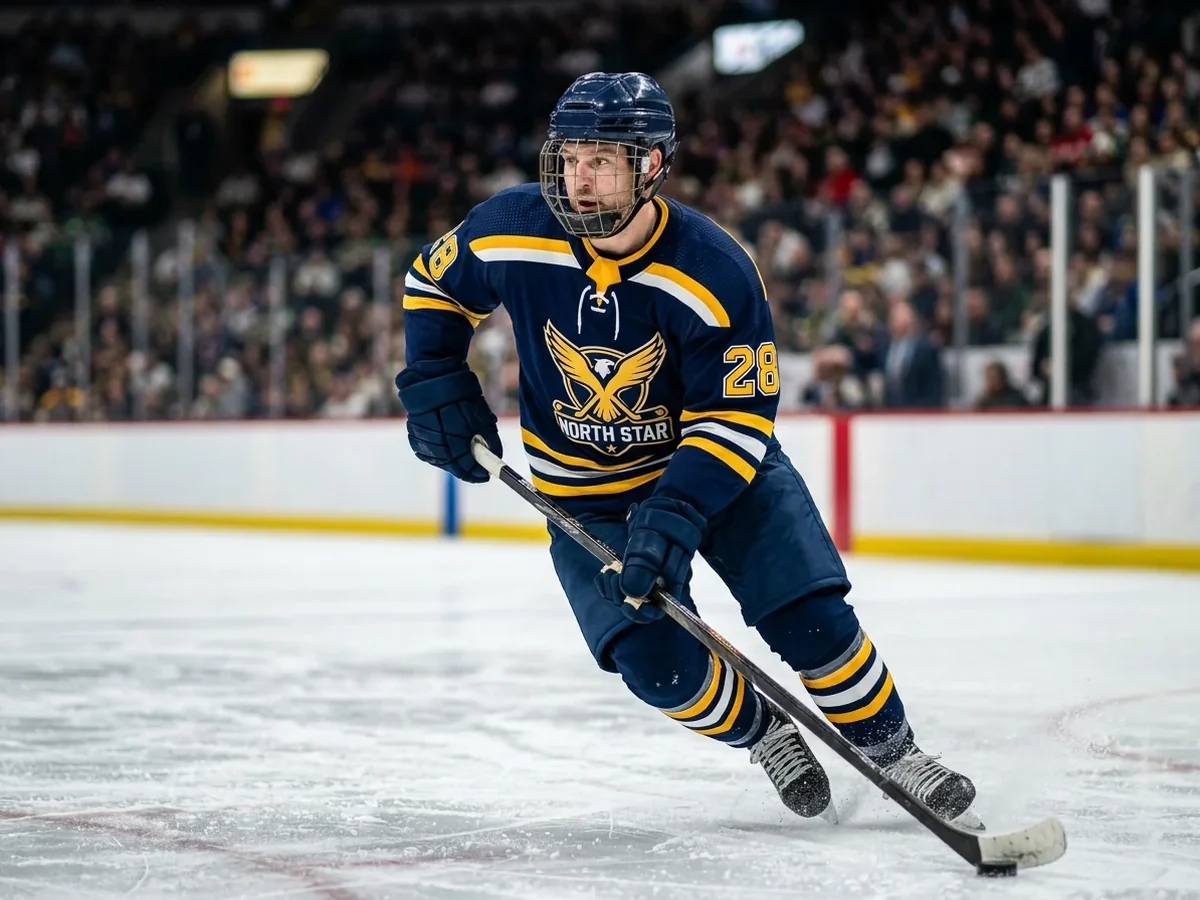
Made for official games, showing the team crest, names, numbers and team colors.
Explore This StyleRunHockey Apparel manufactures custom hockey jerseys decorated to a buyer's own colors, numbers, lettering, and logo mark — built from a submitted tech pack through pattern selection, decoration, and color execution to an approved sample before full production begins.
Choose the jersey type, fit and construction that matches your game, practice, officiating or team-program requirements.
Made for official games, showing the team crest, names, numbers and team colors.
Explore This Style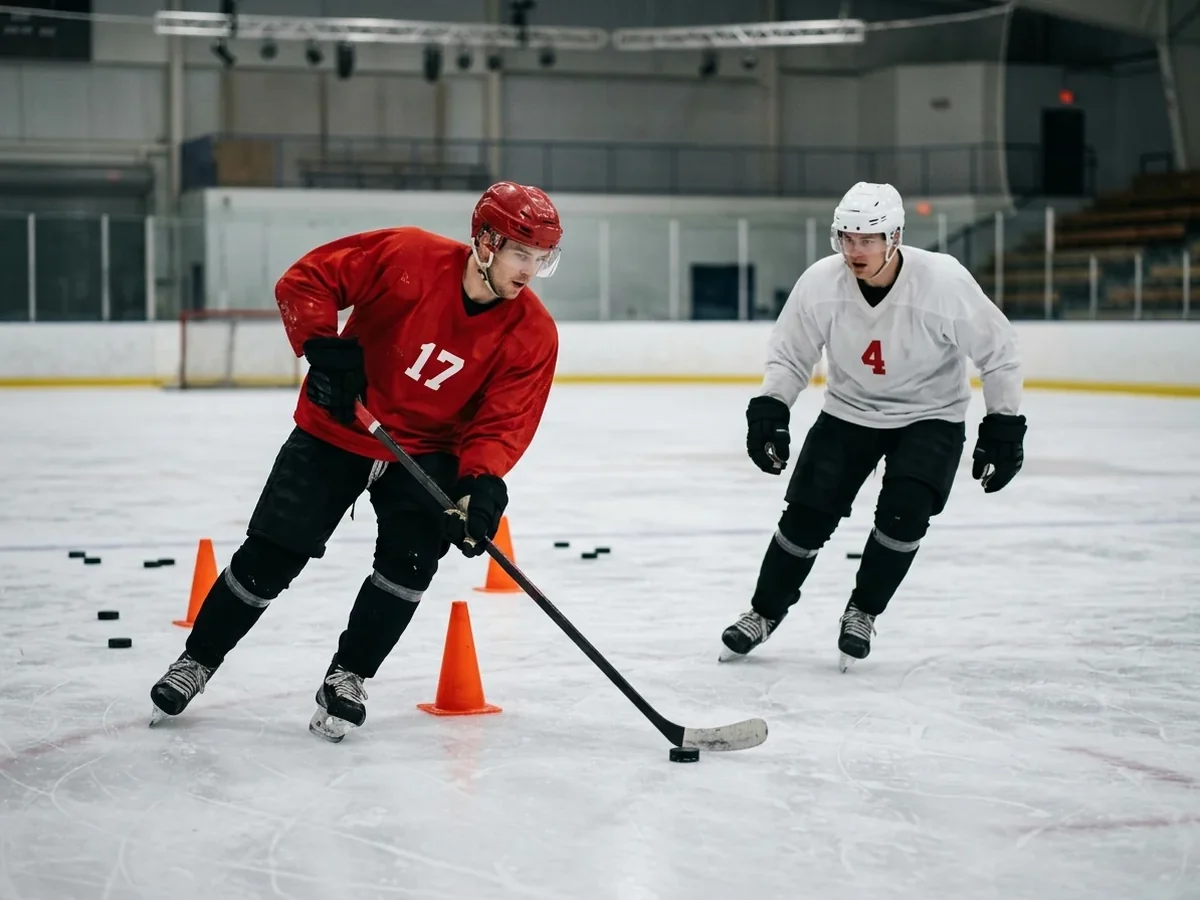
Suited to daily training, frequent use and splitting the team into groups.
Explore This Style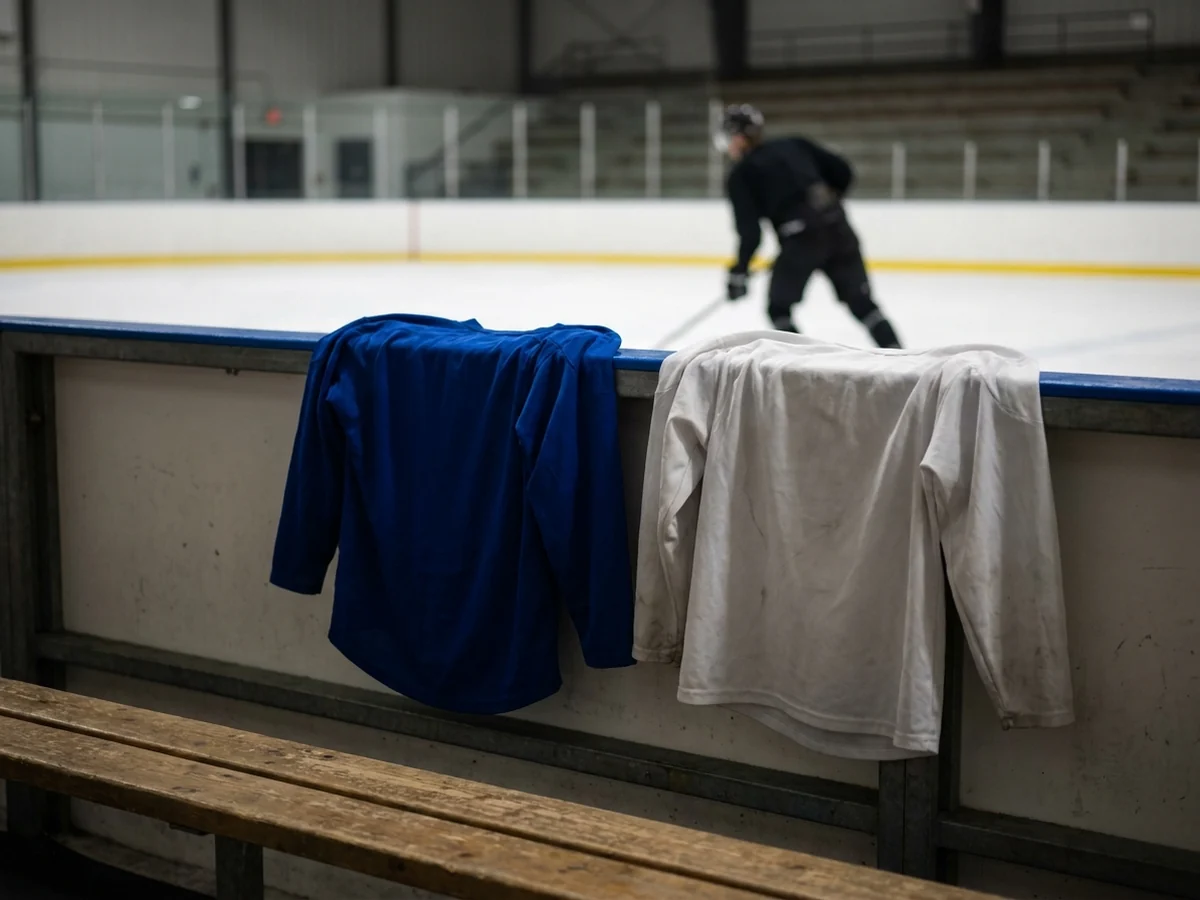
Reversible construction: one jersey provides two team colorways.
Explore This Style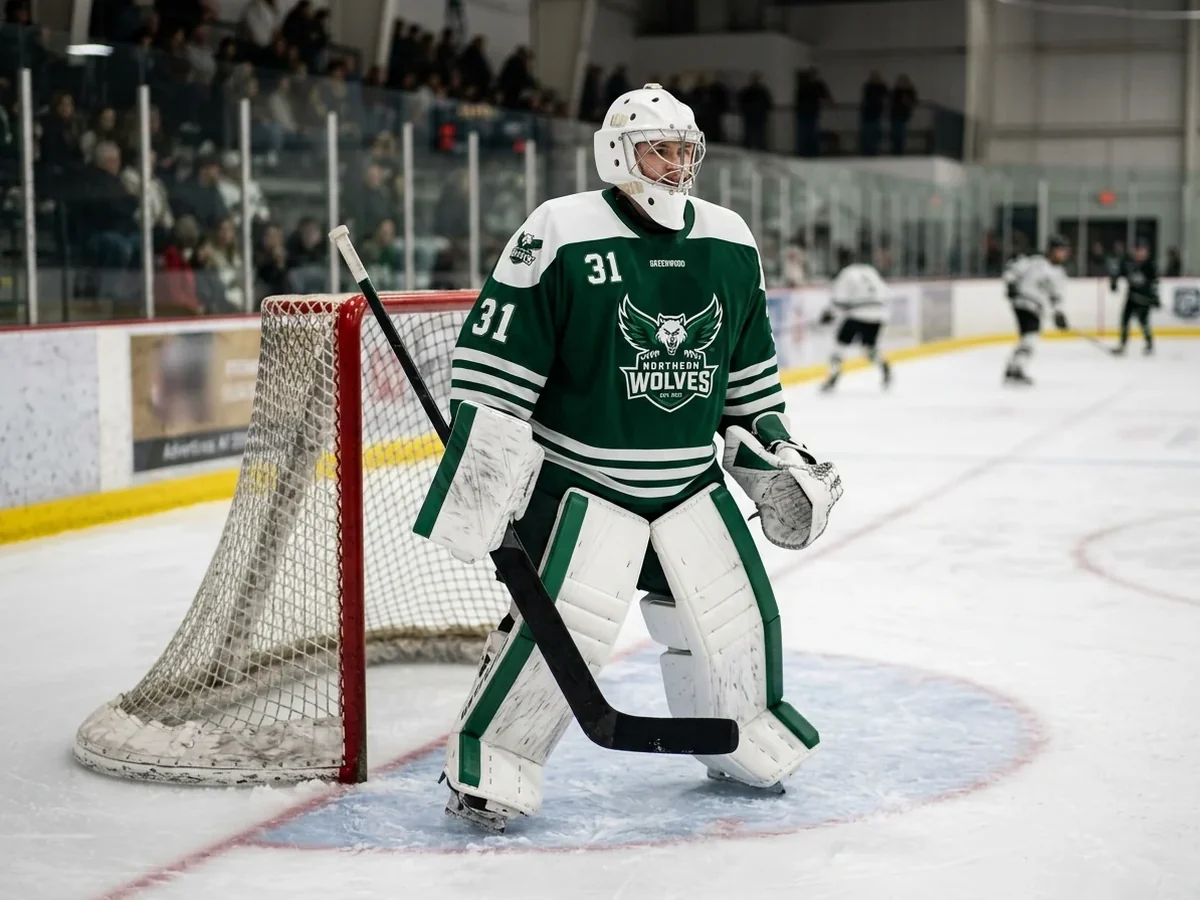
More room in the chest, sleeves and hem to fit over goalie protective gear.
Explore This Style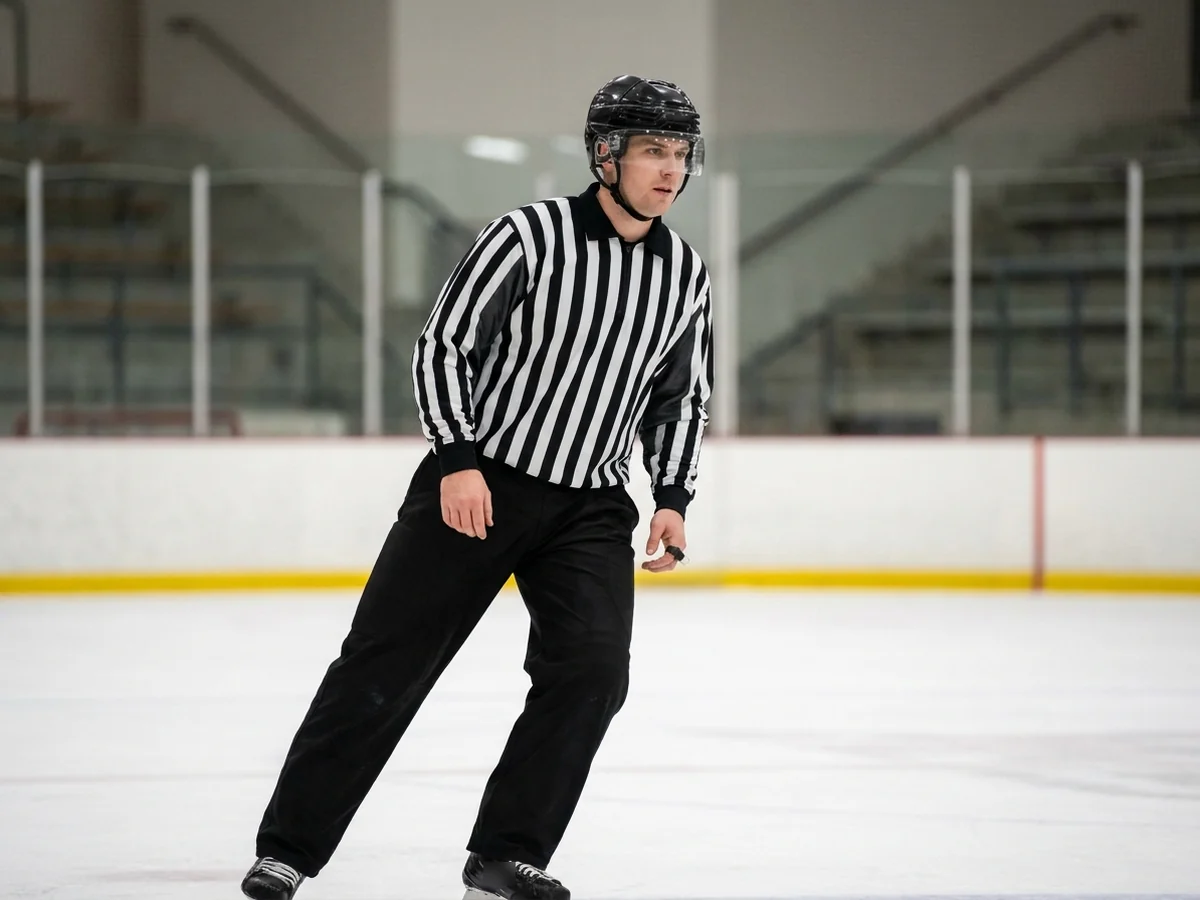
Referee stripe design, with customizable numbers, cuffs and collar details.
Explore This Style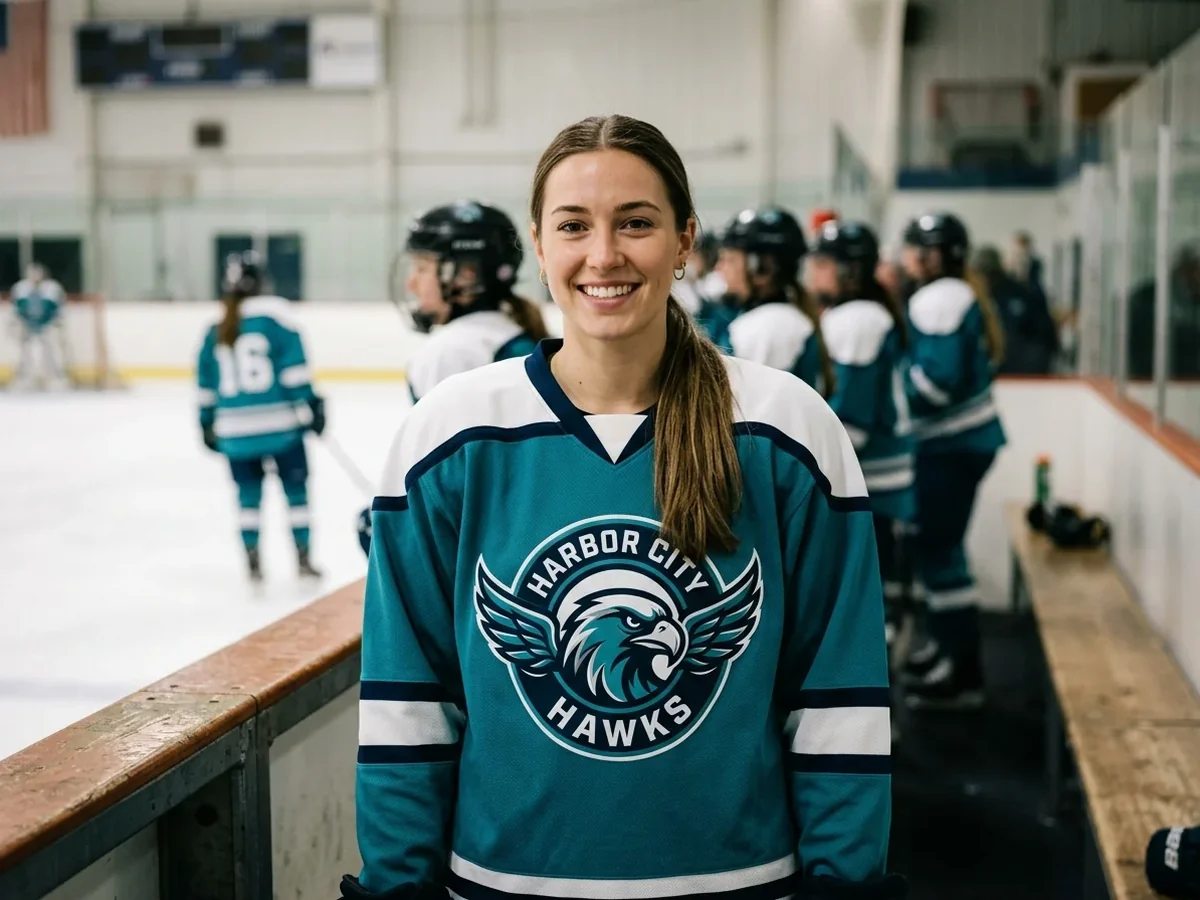
Available in women’s proportions or the standard Player Cut.
Explore This Style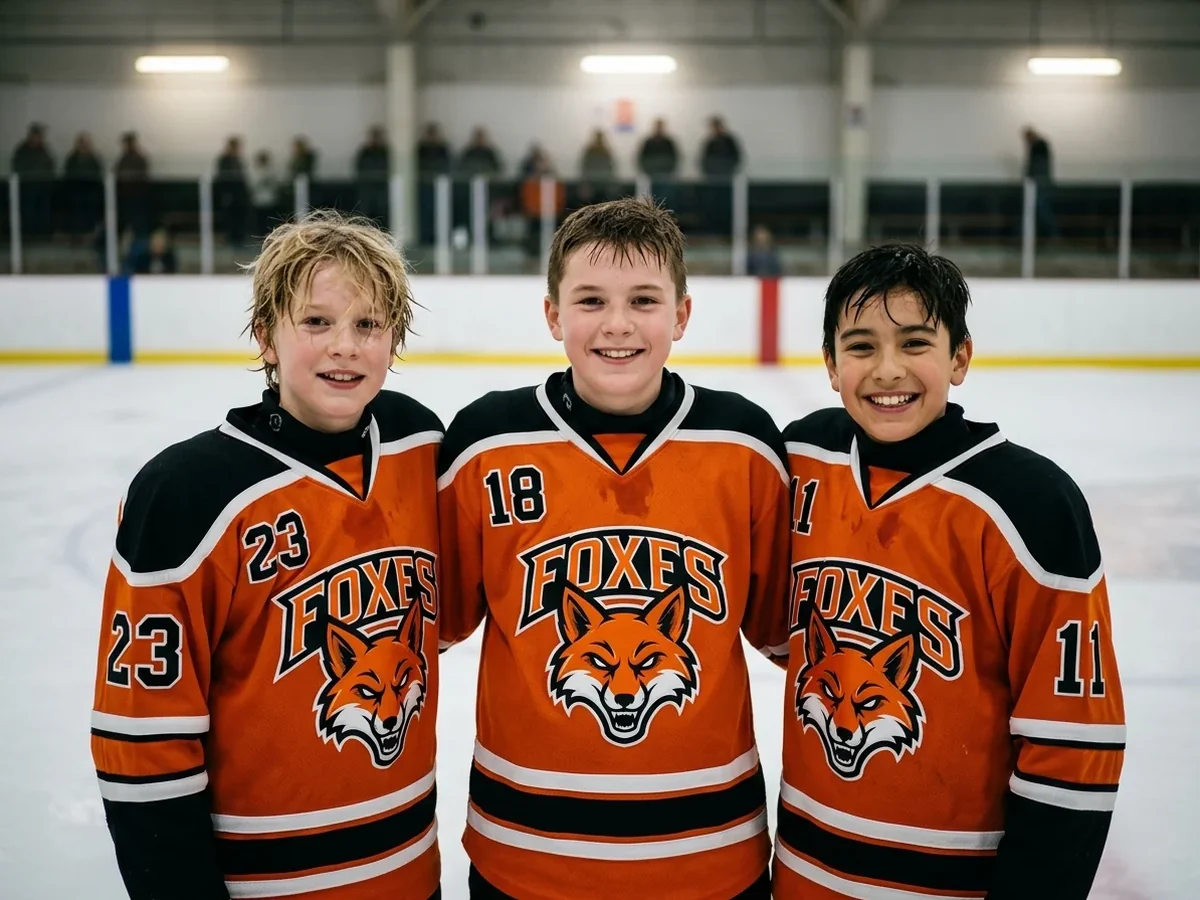
Suited to youth clubs, schools and training programs.
Explore This Style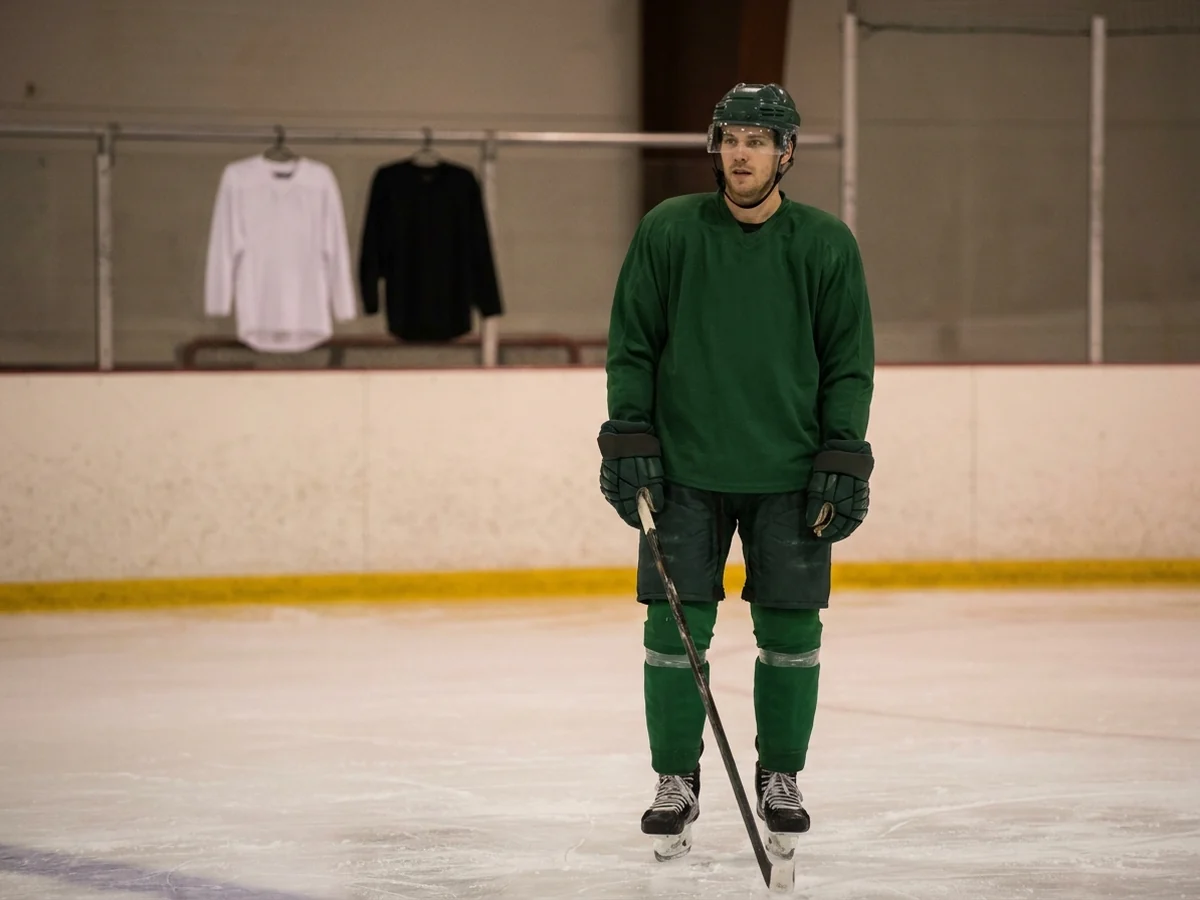
Suited to distributors, print shops and customers who complete the decoration themselves.
Explore This Style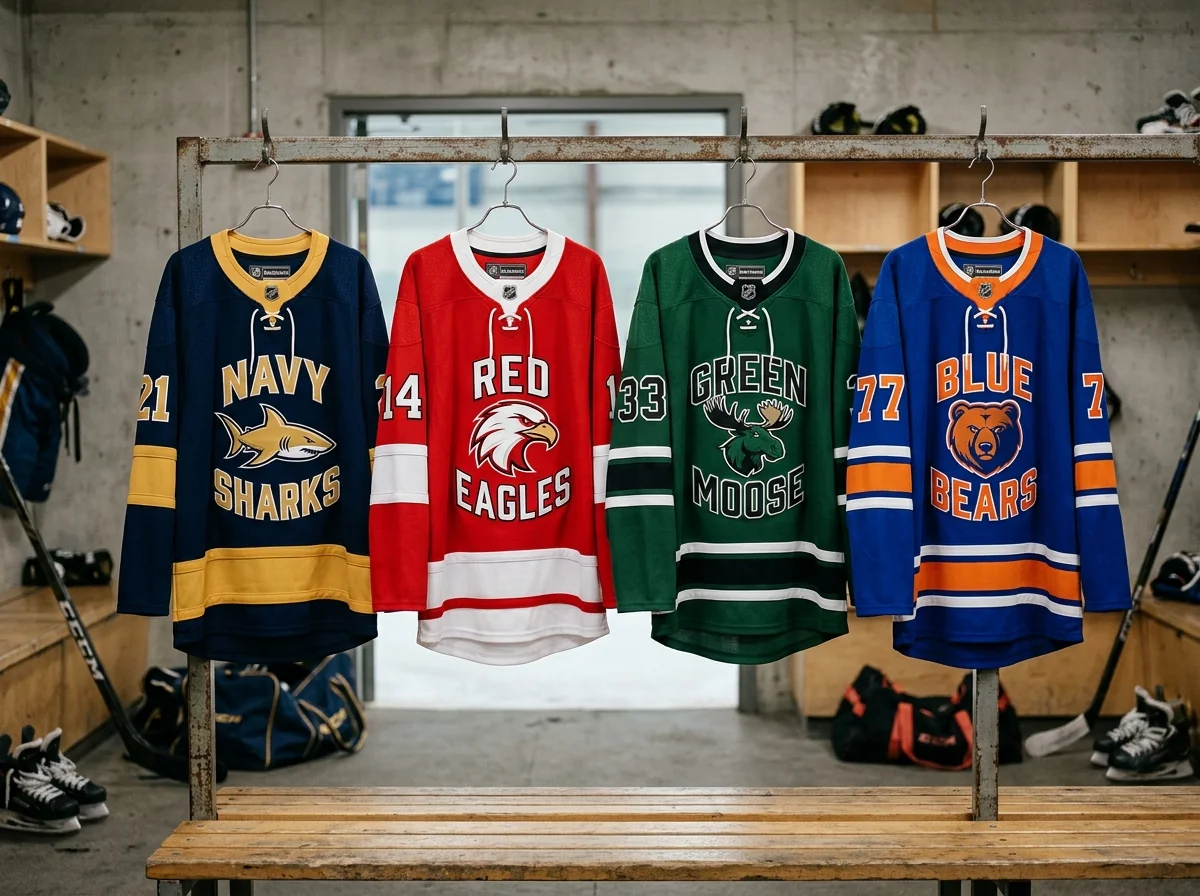
Match your club palette across body, sleeves, and trim, in any combination of colors.
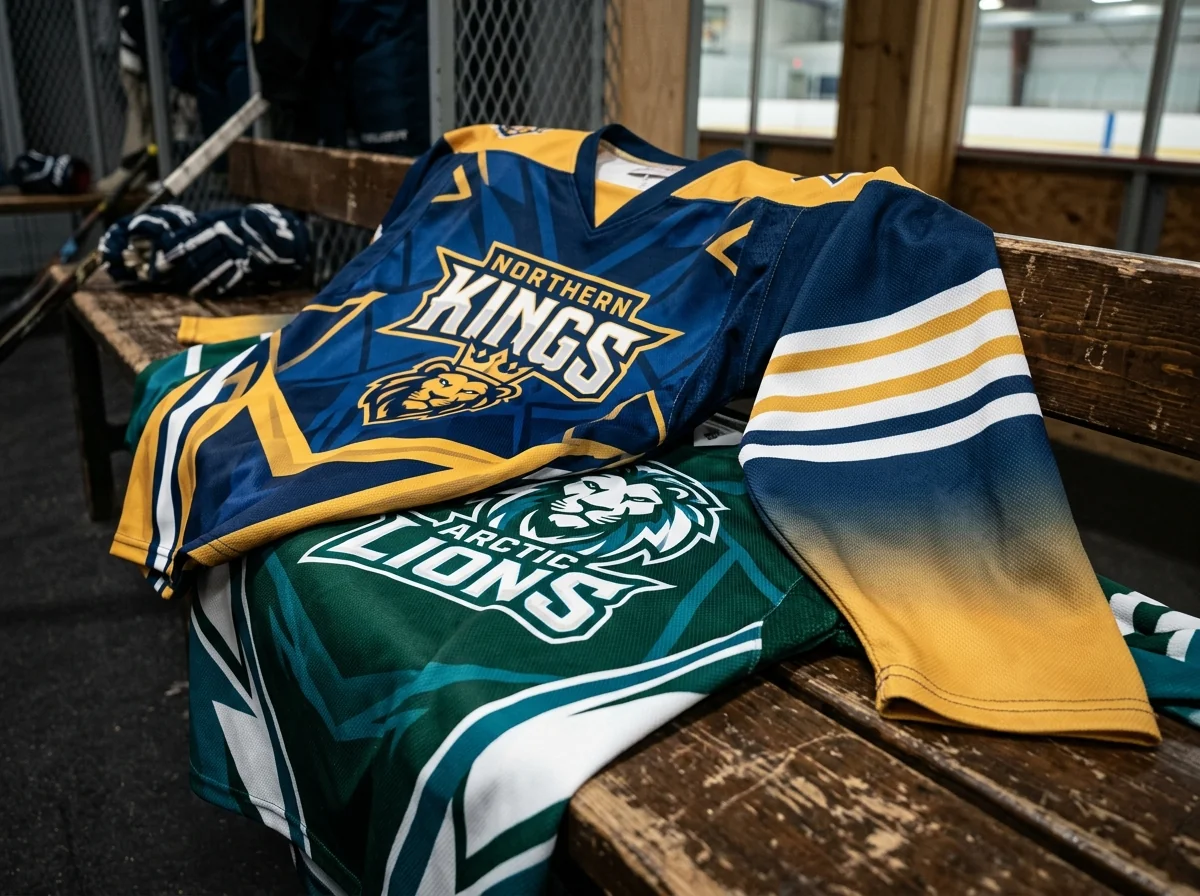
Stripes, gradients, and geometric graphics placed exactly where your design calls for them.
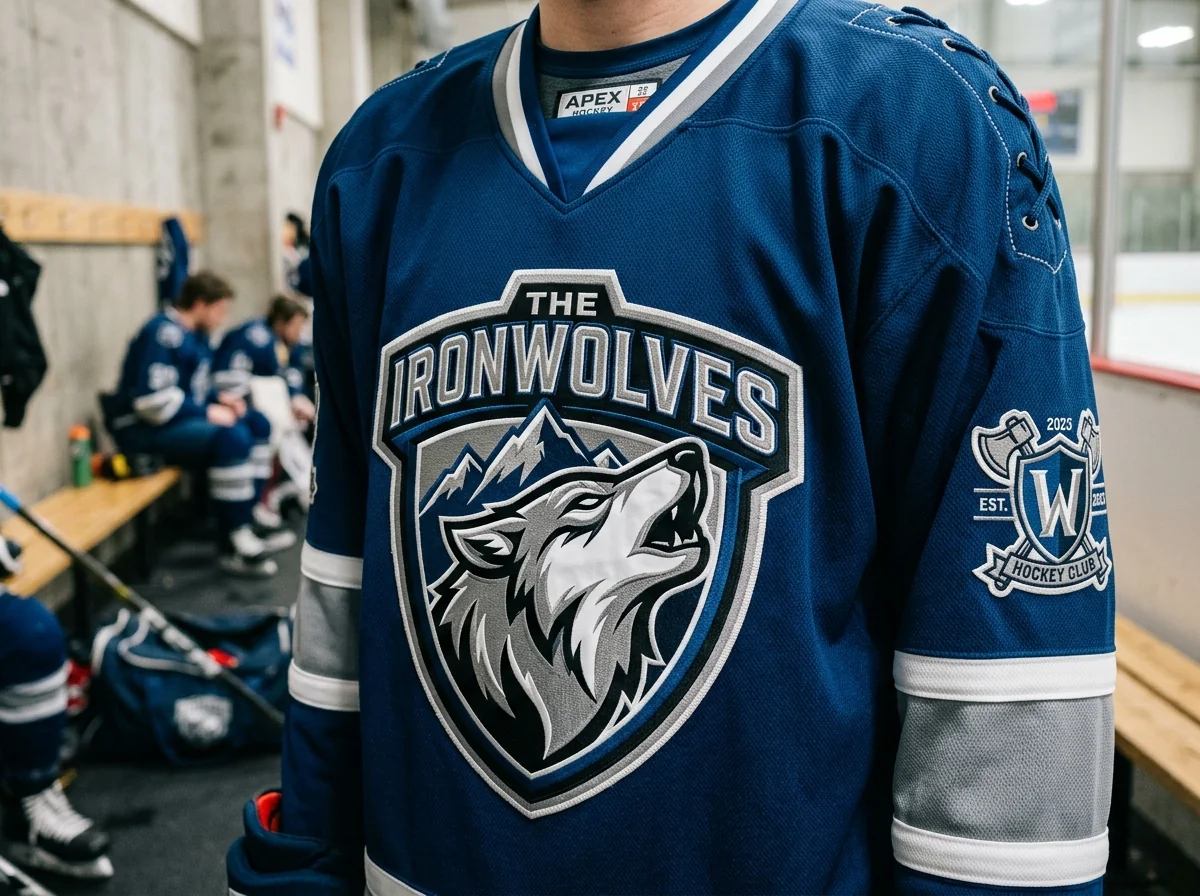
Your crest on the chest and secondary marks on the shoulders, in sublimation, twill, or embroidery.
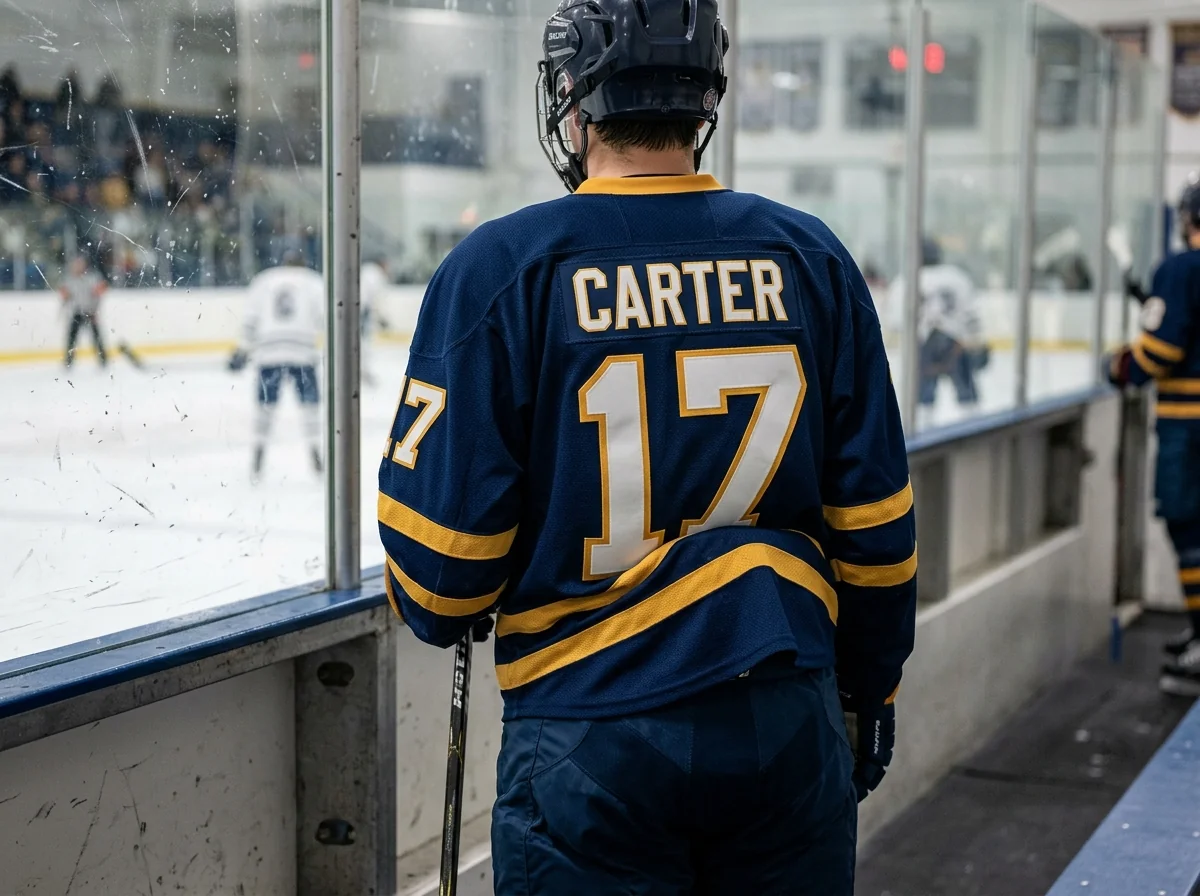
Back names with back and sleeve numbers, set in your team’s font and color layers.
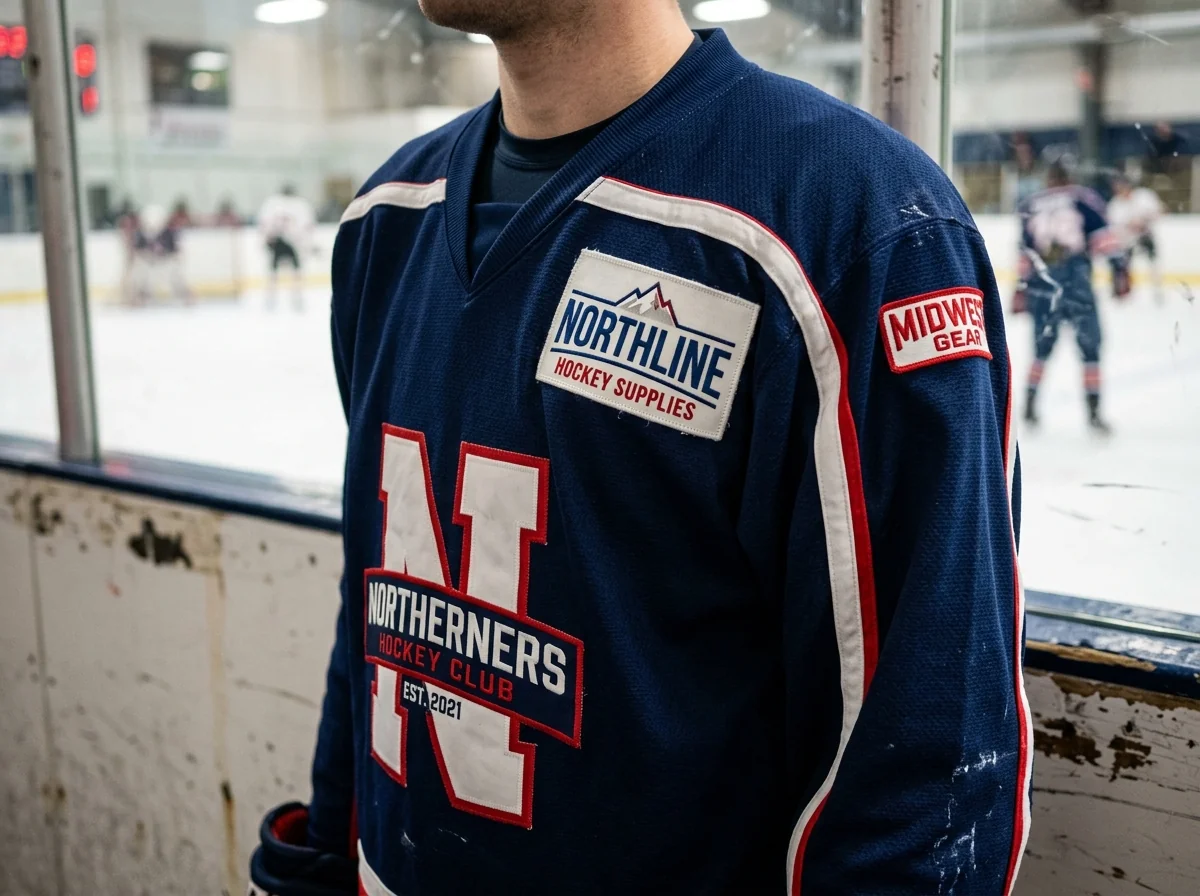
Sponsor logos positioned on the chest, sleeves, or hem without crowding the team crest.
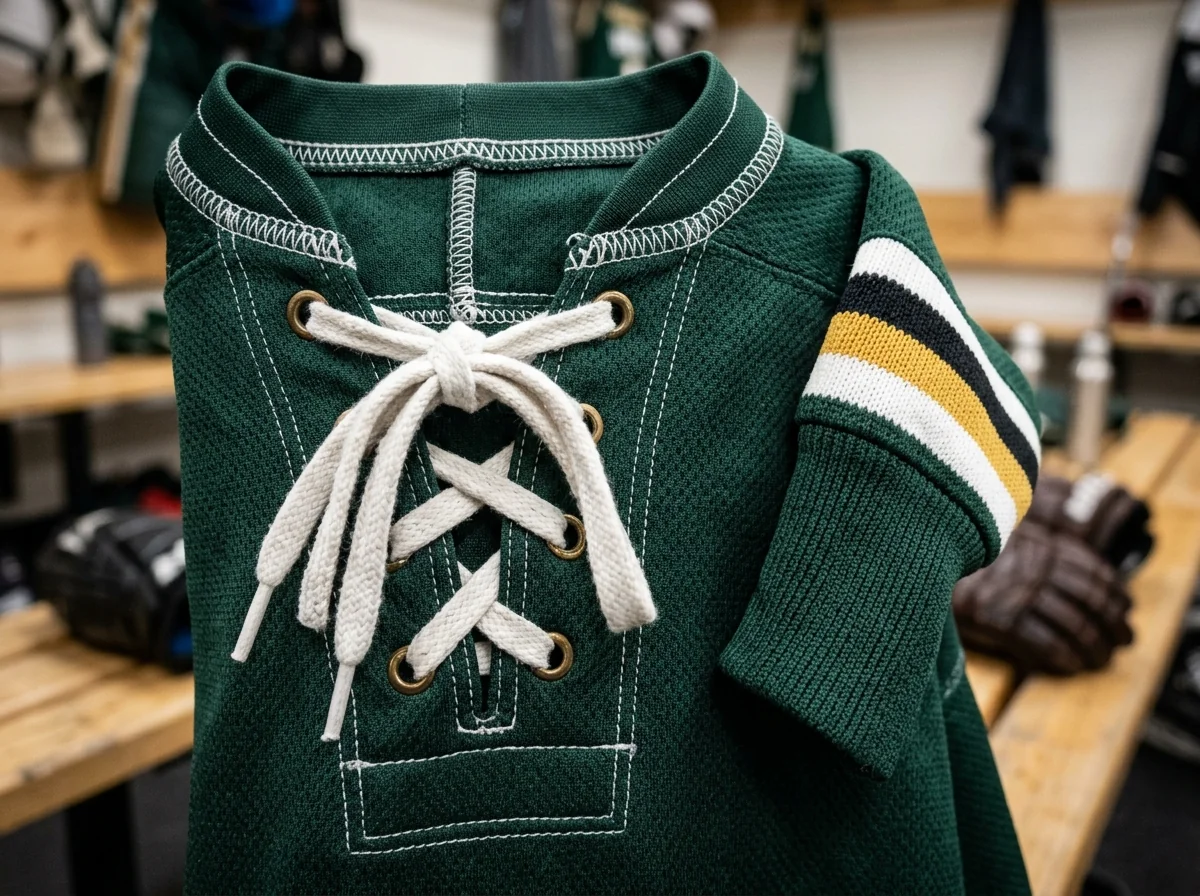
Lace-up, V-neck, or crew collars, with cuff and sleeve striping finished to match.
Pattern, decoration, and color are one connected capability rather than three separate specs: the decoration method constrains what the pattern can carry, and the pattern constrains where decoration can sit without distortion.
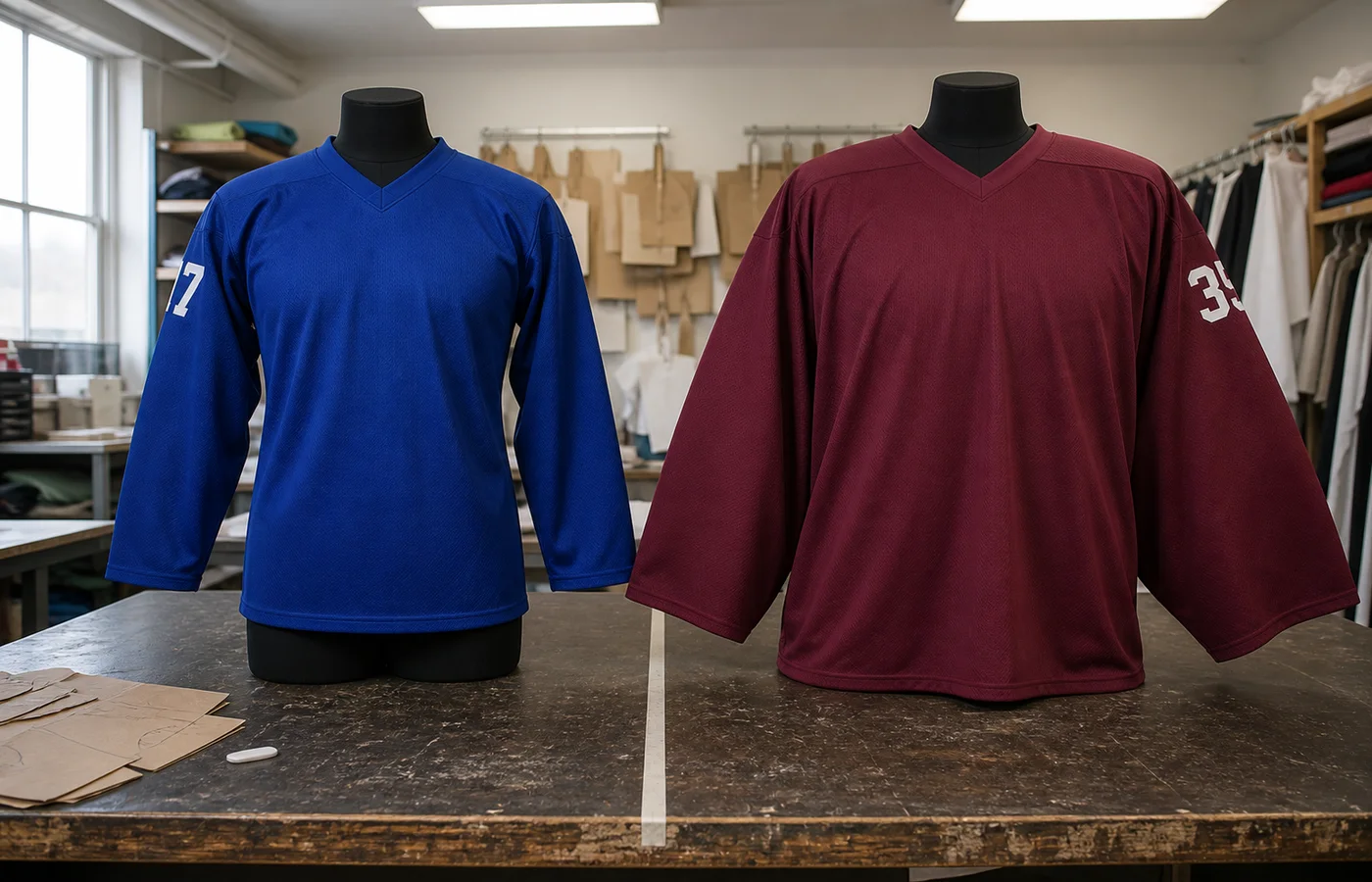
A hockey jersey is not cut like a jersey worn against skin, because it is worn over protective padding underneath. The body and sleeve need enough room to move over that padding without pulling tight across the shoulder or restricting a full stick swing, so the pattern is drafted wider through the chest, shoulder, and upper sleeve. Patterns for this kind of garment typically add extra ease at the underarm — often a dropped gusset — so the sleeve still has room to rotate.
A hockey goalie cut extends that same logic further: because hockey goalies wear bulkier protective padding than skaters, that cut is drafted noticeably looser and longer through the torso and sleeve than the player cut, with a wider armhole so the added bulk underneath doesn't catch on the seam. The two patterns are not interchangeable — sending the wrong one out binds across the padding in one direction and sits oversized in the other. That's why the cut has to match how the jersey will actually be worn rather than defaulting to one pattern for both roles.
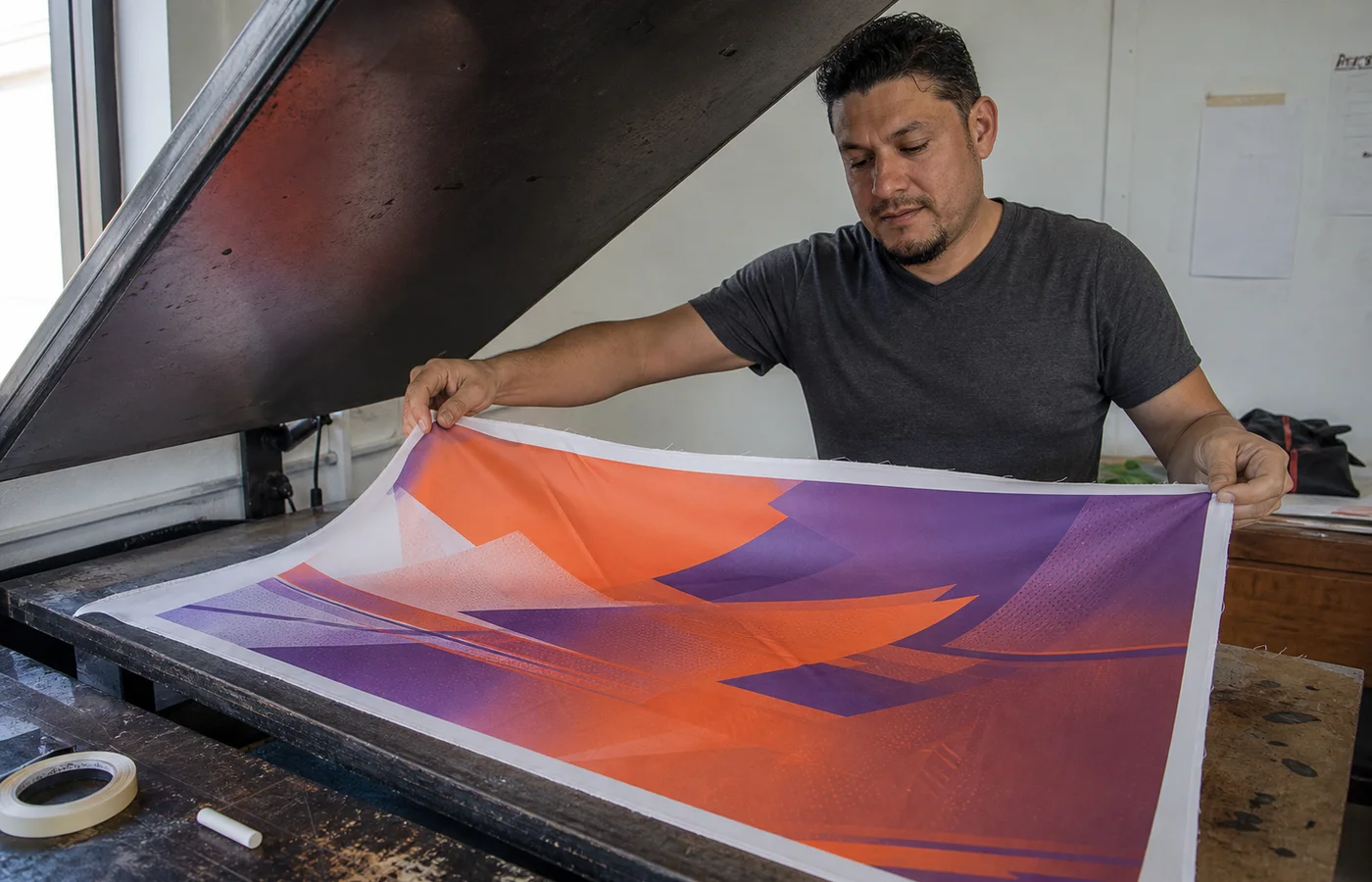
Sublimation prints the design directly into the fabric before the jersey is cut and sewn: dye is printed onto transfer paper, then heat and pressure turn it into a gas that bonds into a polyester weave, so the color becomes part of the fiber instead of sitting on top of it. That makes sublimation the practical route for jerseys with more than a few colors, a gradient, or a full all-over pattern, because there is no per-color setup the way there is with cut fabric or stitched decoration.
The trade-off is fabric and sequencing. Sublimation needs a light-colored, high-polyester fabric to take dye cleanly, so it is not an option on a dark base fabric or a fabric blend with high natural-fiber content. Because the artwork is printed before the pattern pieces are cut, any number, name, or logo that has to land in a specific spot has to be placed on the print file relative to where that pattern piece will be cut — placement is locked in before construction, not adjusted afterward. That upfront placement step is what adds time to a sublimated order compared with decoration applied after the jersey is already sewn.
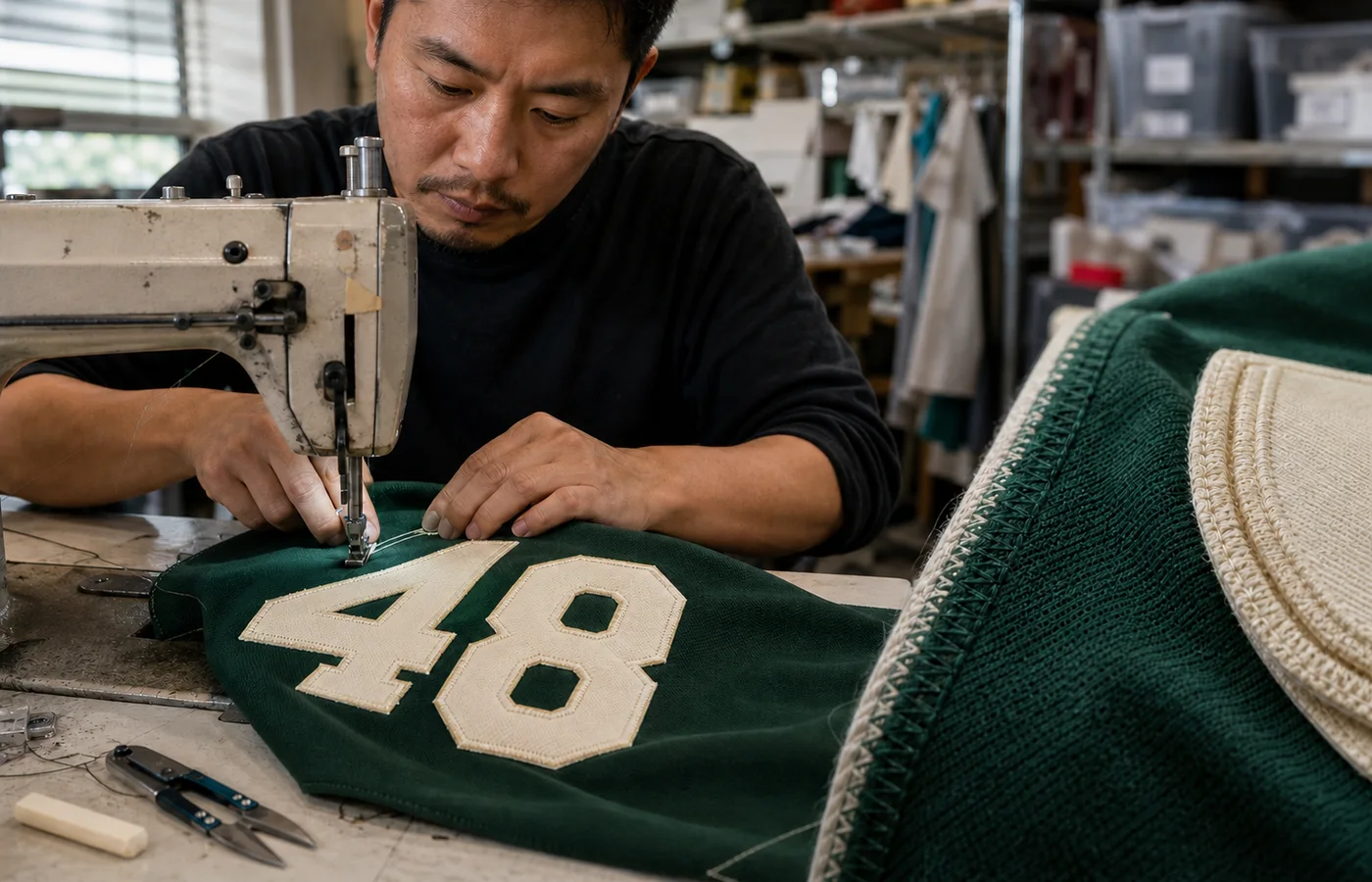
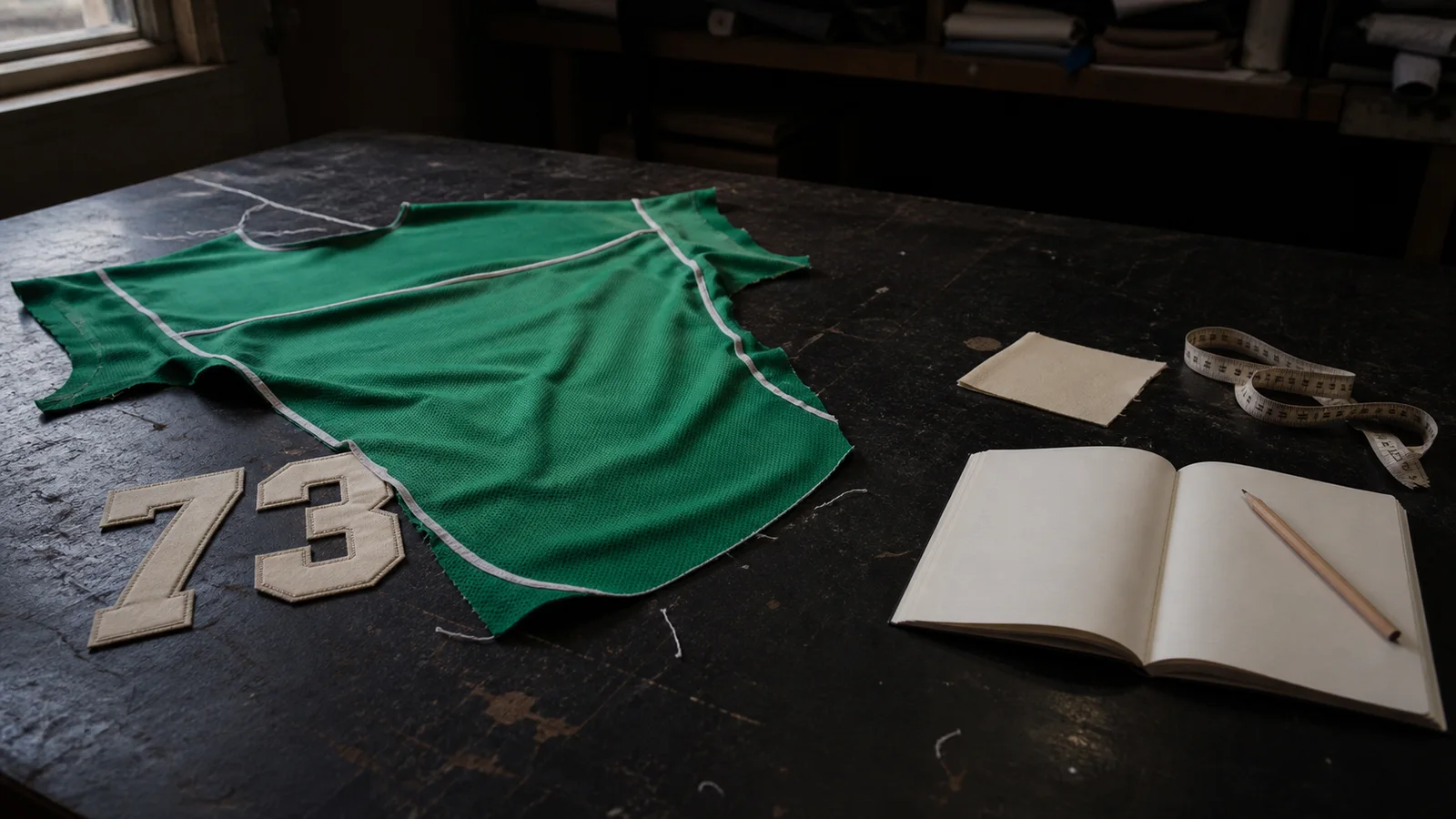
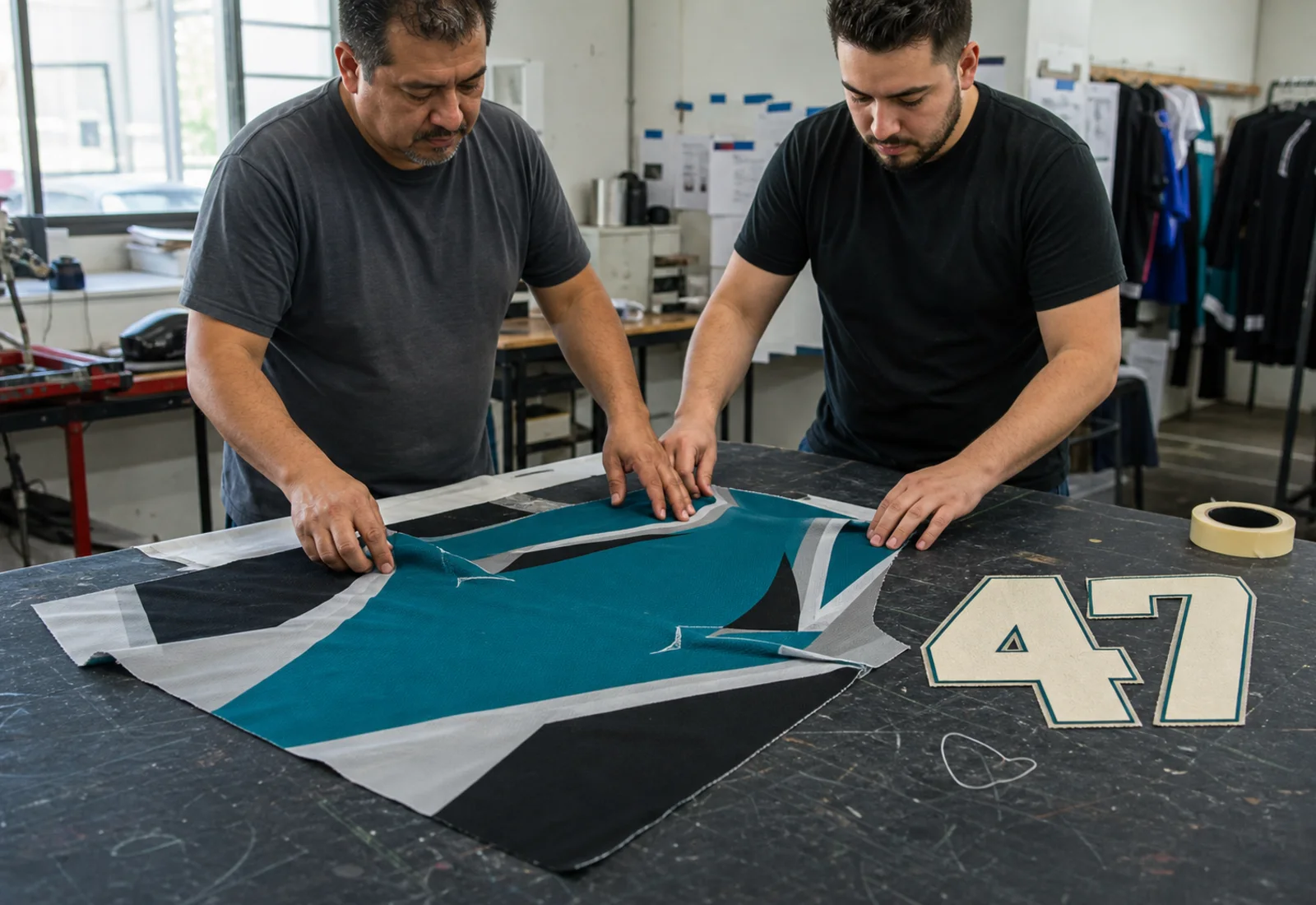
Tackle twill and embroidery are applied after the jersey is already cut and sewn — the opposite order from sublimation. Tackle twill cuts letters, numbers, or a logo shape out of a separate twill fabric and stitches or heat-bonds that piece onto the finished jersey. Embroidery stitches the design directly into the jersey fabric with thread, building a raised, textured surface. Both give a durable, dimensional result that sublimated print can't reproduce, which is why number and name treatments on an otherwise sublimated jersey often still use twill or embroidery.
The limit is color and shape complexity: twill and embroidery hold solid color blocks and clean outlines, not gradients, photographic detail, or fine text at a small size, because thread and cut fabric can't resolve detail the way printed dye can. Adding colors or letters adds separate stitching or cutting passes, so a heavily lettered design takes longer to produce than a single-color number. Because the piece is applied after construction, twill and embroidery placement is less constrained by the cutting pattern than sublimation is — but it is constrained by the jersey's seams, since a mark can't be embroidered across a seam without distorting it.
Once pattern and decoration method are set, RunHockey Apparel matches the actual colorway to whatever the buyer supplies as reference — a color code, an existing garment, or brand artwork — rather than selecting from a fixed in-house palette. Numbering and lettering content, spacing, and sizing follow exactly what the buyer specifies in the tech pack; RunHockey Apparel does not originate a team's numbers, names, or wordmark. No completed jersey artwork is shown on this page as a portfolio piece: customer-supplied designs are not displayed without the buyer's explicit permission, and no league, team, school, or mascot artwork is reproduced or referenced at any stage of the process.
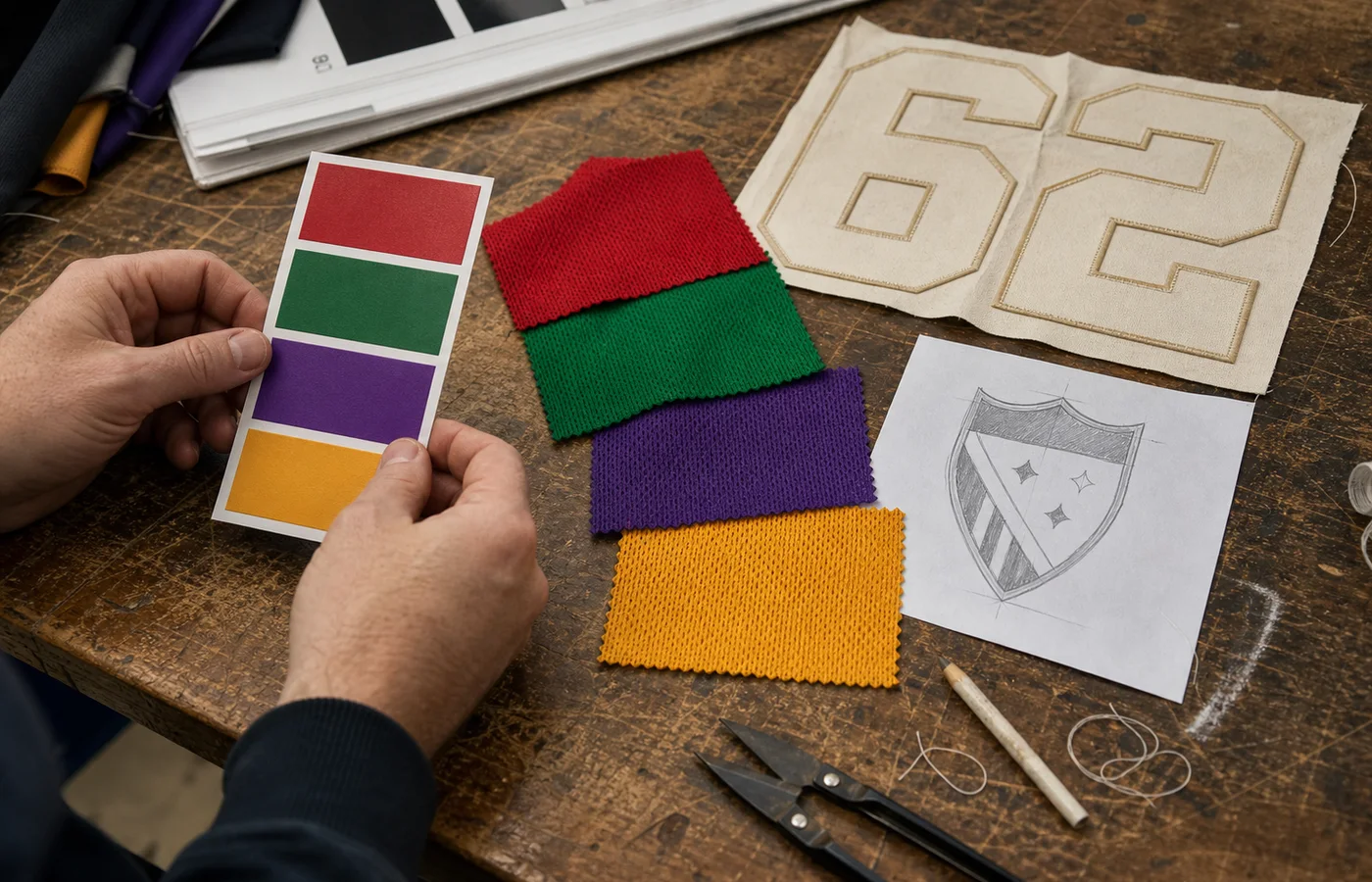
Matched to a color code, an existing garment, or supplied brand artwork.
Content, spacing, and sizing follow exactly what the buyer specifies.
A tech pack moves through decoration cleanly or gets sent back for a second round depending on four things.
Artwork needs a vector source (AI, EPS, or a vector PDF with editable paths) for anything with sharp edges — numbers, wordmarks, a logo mark — because a vector scales cleanly to any decoration method; a raster file (JPG, PNG) below a usable resolution has to be redrawn as vector before it can be used, which is an added step rather than a rejection.
A color code (such as a Pantone reference) is the most exact way to confirm a color; a physical garment sample sent for match requires a match-and-approve round against that sample; pulling a color straight from a digital artwork file carries the most risk, because color on a screen can shift once it's rendered on fabric, which is exactly what the sample step is there to catch before the full order is cut.
A font name alone is not enough to reproduce an exact letterform — either the actual font file or outlined/vector letterforms already built into the artwork are needed, or the letterform has to be approximated or requested again.
The three that most often send a sample back for a second round are raster-only artwork with no vector source, a color specified only as an on-screen preview with no code or physical reference, and lettering supplied as a font name without the file or outlined artwork.
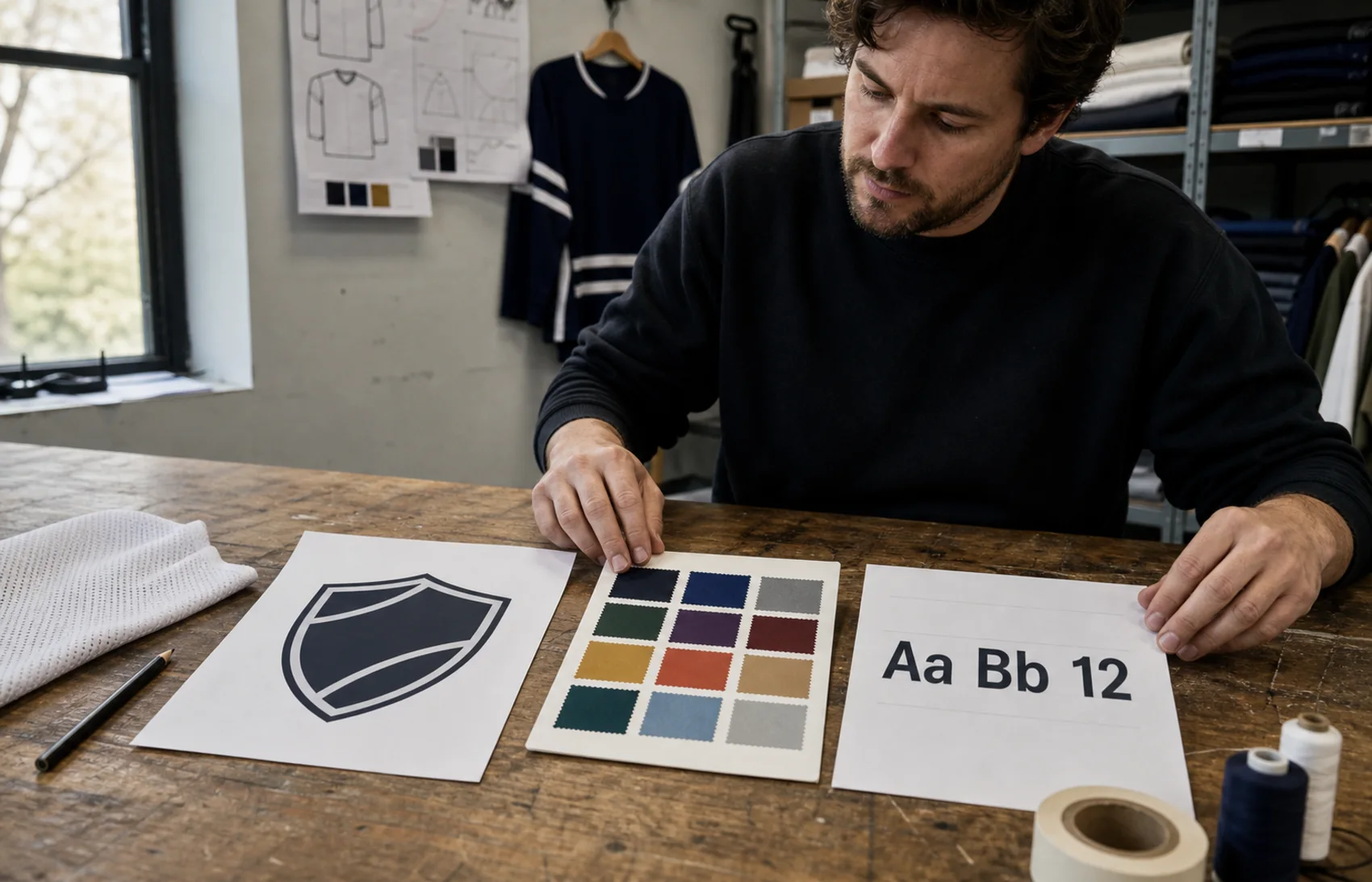
A custom hockey jersey order starts with a tech pack: the pattern or cut selection, the color specification, and the artwork or lettering/numbering layout the decoration will follow. From that tech pack, RunHockey Apparel produces a sample built to the exact pattern, color, and decoration placement specified, so the buyer can check fit, color accuracy, and decoration position before anything is cut for the full order.
Pattern selection, color specification, and artwork or lettering/numbering layout submitted as a tech pack.
Sample built to the exact pattern, color, and placement. Full-order production starts only after sign-off; any change after that point is a tech-pack revision, not a factory-floor correction.
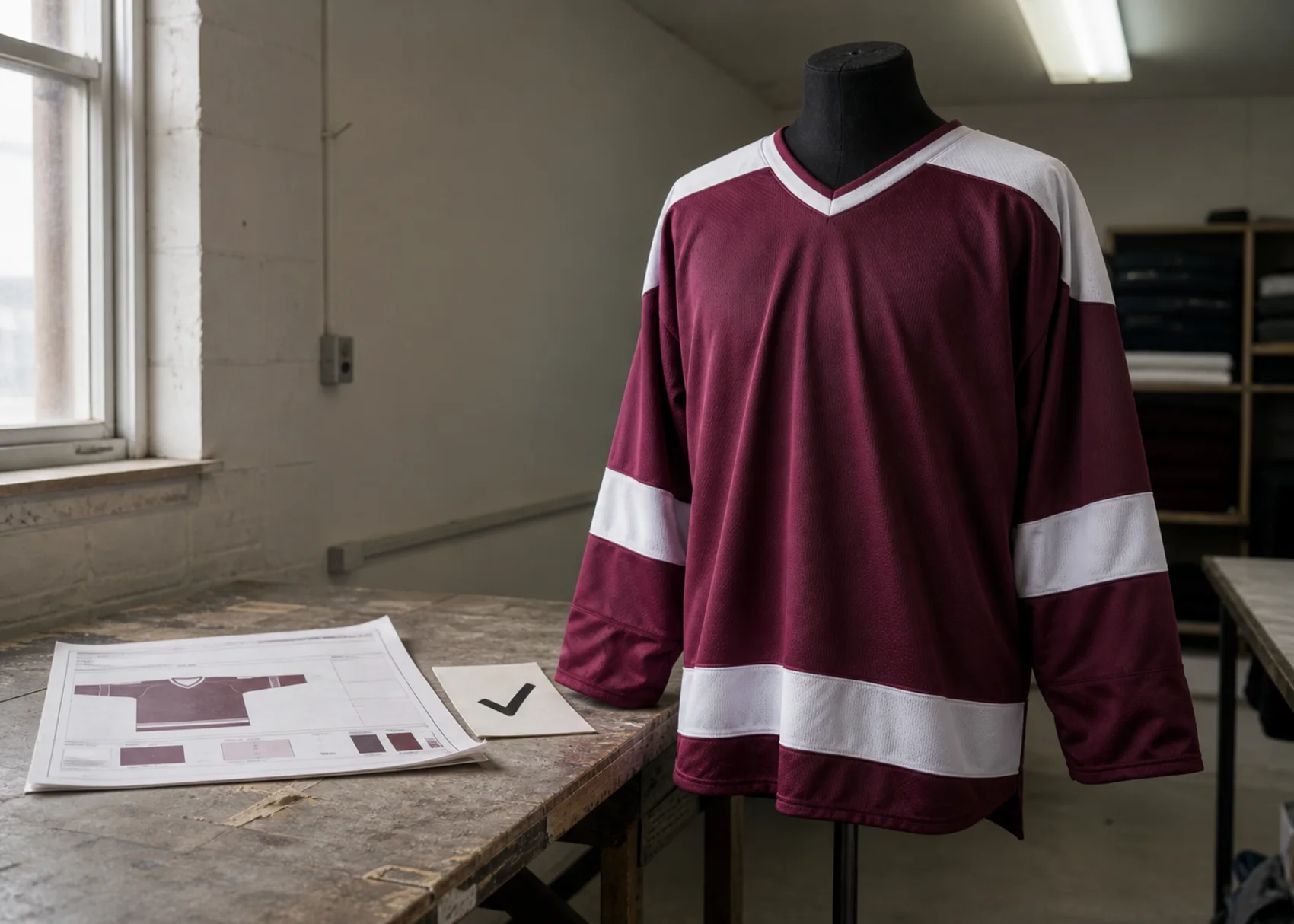
What happens inside the factory once a sample is approved is covered separately below.
Use the four-field form to send RunHockey Apparel a custom hockey jersey inquiry, with or without a tech pack ready yet. A custom hockey jersey inquiry is answered within 12 business hours. Once the tech pack is complete, a quote is returned within 24 hours.