Blank Hockey Jersey Manufacturer: Undecorated Jerseys, Socks, and Shells Built to Your Spec

Undecorated stock built from the same production line as our custom program — not a separate, lower grade held back for resale.

Stacked folded blank hockey jerseys in Royal Blue, Vegas Gold, and Kelly Green, no crests, numbers, or wordmarks visible.
Royal Blue · Vegas Gold · Kelly Green
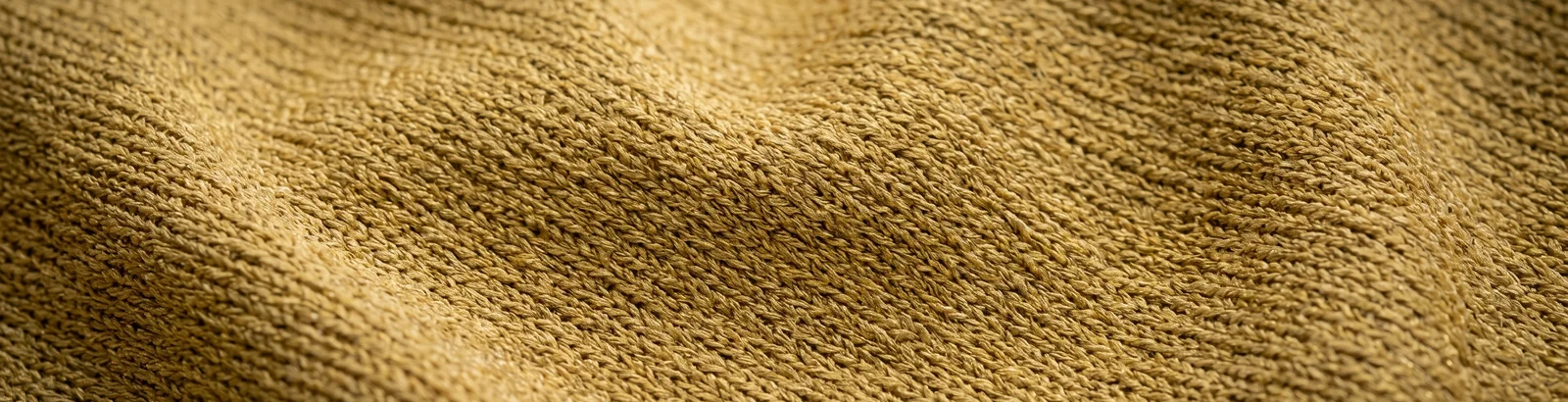
Close macro shot of undecorated knit fabric in the Vegas Gold colorway used for blank hockey socks.
Sock Colorway · Vegas Gold
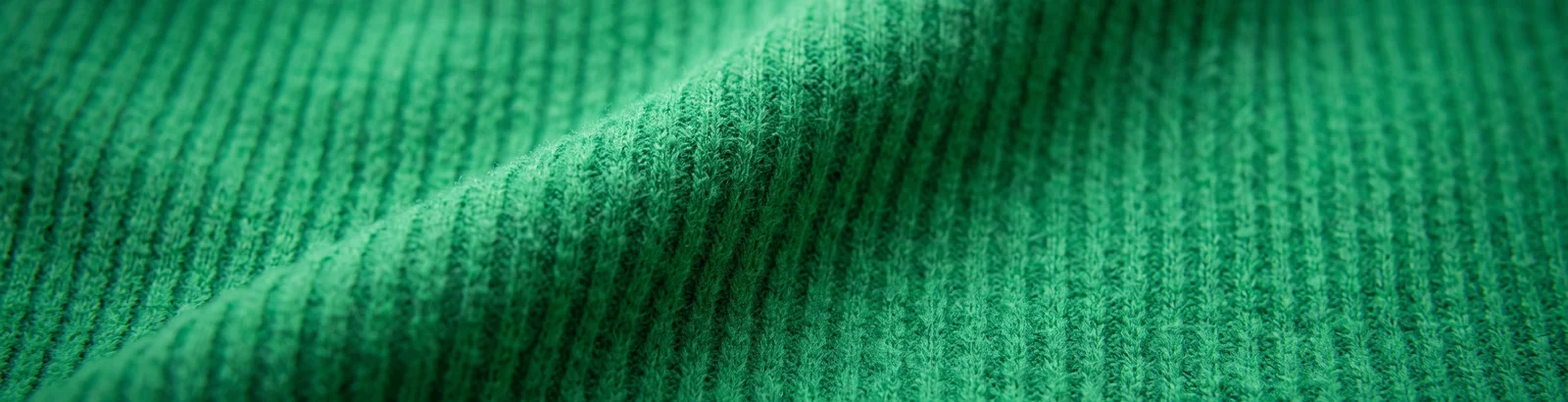
Close macro shot of undecorated woven fabric in the Kelly Green colorway used for blank hockey pant shells.
Pant Shell Colorway · Kelly Green
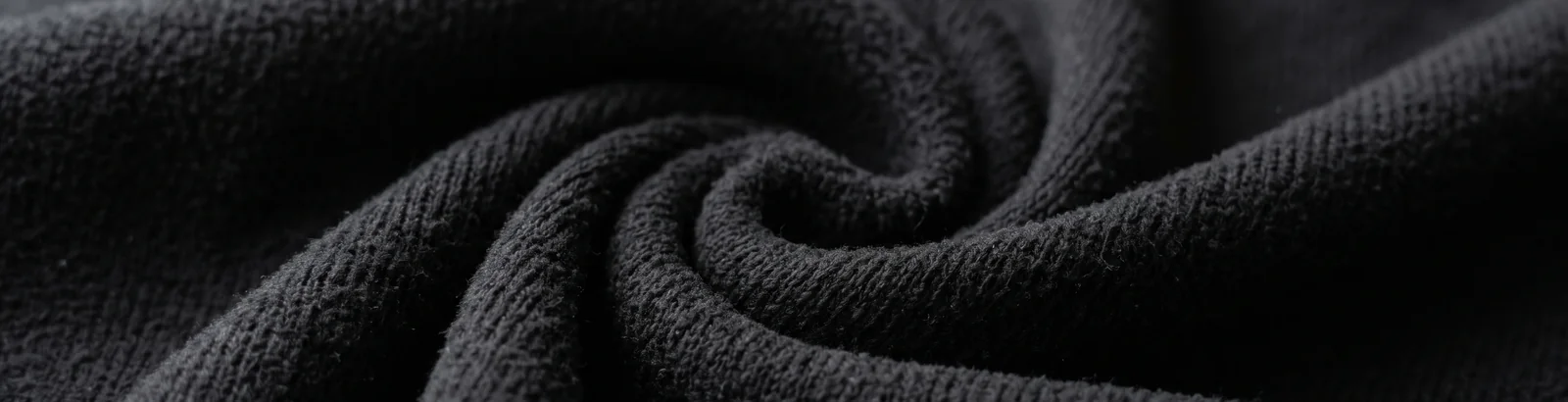
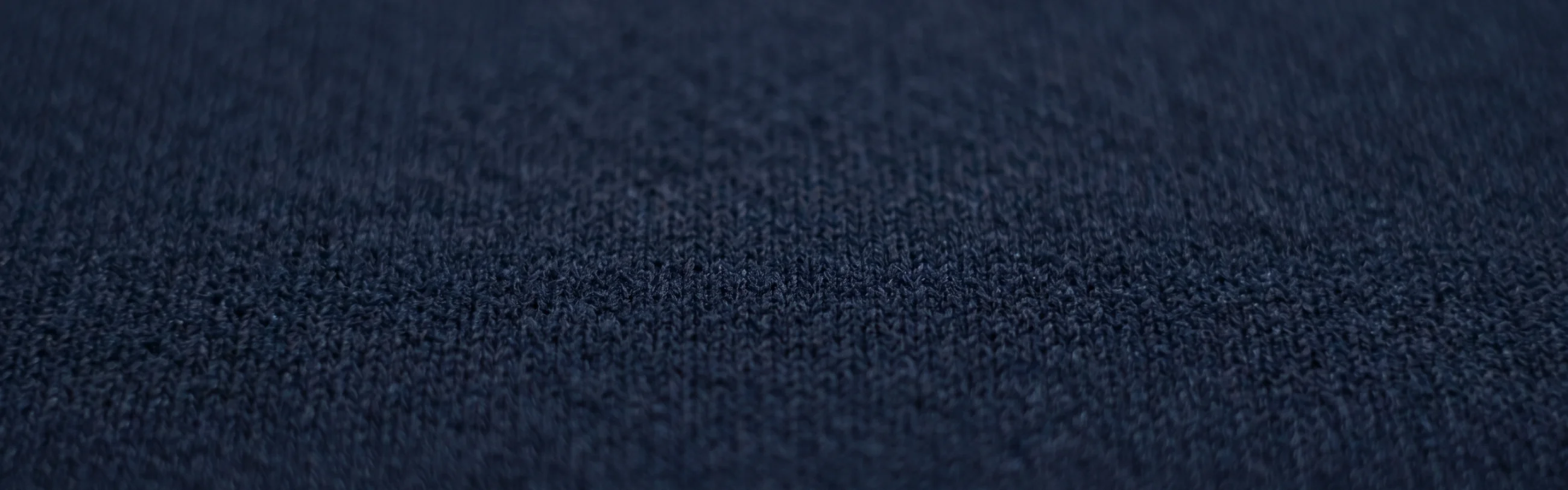
Close macro shot of undecorated knit fabric in the Black colorway used for blank practice jerseys.
Practice Jersey Colorway · Black

Which Hockey Jerseys, Socks, and Shells Ship Undecorated

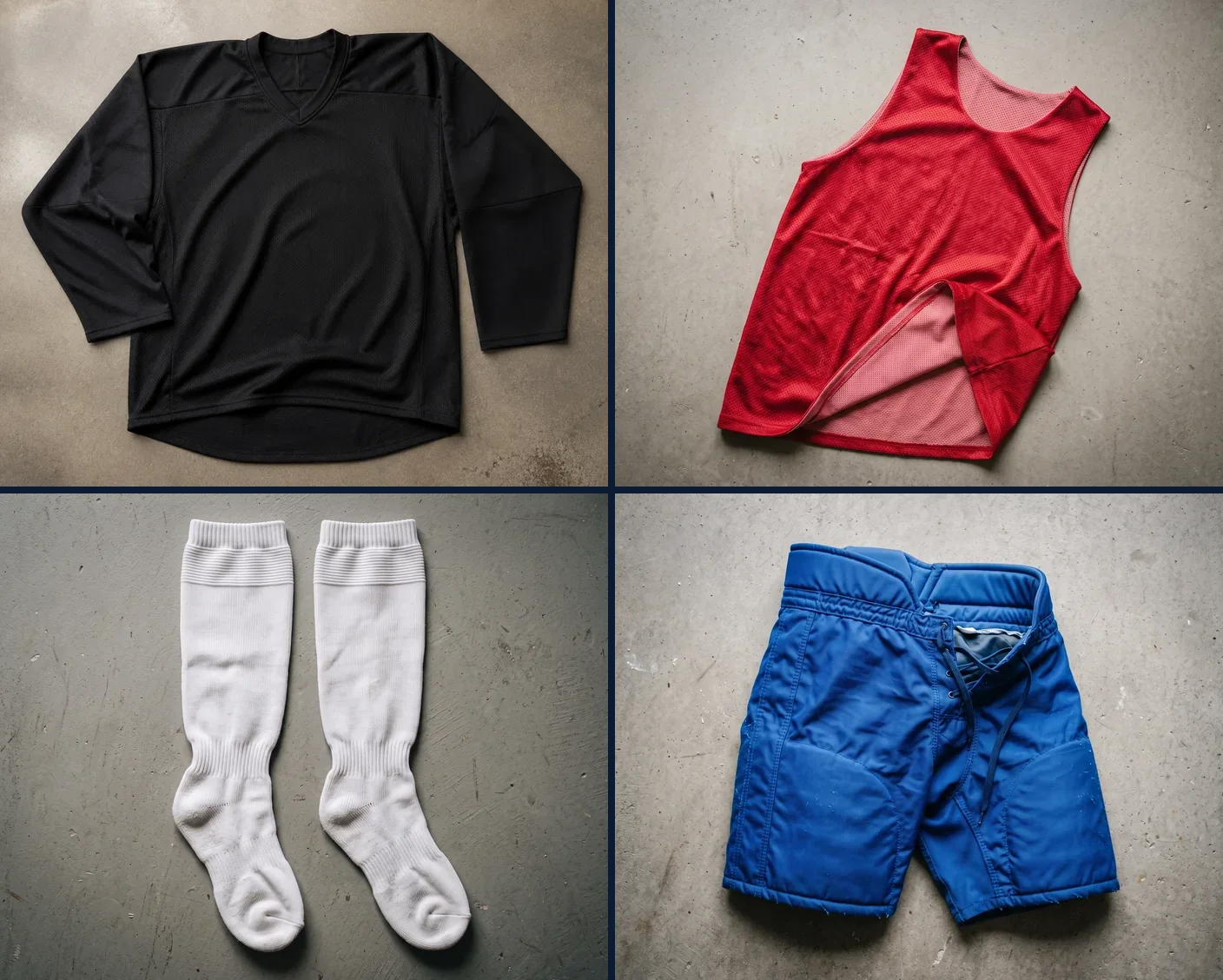
Four garment types, each available without decoration — not a subset held back from the full range shown on the home page.

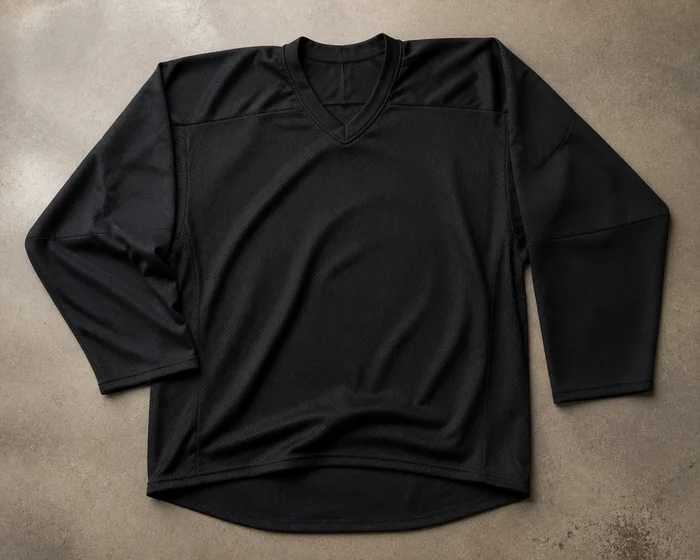
Blank black hockey jersey laid flat, no crest, numbers, or wordmark. Player-Cut and Hockey Goalie-Cut Jerseys

Both ship blank; the cut is selected at order, using the same two pattern sets run for decorated production. This is the only one of the four with more than one cut — a buyer names player or hockey goalie on the order, not both from one pattern.
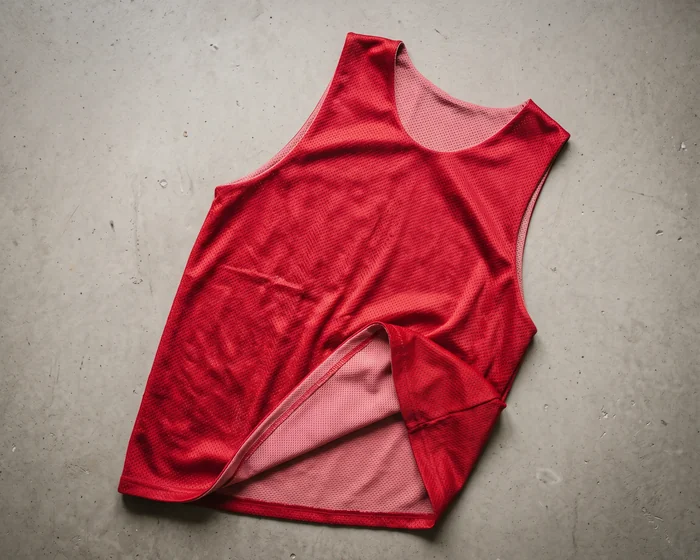
Blank red practice jersey laid flat, no crest, numbers, or wordmark. Practice Jerseys, Reversible Build Included

Ships blank; the reversible two-panel construction is a sewing choice made independent of decoration. The two faces are cut from the same base fabric and bonded together, so both sides carry the same weight and the same colorway options — one face is not a lighter secondary layer than the other.

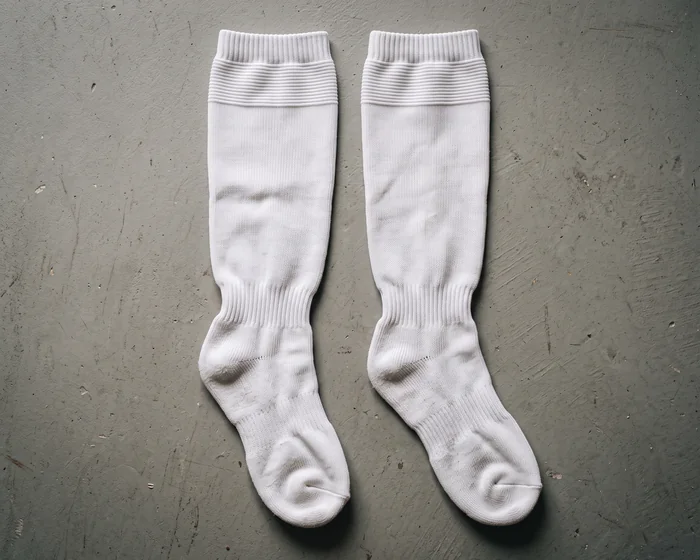
Blank white hockey socks laid flat, no crest, numbers, or wordmark. Hockey Socks

Ship blank in one standard tube-knit construction; there is no cut variant the way jerseys have player and hockey goalie versions, only the colorway choice covered in section 5.

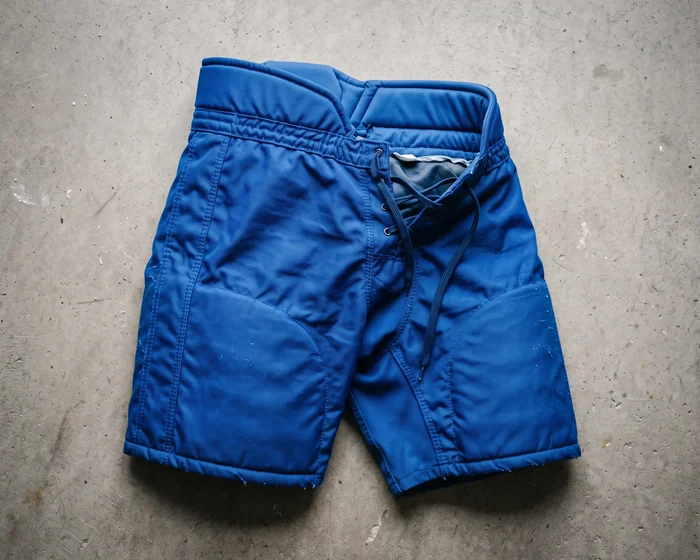
Blank Royal Blue pant shell laid flat, no crest, numbers, or wordmark. Pant Shells

Ship blank in one standard shell construction, cut from the same shell pattern as the decorated version and sized across the same range as the rest of the line; like socks, there is no separate cut option beyond colorway.

Warm-up hoodies, jackets, and coordinated team-kit bundles sit outside this page; see the related programs below.

Three Fabric Bases and Their Weight Range for Blank Hockey Jerseys

Three base constructions, each with a fixed weight band — the numbers this page is the only place on the site where they are published.

Each blank order is cut from one of three base constructions, selected per garment at quote stage:

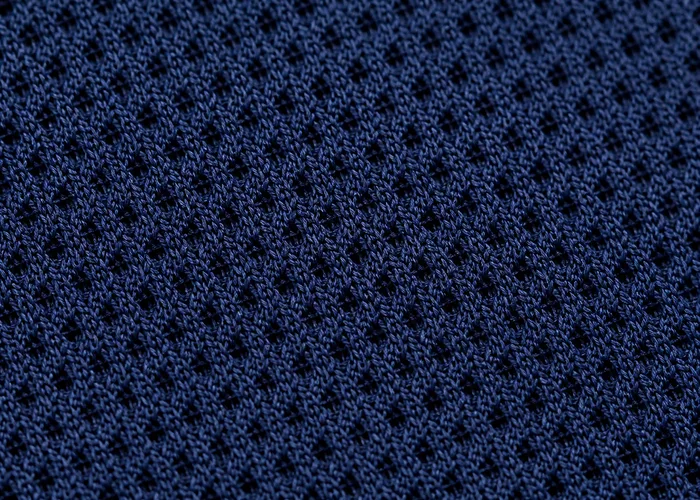
Close macro shot of air knit polyester fabric texture, open weave structure visible.
Air Knit Polyester
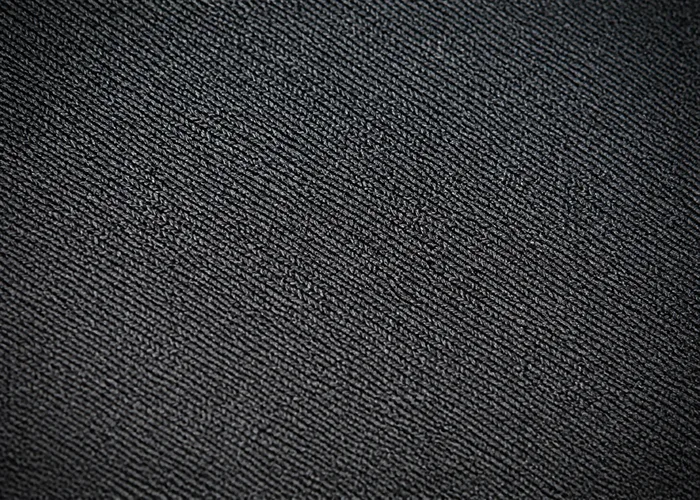
Close macro shot of double-knit polyester fabric, tighter and denser weave than the air knit base.
Double-Knit Polyester
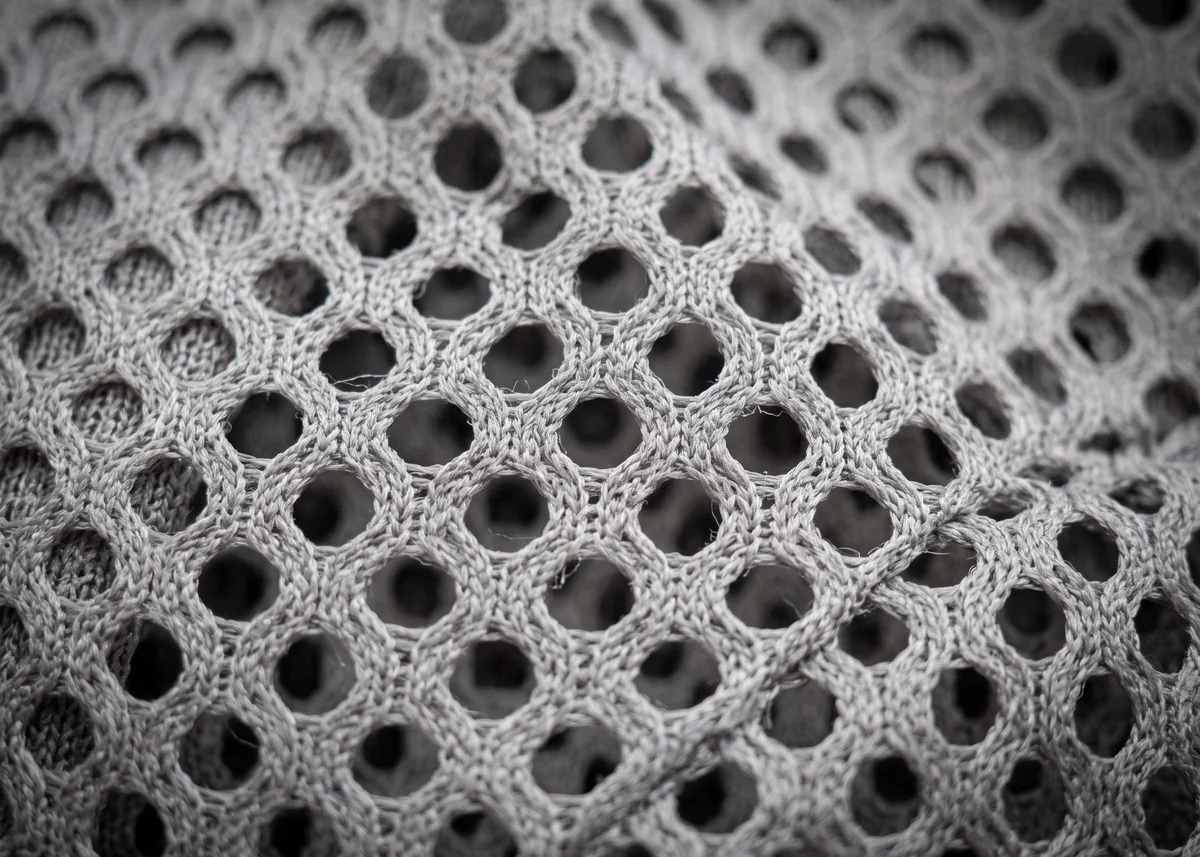
Close macro shot of mesh polyester fabric, open perforated weave with visible negative space.
Mesh Polyester
Fabric base, typical use, and weight range for blank hockey jersey orders
Fabric baseTypical use on a blank orderWeight range
Air knit polyester Jersey body and sleeve 160180 gsm
Double-knit polyester Pant shell and heavier practice-jersey panels 200220 gsm
Mesh polyester Ventilating panels and sock body 140160 gsm

Air Knit Polyester

Typical use: Jersey body and sleeve

Weight range: 160180 gsm

Double-Knit Polyester

Typical use: Pant shell and heavier practice-jersey panels

Weight range: 200220 gsm

Mesh Polyester

Typical use: Ventilating panels and sock body

Weight range: 140160 gsm

Colorway does not move a base outside its published range — the same air knit garment runs 160–180 gsm in any of the six standing-stock colors, since dyeing the knit is a separate step from constructing it. A shipped batch is confirmed against the mid-point of the range recorded on the order; a reading anywhere inside the published band is inside spec, not a deviation that gets negotiated piece by piece. A repeat order on the same style pulls fabric against that same recorded base and range rather than a fresh weight decision each time.

A fabric outside these three bases can be evaluated against a swatch or spec sheet a buyer supplies. Whether it's accepted depends on whether the equipment already running air knit, double-knit, and mesh can process it — there is no fixed list of pre-approved alternates beyond the three published here.

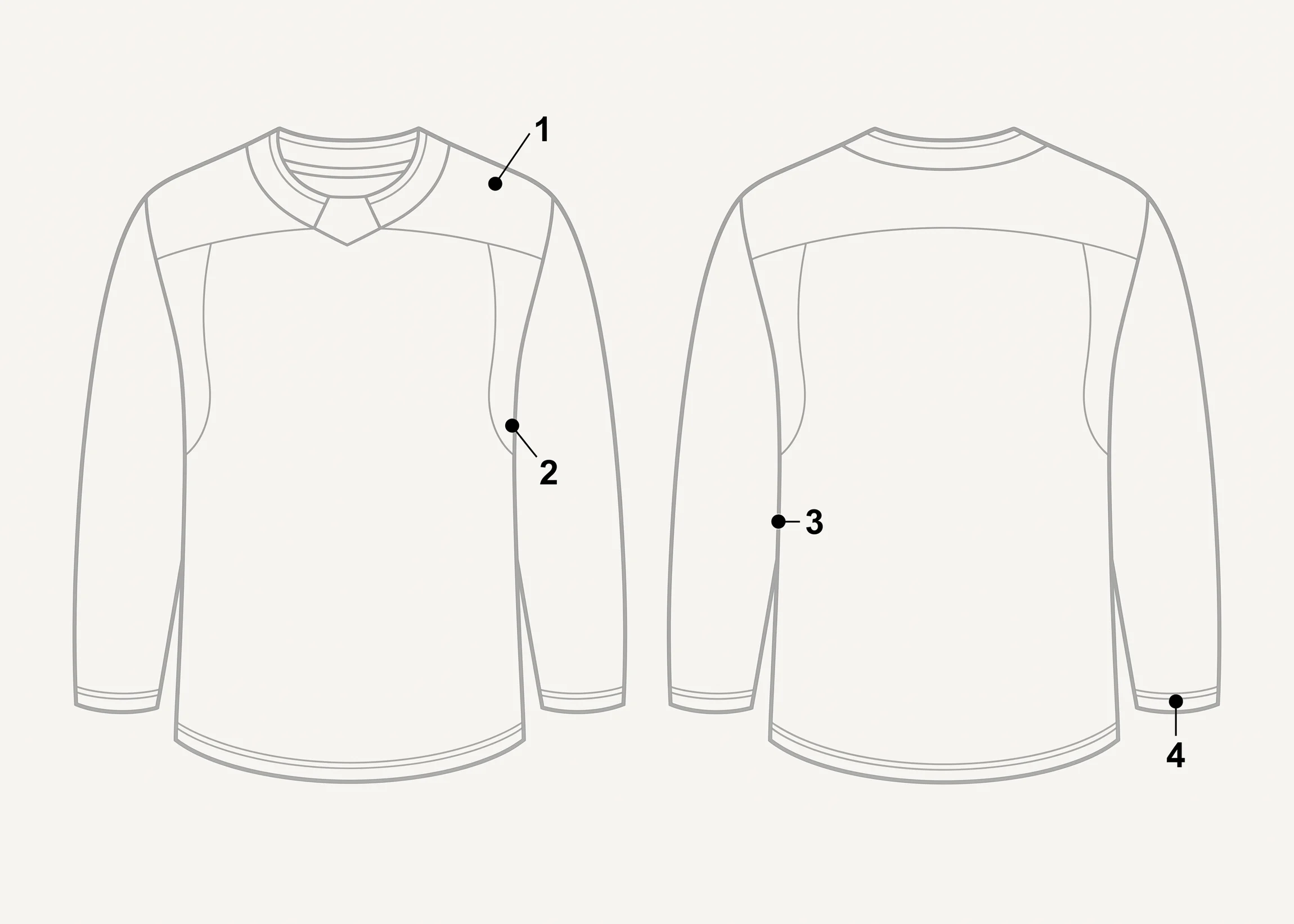
Panel and Seam Placement on a Blank Hockey Jersey

Where the body meets the sleeve, and where the seams fall on an undecorated garment.

Line-art technical diagram of a blank hockey jersey torso, front and back view, with four numbered callout points marking panel and seam locations.
  1. 1The chest and back run as one panel to the shoulder seam, with the sleeve set in below a dropped underarm gusset.
  2. 2A jersey run counts six primary panels before any collar or cuff binding is attached: front, back, two sleeves, and two underarm gussets.
  3. 3The practice jersey follows the same shoulder-to-underarm panel layout as the player-cut jersey, with the reversible build adding a second interior panel bonded to the outer one rather than sewn as a separate lining.
  4. 4The pant shell side seam runs a straight vertical line from waistband to hem, with no cross-seam through the front panel.
  5. 5The sock leg is a single tube knit with no side seam; only the heel and toe carry a seam.
  6. 6Every panel carries the same cutting-line reference marks at the shoulder point and side seam, taken from the same digital pattern file used for a decorated order — the same panel and the same reference points, whether or not anything is added afterward.

Six Standard Colorways for Blank Hockey Jerseys

Six colorways carried as standing stock — what “standing” changes about how an order runs.

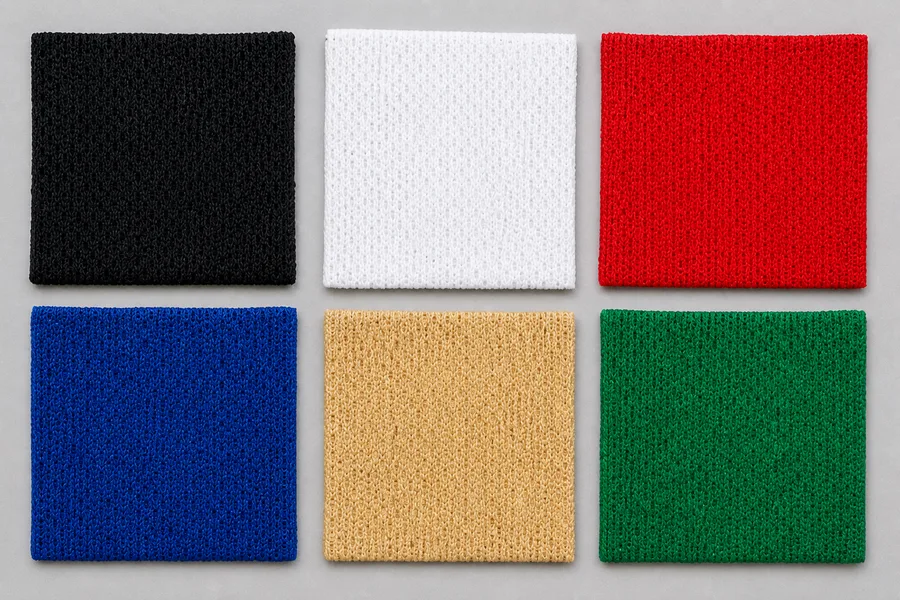
Six fabric color swatches arranged in a grid — black, white, red, royal blue, Vegas Gold, Kelly Green — each a solid color block with visible knit texture.
Black
White
Red
Royal Blue
Vegas Gold
Kelly Green

Standing stock: 6 colorways

Black, White, Red, Royal Blue, Vegas Gold, and Kelly Green are kept as standing stock for blank hockey jersey, practice jersey, sock, and pant shell orders.

Standing stock means these six colors are already dyed and held ready rather than run to order, so there is no color-match-and-approve round before a standard-stock order ships — that round only applies outside the six. A color outside the standard list runs against a reference a buyer supplies, the same reference-matching approach used for decorated orders, rather than a fixed list of alternates.

Current availability is confirmed on blank hockey jerseys by color, which also covers pairing principles — which of the six read well together for a home-and-away set — a level of detail this section doesn't go into.

Ready to Send Your Blank Hockey Jersey Spec?

No new form to hunt for — the inquiry below takes fabric base, colorway, and product mix in one message.

Already know the fabric base, colorway, and product mix you need? Send the details now instead of reading through sizing and packaging information first.

Still checking what ships blank? Back to the product range

Youth Through Adult Sizing on Every Blank Hockey Jersey Order

One range across the whole blank line.

Blank hockey jerseys, practice jerseys, socks, and pant shells are cut across the same youth-to-adult range used for decorated orders. Full measurements and the size chart are on hockey jersey size chart.

Neck Tape and Packaging on a Blank Hockey Jersey Order

What's on the tag, how the carton is sorted, and what's inside it to check against.

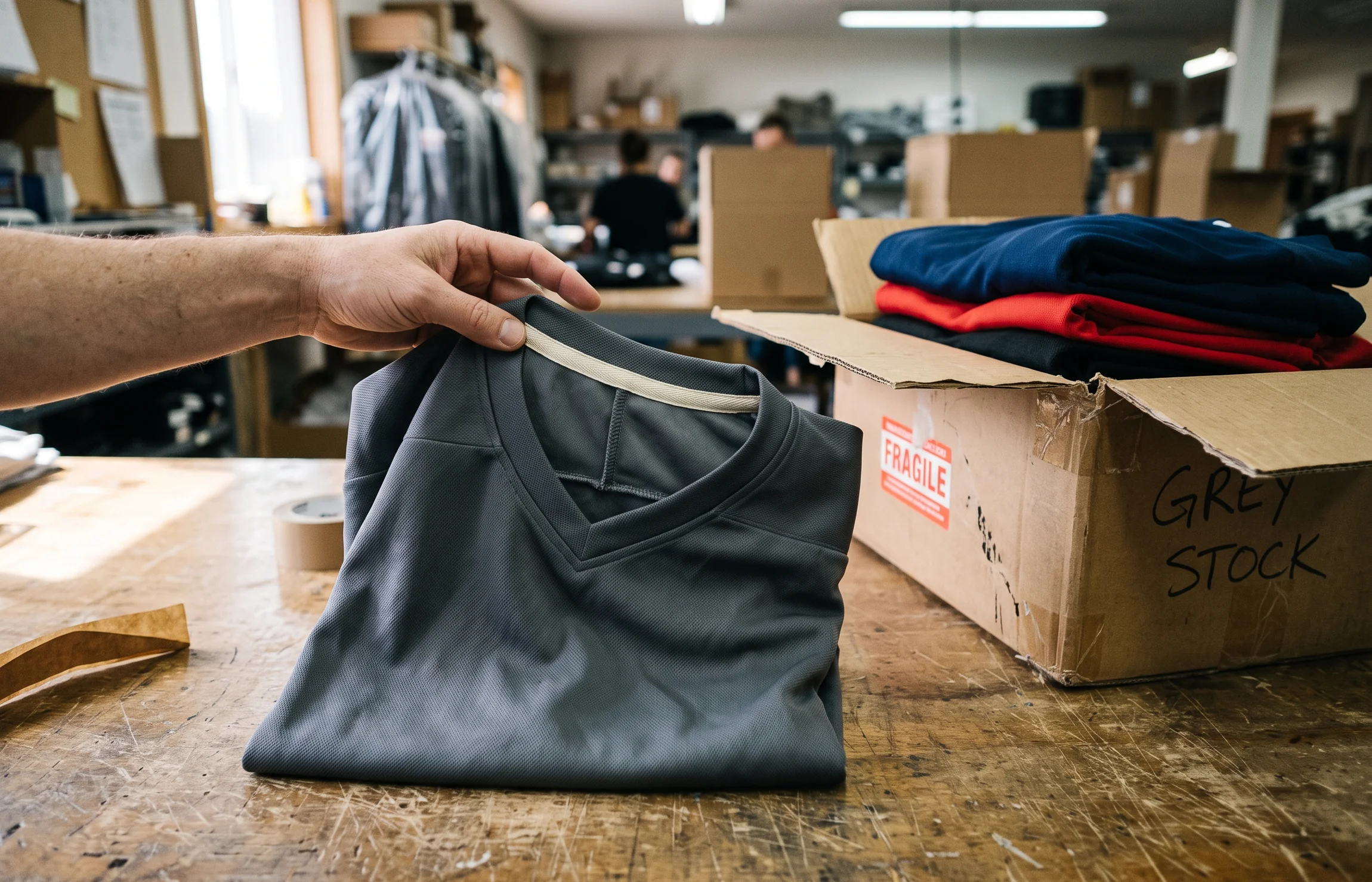
An unbranded hand folding a blank hockey jersey with a plain woven neck tape, beside an open carton showing garments sorted by color.

The neck tape ships blank — a plain woven tape carrying only fiber content and care symbols, with no brand name or wordmark.

Garments are folded flat rather than hung or bagged individually, the same folding format used for a decorated order before it's boxed.

Garments are sorted and packed by color and size against the order, one colorway and one size per carton wherever the order quantity fills a carton on its own.

Where a smaller size run doesn't fill a carton alone, two adjacent sizes in the same colorway share the carton rather than mixing colorways in one box.

Each carton is marked outside with style number, color, size, and quantity, and a packing list inside itemizes the same four points in the same layout on every order — so a second order reads the same way as the first.

A main label, hangtag, and custom packaging are handled on the private label and OEM hockey apparel program, not on a blank order — that program adds to this packing sequence rather than replacing it.

How to Choose the Right Blank Base for Your Decoration Process

The order to confirm three things in, and what to look at on your own line while you do — not a recommendation on which decoration method to run.

Confirm cut first, fabric base second, colorway last — in that order. Getting the cut wrong (player, hockey goalie, or the applicable pant-shell and sock construction) means a wrong garment shape regardless of fabric or color, and the whole run has to be re-cut. Getting the fabric base wrong is the next most costly: it's the one most tied to your own decoration or finishing equipment, and a wrong base means re-cutting in a different material rather than a color swap. Colorway is the most forgiving of the three — standing stock ships as one order line, and a wrong swatch from the six-color range is the cheapest of the three to correct.

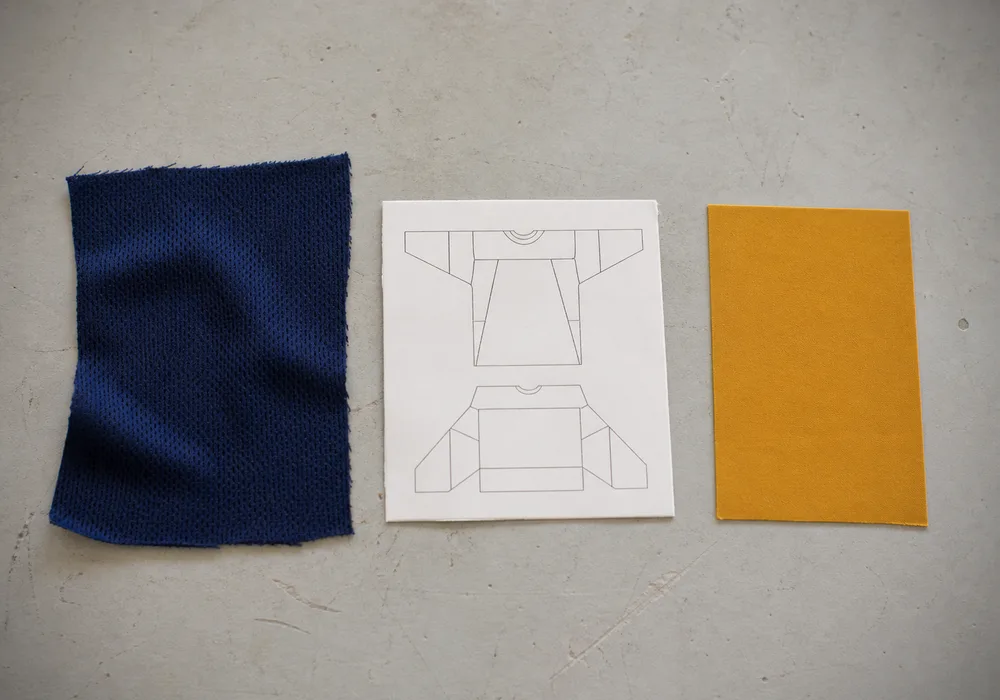
Three neutral reference items arranged for comparison: a fabric swatch, a panel diagram thumbnail, and a color reference chip on a plain work surface.

Send the cut, fabric base, and colorway direction together and the order is specified from there — none of the three has to be finalized before the other two are sent. Get in Touch About Your Blank Order

Fabric Base

The observable difference between the three bases, independent of what decoration method you run, is handling weight and surface density: air knit is the lightest and most open of the three; double-knit is noticeably heavier and holds its shape when held up; mesh is the most visually open, with clear negative space across the weave (see section 3 for the weight ranges behind each).

Construction

Player-cut, goalie-cut, and practice-jersey panels differ in body and sleeve width and in seam placement (see section 4); pant shells and socks each carry seams in different positions from a jersey.

Colorway

Standing stock covers six colors (see section 5); anything outside that list runs against a reference you supply rather than a standard shelf color.

Send Your Blank Hockey Jersey Order Details

Name, email, country, and what you need — with or without a fabric or colorway decision made yet.

Use the four-field form to send RunHockey Apparel a blank hockey jersey inquiry. This inquiry is answered within 12 business hours, by someone who reads what's already in the message before asking for anything else.

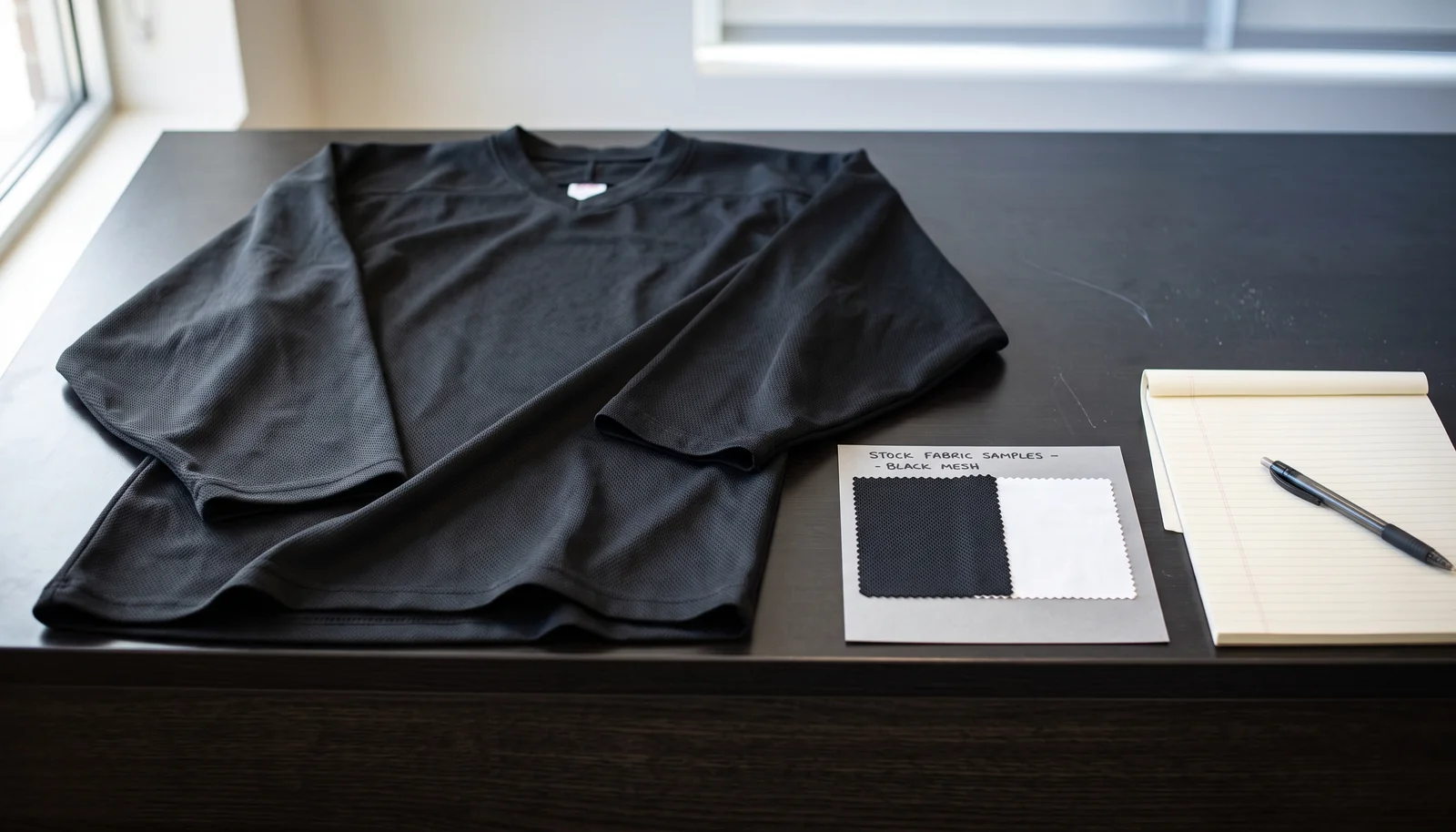
A blank hockey jersey and a plain fabric swatch card beside a clean inquiry workspace in a dark closing band.

Include the product (jersey, practice jersey, socks, or pant shells), fabric base if known, and target colorway or quantity direction.