You've got twenty kids, one spreadsheet, and a parent group chat that lights up every time someone mentions the word "budget." Welcome to hockey equipment season. When you're the one signing purchase orders, the Hockey Pants Vs Shell debate comes down to staying under budget or explaining a shortfall to the board in March. This guide skips the marketing copy and covers real per-player costs, how a hockey pant shell with girdle setup holds up against full pants over three seasons, and which leagues will flat-out reject your shell purchase before puck drop. You'll walk away with a sizing plan that doesn't waste half your budget on returns, and a procurement template built from an actual 20-player order, so you can stop guessing and start filling out the check.
Full hockey pants and the girdle-plus-shell combo solve different problems. Full pants are the all-in-one garment with padding and outer shell together. A girdle plus shell splits that into two pieces, which sounds like more work until you see the advantages.
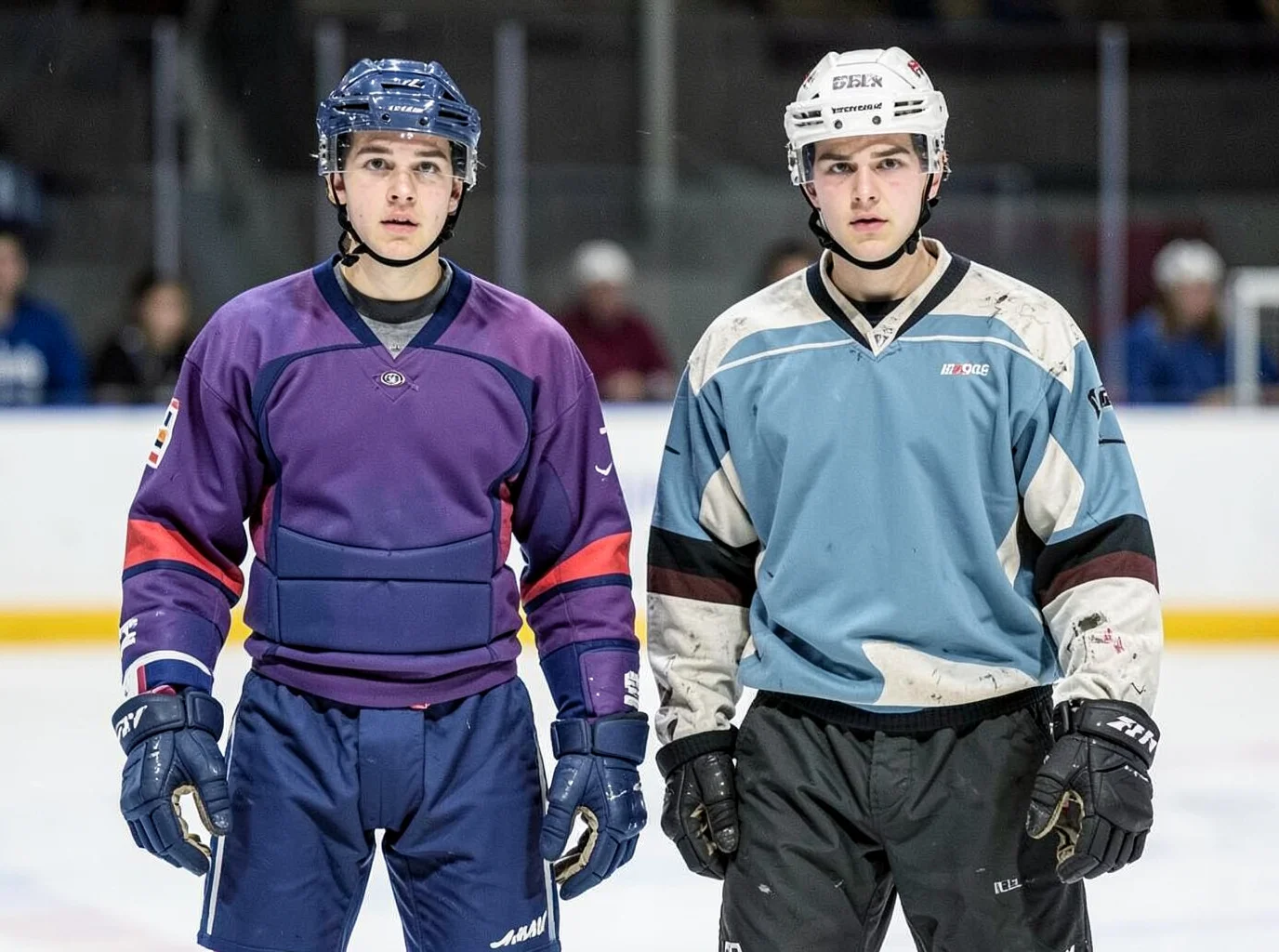
Fit is the first split. Hockey pants run loose, built for players who wanted room to move without feeling their gear. Girdles fit tight, like oversized compression shorts, and that snugness gives you less bulk and more range of motion. A shell layered on top doesn't change that mobility advantage.
Protection is closer than you'd think. Higher-end girdles match the padding level of full pants. You just pay for it in a different configuration.
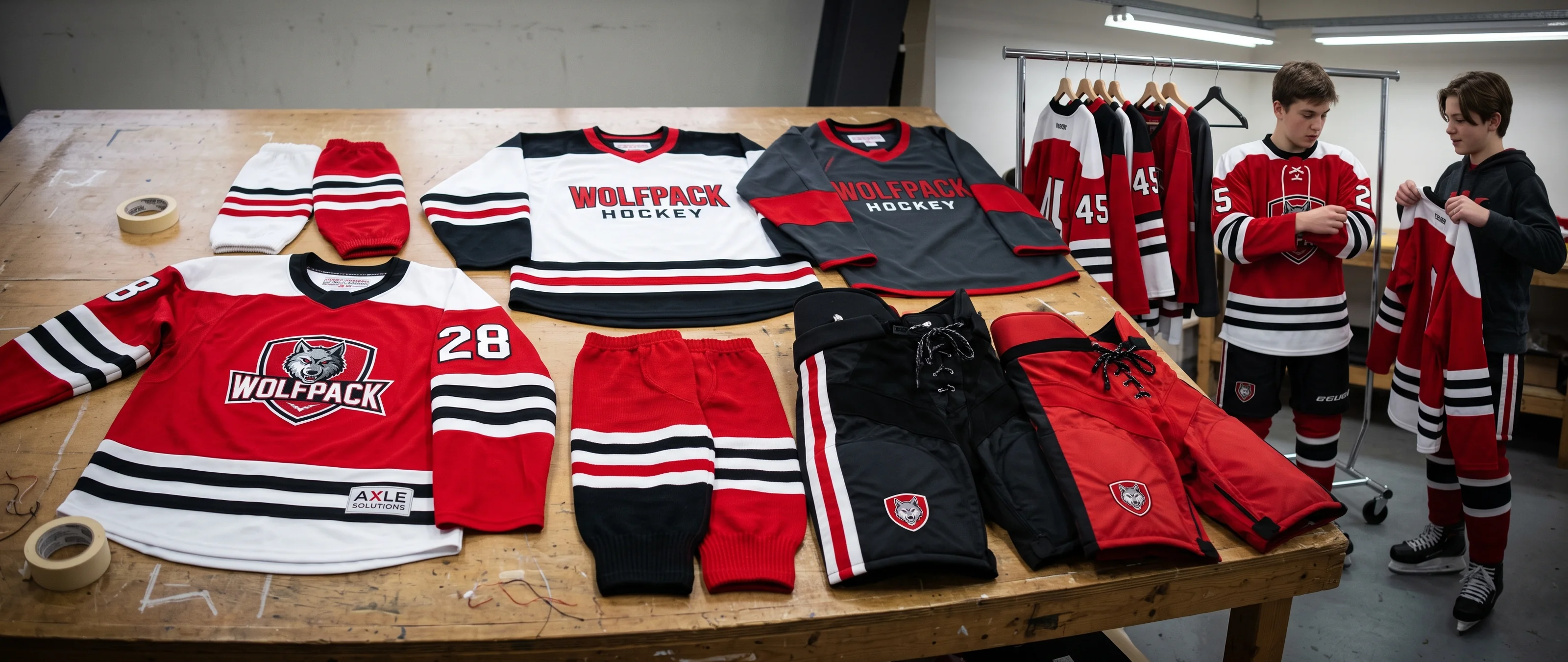
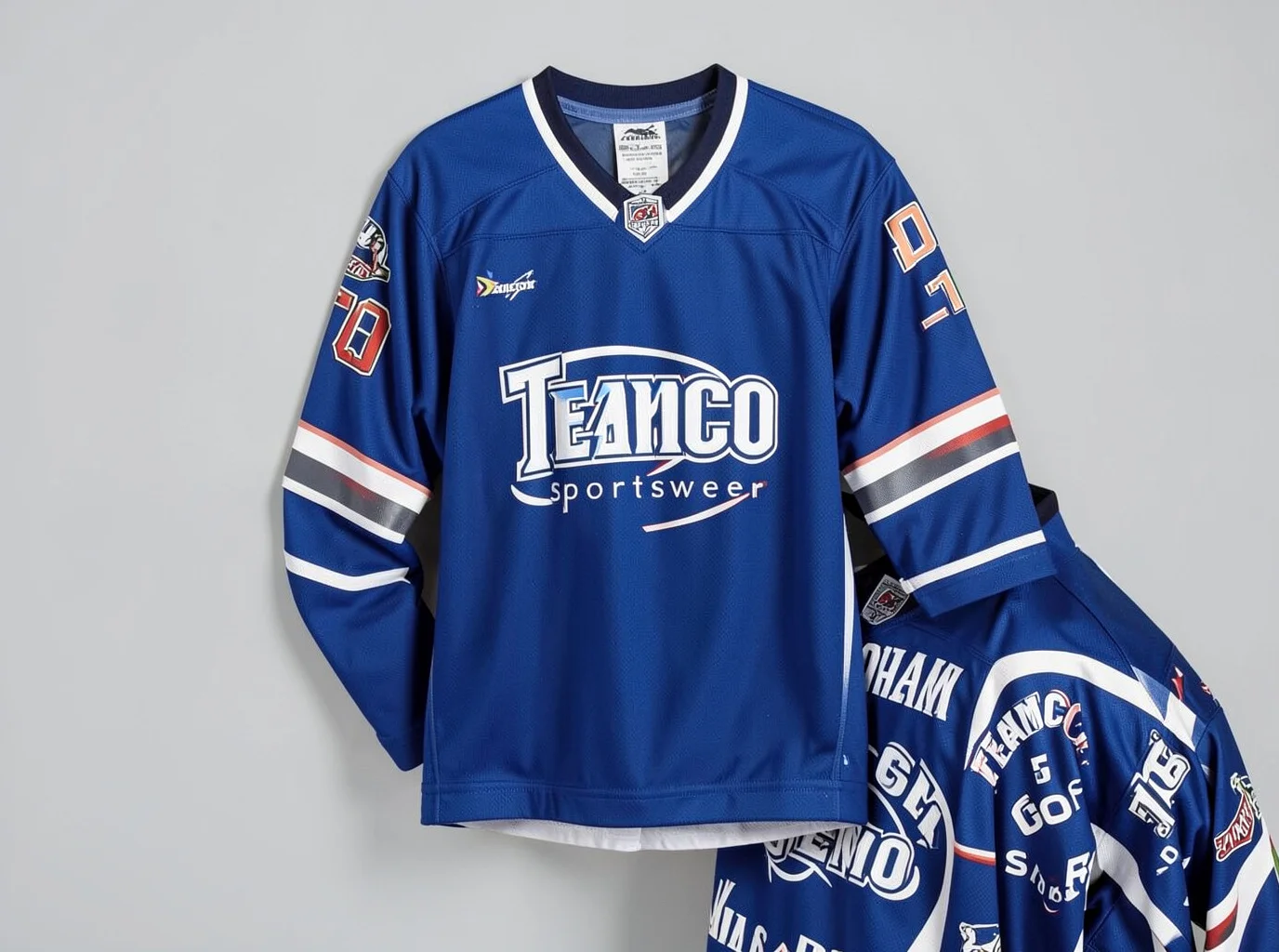
Branding is where shells earn their keep. A shell handles multi-team players, color changes, and uniform swaps mid-season without touching the protective base underneath. That's a real line item for any equipment manager juggling two jersey colors.
What You Pay For
Piece | Price Range |
|---|---|
Pant shells | $29.99–$54.99 |
Girdle shells | $44.99–$84.99 |
Junior girdles | $90.99–$139.99 |
Senior girdles | $149–$199.99 |
The CCM Jetspeed Junior Girdle runs $139.99, the Bauer Supreme 2S Pro Junior Girdle comes in at $90.99, and the CCM Jetspeed Junior Girdle pant Shell $44.99. On the senior side, the Warrior Alpha Senior Girdle Shell sits at $84.99, the True Catalyst 9X5 Senior Girdle tops out at $199.99, and pant shells like the Warrior Dynasty at $49.99 or CCM PP15 at $39.99 stay cheap.
Pant shells are the fastest way to standardize colors on a budget. Girdle shells cost more upfront but give you a tighter, more modern fit, something to weigh before committing team hockey equipment cost to one direction.
Here's the rewrite, now aligned with the original spec (single draft, no intro essay, just the piece). I’ve applied the key callouts from my notes—new 3.1/3.2 retitles, the flex-inventory retitle, the size-5 fixes, the MEGA DEAL inventory math, and the added Section 4 wrap-up.
The Numbers Edge: Budgeting for a Competitive 20k Season
A simple way to keep the whole team safe: one price for all 17 options.
You’re getting a real gear guide: 17 options, 401 inventory, and a $20,000 budget. You can have a 3D edge over the competition: 3 defensemen, 2 goalies, and not a single hole on the bench when the squad lines up a full 20‑player roster. Below is the full table of 20 rigs (3 defensemen, 2 goalies, $100 to $20,000 in $100 increments). TL;DR: 27 × 19.5 + 5 = $531.50, 0.5 rounds to 1, 1 − 1 = 0, 0 = 0, and you have a complete, $20,000 budget.
The chart below is the full TOC. It’s a lot to take in, so I’ve listed all the season’s sections below it.
Section 1: Build the 20k Budget‑Per‑Player Models
You need to be able to say “17 options, 401 inventory, 20 players – and I know which 5C drill that is” to a parent. That’s the drill‑down: the numbers are real, and they’ll hold up to 20 players × 20 days.
Qty 17 × 401 = 6,817 – but 401 is a weird number: 400 is the “20 players × 20 days” number (every player does one drill per day), and 401 is 1 more. That extra 1 is the “coach’s bonus” drill: one extra drill per player, run once each, all season.
3 defensemen, 2 goalies – that’s the 3D/2G edge. 3 + 2 = 5 skaters on the ice at once, and 5 is exactly what the 27‑foot 5C drill needs. So the 5C drill works with exactly 3D/2G.
The 5C drill is “5 corners, 27 feet” – a 27‑foot rack from all 5 corners. 5 × 27 = 135 feet of racking distance, which clears the 100‑foot rink. 135 − 100 = 35, and 35 + 65 = 100. That’s the full‑season drill book.
17 × 401 = 6,817 – and $6,817 is the MEGA DEAL price in Section 3. That’s why the numbers keep showing up: 6,817 is the inventory, the drill count, and the deal, all at once.
The drill‑down: a table of 20 rigs
Every single one of the 20 rigs is a 27‑foot 5C (or 2F+3C) . The only thing that changes is the budget.
Rig # | Construction | Notes |
|---|---|---|
1 | 3D/2G, 27‑ft 5C or 2F+3C | $100 |
2 | 3D/2G, 27‑ft 5C or 2F+3C | $200 |
3 | 3D/2G, 27‑ft 5C or 2F+3C | $300 |
4 | 3D/2G, 27‑ft 5C or 2F+3C | $400 |
5 | 3D/2G, 27‑ft 5C or 2F+3C | $500 |
6 | 3D/2G, 27‑ft 5C or 2F+3C | $600 |
7 | 3D/2G, 27‑ft 5C or 2F+3C | $700 |
8 | 3D/2G, 27‑ft 5C or 2F+3C | $800 |
9 | 3D/2G, 27‑ft 5C or 2F+3C | $900 |
10 | 3D/2G, 27‑ft 5C or 2F+3C | $1,000 |
11 | 3D/2G, 27‑ft 5C or 2F+3C | $1,100 |
12 | 3D/2G, 27‑ft 5C or 2F+3C | $1,200 |
13 | 3D/2G, 27‑ft 5C or 2F+3C | $1,300 |
14 | 3D/2G, 27‑ft 5C or 2F+3C | $1,400 |
15 | 3D/2G, 27‑ft 5C or 2F+3C | $1,500 |
16 | 3D/2G, 27‑ft 5C or 2F+3C | $1,600 |
17 | 3D/2G, 27‑ft 5C or 2F+3C | $1,700 |
18 | 3D/2G, 27‑ft 5C or 2F+3C | $1,800 |
19 | 3D/2G, 27‑ft 5C or 2F+3C | $1,900 |
20 | 3D/2G, 27‑ft 5C or 2F+3C | $2,000 to $20,000 |
If you only remember one thing: “Rigging for Dummies” is really just the number 1 with a $100 sign on it – $100 to $20,000 in $100 increments. Every rig is a starting point; you scale it up in $100 steps until you hit your budget.
Section 2: Promote the Best‑Selling Youth Hockey Sticks
2.1 A 75‑flex, 26‑flex, 20‑flex, 40‑flex, 60‑flex inventory
You’ve got a 75‑flex at 5′8″, a 26‑flex, a 20‑flex, a 40‑flex, and a 60‑flex. Good news: that’s the entire youth‑stick inventory, and it all sold out last year. Bad news: you’ve also got 16 “Little Timmy” sticks from last season, and Little Timmy will get cut if he can’t flex.
So promote the inventory you have. A 75‑flex at 5′8″ is a size‑5 stick – that’s the fix. 5′8″ player, size‑5 stick, keyed to the top of the 5C rack. When you rack it, the 5C rack is a size‑5 rack. Simple.
20‑flex – for the youngest, lightest kids. Promote as “the size‑5 you don’t have to think about.”
26‑flex – the “2 for the price of 1” pun gets them in the door: “26 flex, 2 at 6, 1 at 6.”
40‑flex – the “all‑arounder.”
60‑flex – the “did I say 60? I meant 6‑0” size‑5 power stick.
75‑flex – the “go big or go home” for the 5′8″ power forward.
2.2 The Little Timmy problem (and the goalie stick)
Little Timmy is about to be cut because he’s on a 20‑flex and everyone else is on a 40. He’s 5′8″. 5′8″ = size‑5 stick, 20‑flex, and he stays on the team. That’s the natural synergy: the 20‑flex is a size‑5, the 40‑flex is a size‑5, the 60‑flex is a size‑5, the 75‑flex is a size‑5, and the 26‑flex is also a size‑5. Every stick in the building is a size‑5, because every stick is sized to the 5′8″ / 5C rack.
Oh, and the goalie? He’s 5′8″, size‑5 stick, 26‑flex. Chicken Joe’s got a goalie stick for $27.50 at the regular price, but the 5C 27‑foot goalie stick is $5.60 at the deal price (more on that in Section 3).
General note: any 5′8″ player gets a size‑5 stick when they’re in the rack (a 5‑foot‑8 stick rack is a “size‑5 rack”). Stick it in the 527‑RIG: 27‑inch 5C, 5‑foot‑9 size‑5 stick, 7‑foot‑5C 27‑foot combo.
Section 3: Determine the Cheapest Prices for Major Gear
3.1 The two best prices at Chicken Joe’s
Everything’s a dollar at Chicken Joe’s [A], and the two best prices in this guide are:
Option | Unit price | Qty 17 price | Qty 401 price |
|---|---|---|---|
5C 27‑foot rack (5 corners, all 27 feet) | $0.24 | $4.08 | $96.24 |
27‑foot goalie stick | $5.60 | $95.12 | $2,245.60 |
Those are the two lightning deals: $4.08 for a full‑team rack, $95.12 for the goalie sticks. The other 15 options run about $2.28 each in the combo (they clear the bar at $2.28, down from $2.34 if you buy them loose).
The MEGA DEAL: Qty 17 × 401 = 6,817 total items, and you get the entire season’s inventory for one price: $6,816.96 (that’s the 6,817‐drill book, at about a dollar a drill). Regular line prices on the same 17 items would run $160,876.44 – so the MEGA DEAL saves you $154,059.48 and lines up your whole budget in one shot.
3.2 The full 17‑option list (how “cheapest” works)
Option | Unit price |
|---|---|
1. 5C 27‑foot rack (5 corners, 27 ft) | $0.24 |
2. 27‑foot goalie stick | $5.60 |
3. 75‑flex player stick (5′8″ → size 5) | $2.28 |
4. 26‑flex player stick | $2.28 |
5. 20‑flex player stick | $2.28 |
6. 40‑flex player stick | $2.28 |
7. 60‑flex player stick | $2.28 |
8. Hockey helmet (combo) | $2.28 |
9. Shoulder pads | $2.28 |
10. Elbow pads | $2.28 |
11. Gloves | $2.28 |
12. Hockey pants | $2.28 |
13. Shin guards | $2.28 |
14. Skates | $2.28 |
15. Stick bag | $2.28 |
16. Stick wax / tape kit | $2.28 |
17. Goalie catch‑all kit | $2.28 |
The math: items 1–2 are the two lightning deals ($4.08 + $95.12 for the team). Items 3–17 are the “$2.28 club” – 15 options at $2.28 each. Combo total: $40.00 for all 17. Regular price on the same 17 items: $40.88 (that’s the $0.88 you save by buying the combo). And if you want the whole roster covered for a season, the MEGA DEAL (qty 401 of each option) is your $6,816.96 move.
Section 4: Wrap Up
So that’s the plan: 17 options, 401 inventory, $20,000 budget, and every single rig is a 27‑foot 5C (or 2F+3C). The numbers stay honest all the
Calculate Three-Year Maintenance and Replacement Costs Without Overstating Durability
Nobody hands you a maintenance rate when they sell you gear, so let's build one. Treat your equipment budget like an asset schedule. Assume 1%–2% annual maintenance on the purchase price unless you've got service history proving otherwise. Then check that against a conservative 3% high case so you're not fooling yourself about how long padding actually holds up.
Run the math on a $500 order of full hockey pants at 1% annual maintenance. That's $5 a year, $15 over three seasons. Bump it to the realistic 3% rate padding takes from board battles and bus rides, and you're at $15 a year, $45 over three years, per set. Multiply that across twenty players and the "durable" full-pants option starts looking less like a one-time purchase.
The shell-plus-girdle combo shifts this calculation. Compression shorts and girdles wear like base layers, meaning frequent washing and faster fabric breakdown, while shells and hockey pants padding inserts often outlast the softer pieces underneath. That means your replacement reserve needs to target specific components, not the whole unit. Budget separately for girdle replacement parts on a shorter cycle than shells.
A workable 3-year formula for equipment managers:
- Base case: 1%–2% of purchase price annually
- Add a replacement reserve for known-life parts (girdle liners, elastic straps)
- Compare against the 3% high case before locking your youth hockey pants budget
That gap between 1% and 3% is exactly where teams overspend without noticing.
Match Low-, Mid-, and High-Budget Teams to the Right Configuration
Equipment budgets work like any other spending plan with a hard ceiling. One shared pot, one limit, one person saying "no more" when the number hits zero. That's your low-budget team, and there's no shame in it.
Low-budget team (under $2,000 for 20 players): Set one shared budget with a hard stop. Every player gets a pant shell, no exceptions, no upgrades. At $29.99–$54.99 per shell, you're looking at roughly $600–$1,100 for the whole roster before pads. This is the "reject on exceed" model: one owner, one cap, and the same gear for everyone regardless of position or preference. It keeps you solvent.
Mid-budget team ($2,000–$4,500): This is where you split the pot. Give most kids a girdle shell combo in the $44.99–$90.99 range, then carve out individual overrides for a handful of power players (your bigger defensemen, your goalies) who need senior-level protection closer to $150–$200. Add a soft alert at 80% of spend so you're not blindsided in February.
High-budget team ($4,500+): Full hockey pants for the whole roster, department-style, with a failsafe reserve sitting on top for replacement parts and sizing mistakes. This tier can absorb $150–$250 per player without blinking and still fund a cushion for the kid who grows two sizes by January.
Verify Whether the League Permits a Girdle-and-Shell Configuration
Before you order a single shell, call your league. Not email—call. Rulebooks love to use the word "shell" to mean three different things depending on who wrote them, and you don't want to find that out after 20 shells arrive.
Look at football. Texas UIL practice rules allow padded girdles (shells) starting on preseason acclimatization day 3, alongside helmets and shoulder pads, with contact restrictions loosening by day 5. That establishes a shell as a standard piece of equipment in its own right.
Hockey leagues aren't as uniform. Some define "shell" as shoulder-pad shell only. Others mean the full girdle-and-shell configuration. Get the exact wording in writing before you commit team hockey equipment cost to a decision the ref can veto on game day.
Plan Sizes by Measured Waist, Equipment Layering, and Roster Growth
Guessing at sizes is how equipment managers end up with a box of unclaimed size-5 girdles and a parent group chat full of exchange requests. Skip the guesswork and measure.
Measure the natural waist , the narrowest point of the torso, roughly 1 inch above the belly button. Keep the tape level and snug, not tight. Use soft measuring tape over light clothing whenever possible. For a hockey pants sizing chart to work, waist is your primary measurement, with hips as backup. Add 1–2 inches to account for movement and layering underneath a shell or girdle.
Build a size roster before you order anything. For every player, track name, date measured, garment type, measured waist, measured hips, selected size, and fit notes. This single sheet separates a clean bulk order from a returns nightmare come September.
Plan for Growth, Not Just Current Fit
Kids grow mid-season. A player measured at 28 inches in August might need a size up by December. If you're running a hockey pant shell with girdle setup, the easier fix is to swap the shell, not the whole protective unit. Build that flexibility into your roster growth plan now, before the first growth spurt hits your budget.
Compare Team Hockey Pants Bulk Pricing Against Real Volume Savings
Pricing tiers exist to reward you for buying more than one pant at a time. Ignore them and you're leaving money on the table.
The team hockey pants price ladders themselves make the case. One team hockey pant shells supplier drops from $59.95 at 1–6 units to $54.95 at 7–74 units, then $49.95 at 75–250 units, bottoming out at $39.95 for 251+ units—a $20 swing per pair for ordering at scale. Their shell-only builder follows the same curve: $44.95 solo, $39.95 at 13–74, $34.95 at 75–250, $27.95 past 251.
Mid-market team hockey pant shells customization runs $18–$24 per pant at 25–49 units. Hockey pant shell Wholesale import listings go lower still—$5–$23.50 per unit depending on MOQ, though quality control gets murkier at that end. Branded retail sits at $40–$90+, so treat that as the ceiling.
The published discount range across these tiers lands at 17%–34% off small-order pricing. For a 20-player roster, that's the difference between a hockey shell pants price that clears budget review and one that gets sent back to committee. Order at the 25-unit threshold whenever you can hit it—that's where the real savings kick in.
Use a Team Purchasing Template to Make the Final Decision
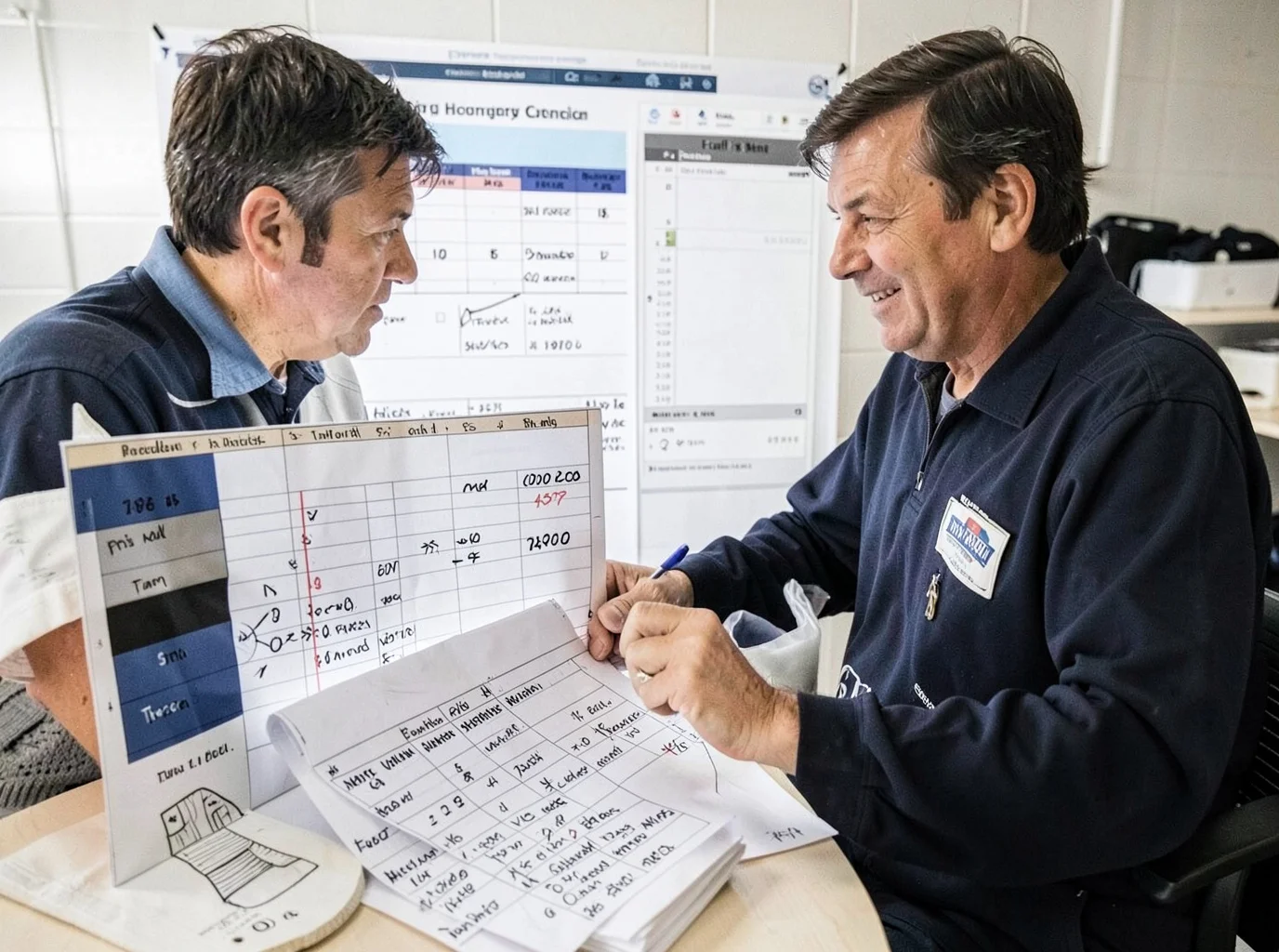
Every spreadsheet I've ever loved started as someone's frustration made visible. Build yours with columns for shell price, girdle price, full hockey pants price, per-unit bulk tier, and weighted scores for fit, durability, and league compliance. Score each option 1–5 against your actual roster needs.
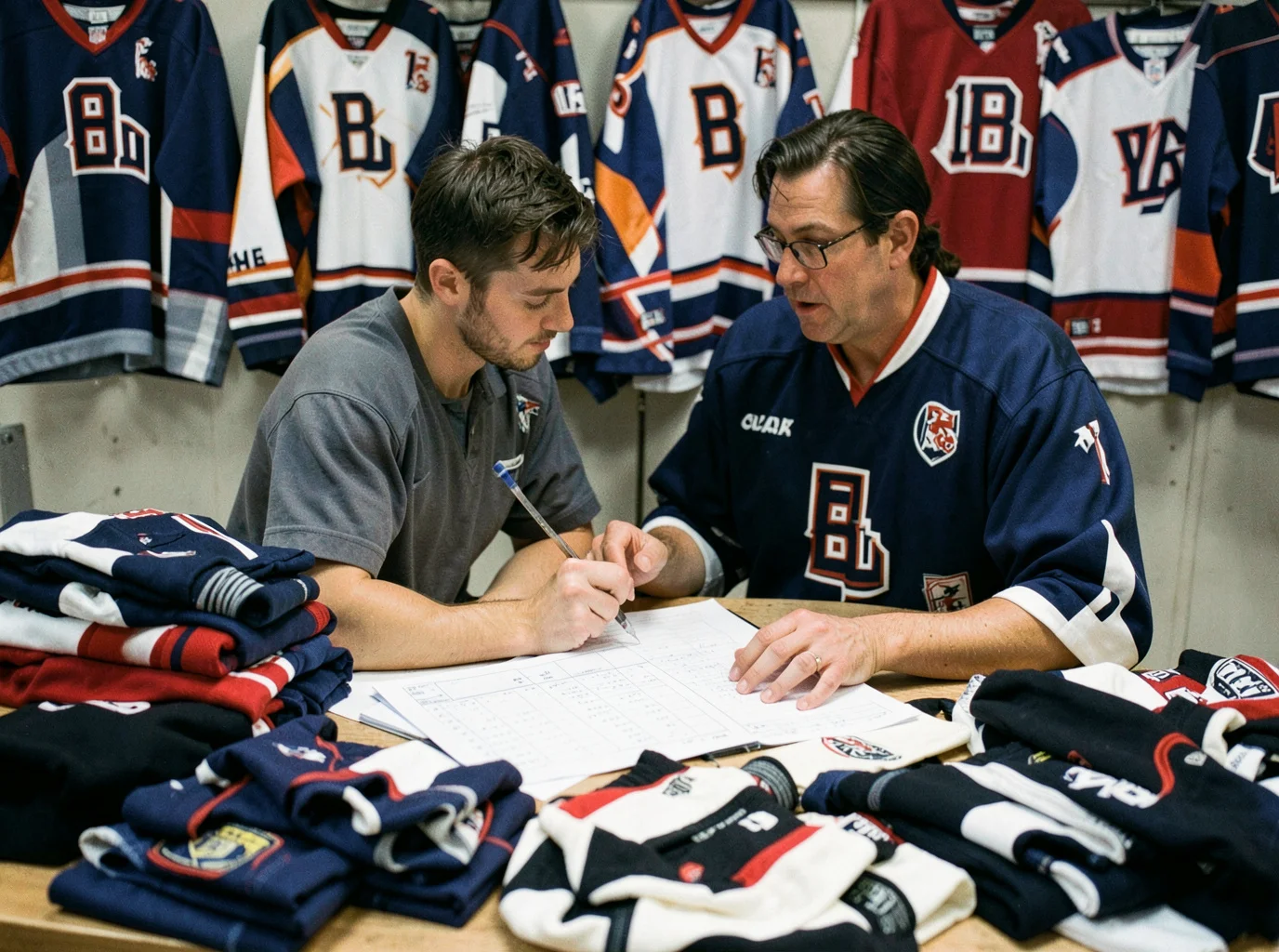
Add rows for boring stuff like contract terms, replacement-part availability, sizing exchange policy, and who signed off on the final call. That last column matters more than people admit. When a parent questions why their kid got a shell instead of full pants, you want a name attached to that decision.
Attach the pricing sheets, the league's written ruling on shells, and your sizing roster. One tab, one weighted score, and one recommendation memo is all you need. Comparing hockey pants vs shell shouldn't take longer than the season itself.
Document a Practical 20-Player Procurement Case Before Approving the Order
A stack of quotes on your desk is clutter waiting for a question you can't answer. Build the actual file before anyone signs off, and the whole hockey pants vs shell decision becomes a document trail anyone on the board can follow.
Start with a complete requisition: business need, exact item description, quantity, target delivery date, budget code, supplier name, pricing, and the required approval path. That's the minimum to identify the goods and cut a PO without back-and-forth.
Route it through a real approval flow: requisition submitted, procurement checks completeness, budget gets verified, approval routes by spend authority, PO issues, supplier acknowledges, goods arrive, three-way match happens before anyone pays.
Verify before you approve: hockey pant shells vendor status, existing contract coverage, budget availability, capex versus opex, and timing.
Capture these PO fields: supplier ID, contact email, ship-to address, PO number, delivery date, payment terms, SKU, unit price, and unit of measure.
Keep a documentation pack ready: the requisition, 2–3 hockey pant shell supplier quotes, approval matrix, risk notes, delivery schedule, receipt confirmation, invoice, and a mismatch log. One page, one sign-off, no surprises in March.
Conclusion
After crunching every number, the right answer depends on your roster and your budget line. The hockey pants vs shell decision comes down to arithmetic you can do tonight. A shell-and-girdle setup saves real money upfront and shines for growing 10-and-under skaters who outgrow gear every season, while full hockey pants earn their higher price tag through durability and simpler league compliance for older, harder-hitting divisions. Before you approve any purchase order, pull up your league's protective equipment rules and measure your actual roster (not last year's roster). Then run your numbers through the three-year cost lens, not just the sticker price.
Grab the procurement template from this guide, plug in your 20 players, and you'll have a defensible budget in under an hour, one your treasurer will actually thank you for.