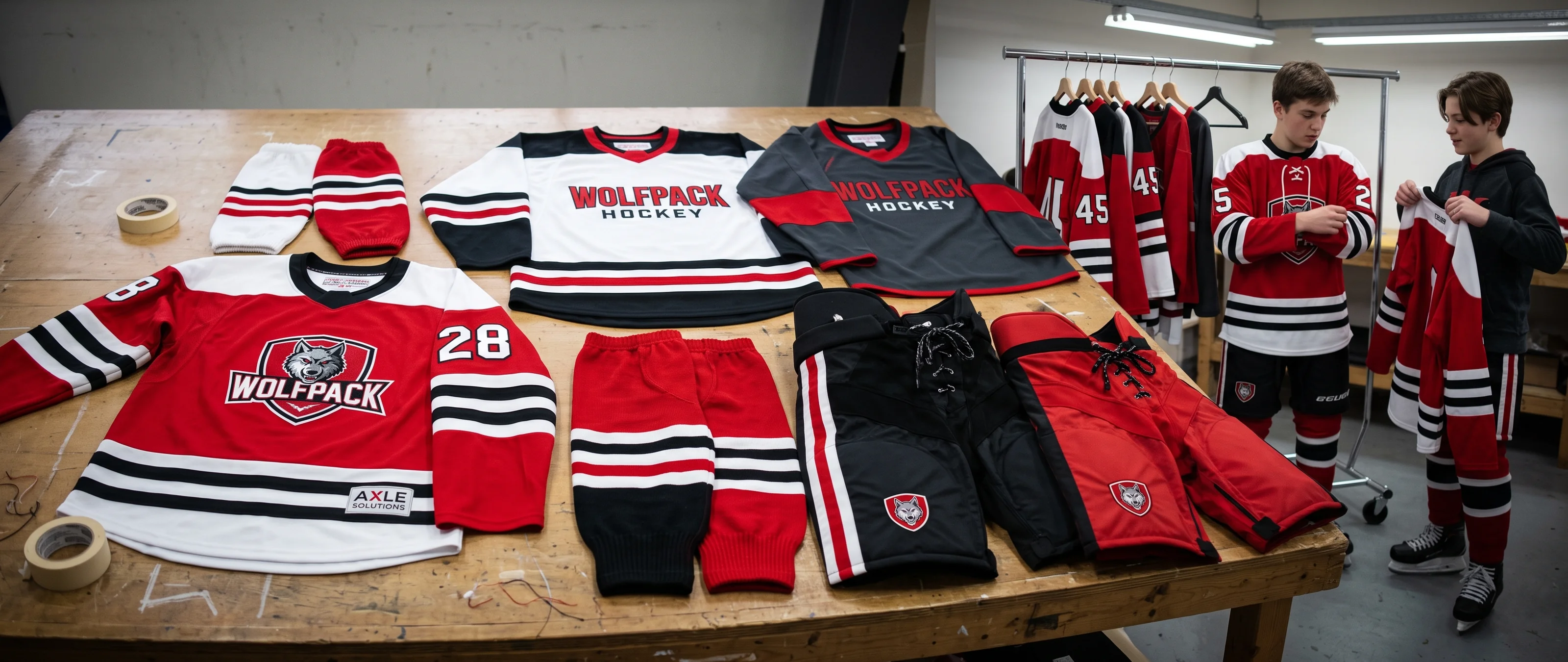
Standing in the equipment aisle, staring at a $180 hockey girdle next to a $90 pair of hockey pants, you hit the same wall. Which one actually protects your kid better, and which one survives more than one growth spurt? For junior players, the girdle vs pants hockey decision is a math problem involving replacement costs, shell system add-ons, and how fast your kid's waist size is climbing this season. Comfort and what the pros wear on TV don't settle it. Coaches will tell you one thing, the team parent group chat will tell you another, and the price tags won't explain themselves. This guide covers age-based sizing recommendations, a side-by-side cost breakdown, and the hidden expenses of a hockey girdle shell system that most retailers won't mention until you're already checking out.
Junior Hockey Girdle and Pants Recommendations by Age, Body Type, and Growth Rate
Forget the age label on the package. Height and waist tell the real story here, and every junior hockey pants sizing chart on the market backs that up.
Junior girdle sizing chart (industry benchmarks):
Size | Waist | Height |
|---|---|---|
Youth S | 20–22 in | 3'4"–3'7" |
Youth M | 21–23 in | 3'7"–4'0" |
Junior S | 23–25 in | 4'4"–4'8" |
Junior M | 24–27 in | 4'8"–5'2" |
Junior L | 26–28 in | 5'2"–5'6" |
Junior pants chart runs slightly wider. Small fits a 22–25 in waist, Medium 24–27 in, and Large 26–28 in. There's also a "Large Tall" option for kids who shoot up before their waist catches up.
Age brackets are loose guides at best — Junior Small covers 7–9 years, Medium fits 8–10, Large runs 9–11. Your kid won't read the box.
Body type changes the answer. A slim, fast-growing 8-year-old fits a Junior Small girdle or pants comfortably around a 22–25 in waist. For a stockier build with broader hips, skip the girdle's compression fit — hockey pants padding sits looser at the waistband and tolerates hip volume better.
For tall-for-age players, size by height first, waist second. A CCM JetSpeed junior girdle spans 24–30 in waist across its junior range, so there's flex room if your kid's legs grow faster than his belt line.
Rule of thumb: keep the waist centered in the range, not at the minimum.Teams can request custom hockey girdles for specific sizing needs. That's your growth buffer.
Hockey Girdle vs. Hockey Pants: Protection, Mobility, and Breathability

A properly fitted girdle and a properly fitted pair of hockey pants protect your kid about equally. Same hip coverage, kidney and tailbone protection, and thigh padding. The differences show up in fit, construction, and how the gear behaves once your kid is sprinting for a loose puck.
Construction is where the split happens. Traditional hockey pants bundle everything — hip, kidney, thigh, spine — into one loose-cut shell. A girdle flips that design. It uses a compression base layer with segmented pads underneath, then pairs with a separate outer shell. That outer shell is the hockey girdle shell system.
Feature | Hockey Girdle | Hockey Pants |
|---|---|---|
Fit | Tight, anatomical, low-profile | Roomier, traditional cut |
Mobility | Higher, pads stay close and shift less | Moderate, more fabric movement |
Pad stability | Wraps tight during hard skating | Can shift on contact or sharp turns |
Breathability | Compression material + moisture-wicking liners | Nylon/polyester shell with mesh airflow zones |
Shell/outer layer | Separate shell required | Built-in, one-piece |
Layering in cold rinks | Trickier | Easier |
Mobility favors the girdle almost every time. The tight fit reduces pad migration mid-stride, which matters for forwards cutting hard on breakaways. Hockey pants padding sits looser, which some kids actually prefer, especially defensemen who value roomier movement over locked-in compression.
For materials: pants usually run nylon or polyester shells over polyurethane or polyethylene foam. Girdles rely on dual-density foams, hard plastic inserts for pelvic protection, and compression fabric holding it together. CCM's higher-end models even use D30 Lite foam and 400D nylon shells for extra durability.
Pick a girdle for mobility and pad stability. A custom wholesale price for hockey pants can support larger team orders.Pick pants for a looser feel and simpler, all-in-one gearing up.
The Real Junior Cost: Girdle and Shell System vs. One-Piece Pants
Here's where the sticker shock actually lives. Junior integrated pants — the traditional one-piece route — land between $29.99 and $50.00 at major retailers. Riddell's Youth 7-Piece Integrated Pants run $29.99. Nike's Youth Recruit Integrated Pants sit at $49.99–$50.00. Under Armour's Youth Gameday model tops out at $50.00. Clearance racks push that floor even lower, with used or off-season integrated pants dropping to $22–$25.
Girdles play a different pricing game. Youth girdle base layers alone run $39.97–$70.00. Riddell and Schutt sit near $39.99, while Under Armour's Pro 5-Pad Girdle climbs to $65.00–$70.00. That's before the separate shell purchase, the hidden line item most parents miss until checkout.
Entry-level girdles and mid-range integrated pants both cluster around $39.99, meaning budget-conscious parents can find comparable protection at either price point. But that only works if you skip the shell add-on on the girdle side.
Pants replace as one unit when your kid outgrows them. Girdles let you swap just the base layer and reuse the shell across a growth spurt or two. That's where the long-term savings show up, not on the initial tag.Bulk hockey girdles are practical for clubs replacing multiple youth sizes.
Replacement Costs During Junior Growth: Which System Lasts Longer?
Growth spurts don't check the team calendar. A kid can jump two waist sizes between September tryouts and February playoffs, and that timing wrecks budgets either way. But the two systems age differently.
Pants hit end-of-life all at once. Waist, hip, and thigh padding are stitched into one shell. Outgrow any single measurement and the whole $30–$50 piece goes in the donation bin. No partial fix.
Girdles degrade in stages. The compression base layer wears out first — usually within a season or two of hard use — while the outer shell holds its shape longer if the fit stays within range. Swap the $40–$70 base layer, keep the shell, and you've dodged a full replacement.
Once your kid's waist pushes past the shell's stated range (like that 24–30 in JetSpeed spread), the shell goes too. Below that threshold, you are only ever replacing half the system.A reliable hockey pants vendor can simplify repeat team orders.
When Coaches and Experienced Youth Hockey Parents Recommend a Girdle
Ask five youth coaches when a girdle beats pants, and four will say the same thing: snug, mobile lower-body protection wins over loose fabric every time a kid needs to move fast. The fit should hug the lower back, waist, and thighs without choking range of motion. That's the whole pitch behind hockey girdle mobility.
Coaches lean toward girdles for players in the 20–24 inch waist range, still climbing fast through Youth Small (20–22 in.) into Youth Large (22–24 in.). Fast-growing kids fit this profile more than any other reason cited.
Experienced parents point to lighter, closer-to-body hockey pelvic protection covering hips, thighs, groin, and lower back — less bulk than pants, more feel on the ice. CCM's JETSPEED junior girdle backs that up with mid-density padding and moisture-wicking Dry Foam.
The fit check is simple: snug, not restrictive. If it shifts or exposes the hips, size up.
When Coaches and Experienced Youth Hockey Parents Recommend Traditional Pants
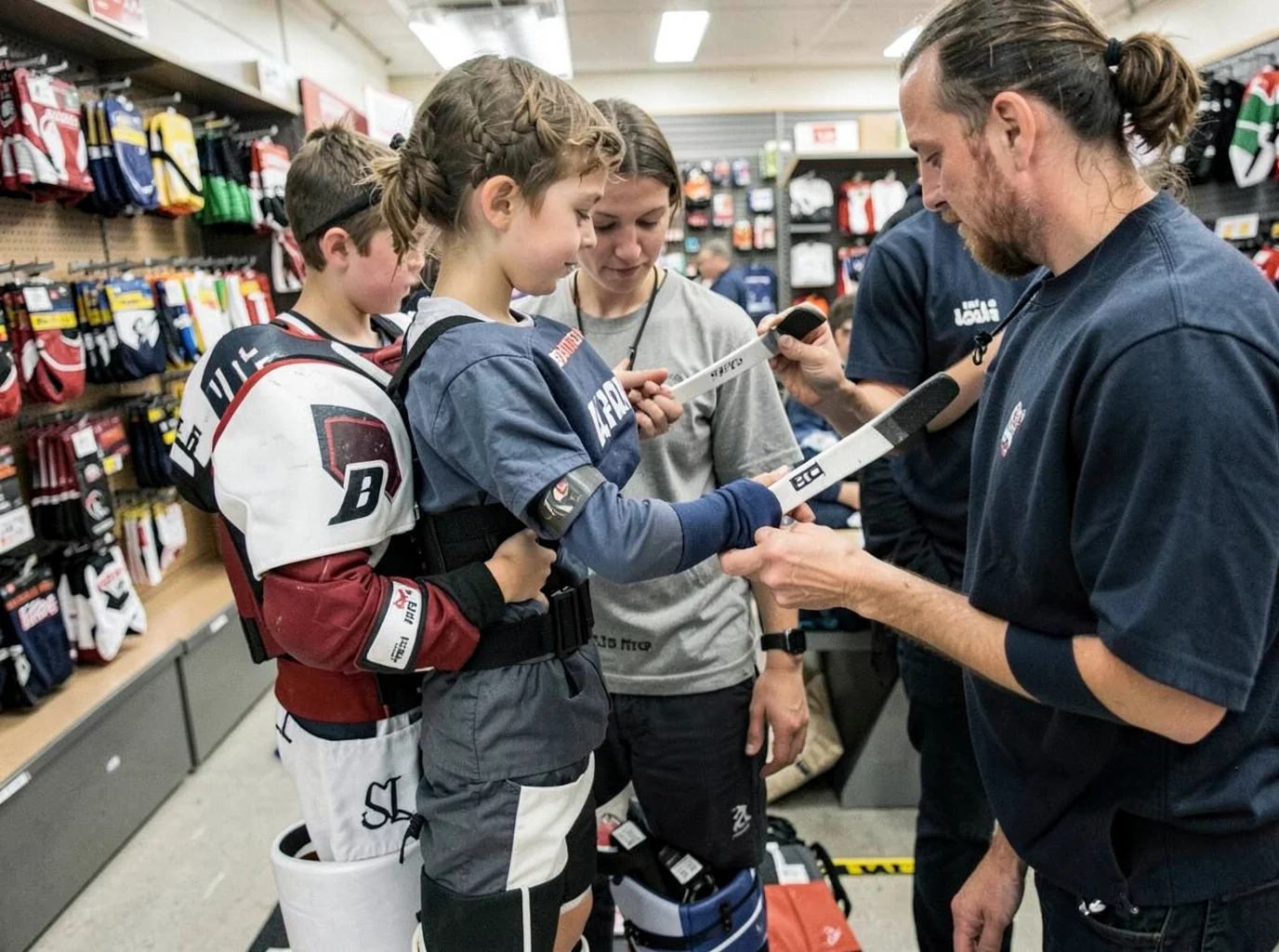
Start with first-timers. Most youth coaches steer brand-new players toward pants, full stop. No separate shell to buy, no compression layer to figure out. Just one piece, on and done. Parents don't realize how much that simplicity matters when a kid's already running late.
Experienced hockey parents echo the same logic. Pants stay the go-to for kids who hate tight, compression-style gear against their skin. Some kids just won't tolerate a girdle's snug fit — and forcing it creates a fight before every practice.
Traditional pants win out when:
Your player is brand new to the game
Dressing speed and simplicity matter more than low-profile fit
Your kid plays defense or leans into rougher, contact-heavy play
Bulkier coverage feels safer than a close-to-body fit
CCM, Bauer, Warrior, and Easton dominate youth pants racks for good reason. The fit is proven and the pants are easy to find. Fit check: pants should sit snug at the hips and overlap the shin guard by about half. Get that right, and protection matches a girdle's, no compromise.
Position- and Intensity-Based Recommendations for Junior Players
Position dictates gear the same way it dictates drills. Forwards sprinting for breakaways need pad stability that won't shift mid-stride, and the hockey girdle's close fit provides exactly that. Defensemen absorbing hip checks and blocking shots benefit from the roomier, bulkier padding of hockey pants. Goalies fall outside this comparison; their gear is a separate system.
Match gear to role and ice time:
Forwards, high-intensity skaters: Girdle. Tight fit, low pad migration, built for speed.
Defensemen, contact-heavy positions: Pants. Bulkier coverage tolerates hits better.
Two-way players logging heavy minutes: Girdle, if budget allows the shell add-on.
Part-time or multi-sport kids: Pants. Lower cost, easier gear-up between activities.
Youth training research backs a broader principle here: position-specific preparation should scale with role and workload, checked on a rolling monthly basis during growth phases, not just at season start. Apply that same logic to gear. A forward logging three practices a week wears down girdle padding faster than a once-a-week rec player wears down pants. Check fit monthly once your kid's ice time climbs past two sessions weekly. Equipment checks should track intensity as closely as age.
Hidden Costs of a Hockey Girdle Shell System
A CCM Jetspeed shell costs $44.99–$54.99 on its own, while a full girdle runs $119.99–$149.99. So the shell is roughly 30–45% of the girdle cost, and it's always a separate purchase.
Brand-lock makes this worse. CCM's JetSpeed shell only clips onto JetSpeed and Super Tacks girdles via three Velcro points. Cross-brand fits exist, but retailers won't guarantee them.
Other costs parents miss:
Shells size by waist and height separately from the girdle, so a growth spurt can force a new shell even if the girdle still fits.
Teams alternating home/away colors often need two shells per kid, not one.
Zippers, Velcro points, and stretch panels wear out first, forcing shell replacement while the girdle's still fine.
Prices swing from $19.97 clearance to $84.99 premium — budget for the high end.
Sourcing rule: one shell per active girdle, plus a backup if colors alternate or a size jump looks likely.
Junior Hockey Equipment Fit Check: Girdle, Shell, and Pants
A tape measure beats a size chart every time. Junior gear sizing varies by brand, but the fit test doesn't. You want snug at the waist, no pinching, no sliding . When your kid stands up straight, the leg should overlap the shin guard slightly, never covering the kneecap.
Measure it right. Put the tape just above the hip bones for waist, then match that number against height, not age. The ranges brands publish overlap, but they're not identical. One major shell chart runs Small at 22–24 in waist (4'3"–4'8"), scaling up to X-Large at 28–30 in (5'4"–5'9"). Other junior pant lines stretch Small to 23–25 in waist with a taller 4'3"–4'8" range. The spread between brands is real, so don't assume a Medium from one label matches a Medium from another.
Test it in full gear, not standing alone in the store. Jock, base layer, shin guards — all on. Then move. Squat. Do a skating-style bend. If the girdle rides up or the pants gap at the shin, that's your answer before you buy.
Shell-specific fit matters too. Shells need to fit over an existing girdle or pants, so look for a stretch waistband, adjustable nylon belt, and Velcro closure. Some shells add a nylon loop at the back specifically to work with certain girdle brands.
No gap at the shin, 1–2 inches of leg overlap above the kneecap, snug but not choking at the waist. That's the fit check, regardless of which system you buy.
Conclusion
For younger, fast-growing skaters, a girdle and shell combo works well. Swap the girdle as they grow, keep the shell another season or two. Older, more physical players — especially defensemen taking hits — do better in traditional pants, where the hard shell padding doesn’t compromise protection to save a few bucks.
Before you buy, pull up a hockey girdle sizing chart, measure your player, and try the gear on over their actual practice layers. If the current setup pinches, slides, or leaves gaps at the hip, it’s a fit check you need, not a full replacement. Get the sizing right first — everything else follows.A hockey pants and girdles manufacturer can also support consistent team sizing.