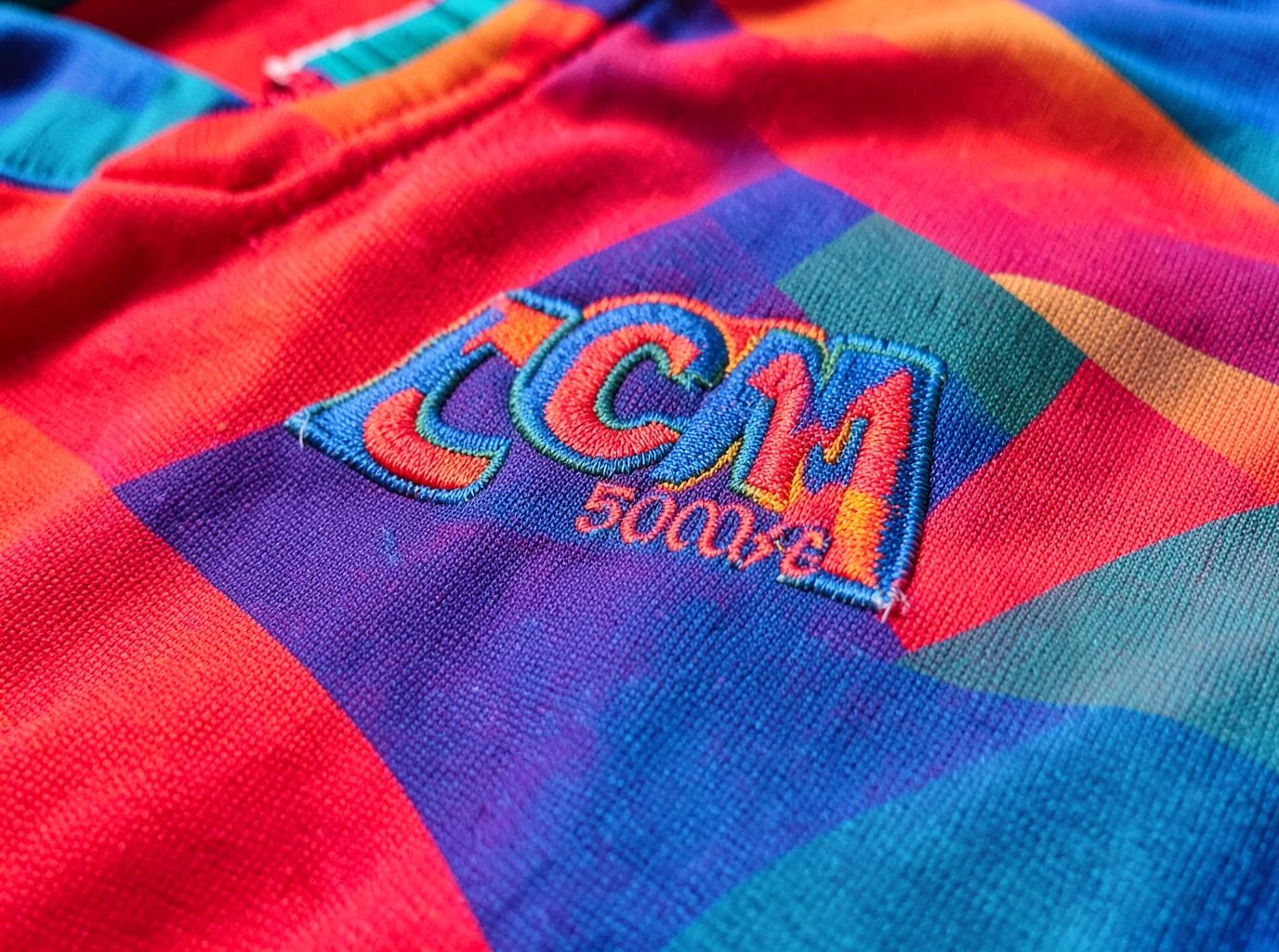
I've spent more hours than I'd like to admit standing in a locker room holding two hockey jerseys like I'm choosing between two equally suspicious strangers at a bar, trying to decide which one deserves my money and my sweat. Everyone tells you CCM Hockey Jerseys and Bauer are "both great," which is the equipment equivalent of a fortune cookie—technically true, completely useless. After three seasons of wearing both brands until they smelled like regret and Gatorade, I can tell you the real differences come down to fit, fabric, and how your specific body survives a hard forecheck. I sweated through both, washed them wrong on purpose, and paid attention to the collar fraying before my ego did.
CCM Quicklite 5000 vs Bauer Supreme: Which Jersey Fits Better Over Hockey Gear?
A jersey is a tent you're asking to fit over shoulder pads without looking like you stole a parachute. The CCM Quicklite 5000 practice jersey is 100% polyester and built to "keep its shape wash after wash," which is corporate-speak for "loose enough that your gear doesn't feel like it's being slowly strangled." Looking at the CCM jersey fit guide, a senior Medium runs a 24-inch chest width, 30-inch length, and 35-inch sleeve , with Large jumping to 26 inches and XXL topping out at 28 inches . Goalie cut (SR GC) gives you a generous 32-inch chest , because nobody wants to explain to their goalie why their jersey feels like a onesie.
Bauer goes the other way. Bauer jerseys have a tapered hockey fit , athletic through the torso and closer to your body. Senior Bauer team apparel is sized for chest ranges of 35–49 inches and waist ranges of 29–40 inches , which sounds generous until you remember that's without pads factored in.
I learned the hard way after wearing a Medium Bauer over full gear and looking like sausage escaping its casing. Measure your chest while wearing pads , then add 4–6 inches for low-profile gear, 6–8 inches for bulkier or older pads, and 12–14 inches if you're a goalie. If you're stuck between sizes, size up—your shoulders will thank you mid-game.
Hockey Jersey Fabric: CCM Quicklite Polyester vs Bauer Mesh
Fabric is where marketing departments lie to you in grams per square meter. I held both jerseys up to a light like I was inspecting stained glass, and here's what's going on underneath the branding.
The CCM Quicklite 5000 is 100% polyester QLT knit at 135 gsm, with a V-neck collar that actually keeps its shape after wash after wash. I tested this by washing mine wrong on purpose four times. The 7000 series steps up to 165 gsm with AER-TEC cooling tech, a stretch collar, and woven neck tape that feels nicer than a practice jersey has any right to feel. Some CCM replica versions swap in two-way stretch pique with mesh inserts for ventilation. That's CCM hedging its bets between structure and airflow.
Bauer skips the hedging. Their practice jersey is flat back mesh at 170 g/m². Mesh-first, no apologies. It has reinforced cover stitching and a traditional fit, built like it expects to survive your team's rowdiest chirp session.
Bottom line: Bauer's mesh breathes like an open window. CCM's knit breathes like a window with really nice curtains.
Hockey Jersey Breathability Comparison During Training and Competition
Sweat doesn't care about your budget. It just shows up, uninvited, like a relative during a hockey tournament, and your jersey either handles it or you spend the third period smelling like a gym bag that lost a fight.
Training jerseys and competition jerseys aren't playing the same breathability game. Practice-weight mesh typically sits around 180–220 GSM , light enough to survive back-to-back drills without turning into a sauna. Competition jerseys get heavier, often 220–250 GSM , because structure and that "authentic pro" look take priority over airflow.
Both CCM and Bauer chase the same goal, moisture management , which means sweat actually moves away from your skin instead of just sitting there judging you. Polyester wins this fight every time. Cotton is basically a sponge with delusions of grandeur.
The real breathability difference shows up in the mesh placement . Underarms and side panels are where both brands sneak in micro-mesh ventilation, sometimes as light as 150–170 GSM , tucked into heavier 190–220 GSM main fabric. It's like cracking a window instead of installing central air: smaller vents, same relief, less bulk.
Practical rule I learned from my own sweaty experience: hot rink, long drills, off-ice conditioning—go lighter mesh, more vents. For official competition, accept slightly heavier polyester with strategic mesh inserts. You lose a little airflow, you gain structure that survives a shift without collapsing on you like a bad tent.
Hockey Jersey Durability Comparison After Repeated Practice Use

Your shoulders and elbows are basically jersey murder scenes. Every board crash, every stick check, every time you faceplant trying to look cool during a drill—that's where the fabric gives up first. I've watched a $60 practice jersey develop a hole at the shoulder seam like it personally resented me for buying the cheap one.
Double-stitched hems and collars, plus bar-tacking at stress points, are the difference between a jersey that survives your season and one that surrenders after a month. One review I trust noted zero fraying after three weeks of hard use thanks to reinforced stitching, which sounds boring until you've owned a jersey that unravels like a bad sweater.
The number on your back is the weak link. Heat-pressed lettering lifts if you wash it in hot water or run an aggressive spin cycle, so cold water and air drying aren't optional if you want your name to survive the season.
Budget matters here more than brand loyalty. Cheaper jerseys, regardless of logo, typically last 6–12 months . Premium construction (thicker polyester, reinforced shoulder/elbow panels) pushes that to 2–3 years , which explains part of the CCM jersey price and Bauer jersey price gap. Printed graphics start cracking around 20–30 washes if care is sloppy. An industry test-style benchmark uses 15 laundering cycles with pass/fail criteria of no seam slippage over 2mm and no color fade past Gray Scale Grade 4 . That's basically the jersey equivalent of a fitness test, and cheap jerseys fail it embarrassingly fast.
CCM Jersey Price vs Bauer Jersey Price Across Three Buying Budgets
Money talks, and in this case it's whispering "buy the cheap one, you emotionally unstable hockey goblin." I broke this down into three budgets because that's how actual humans shop—by staring at their bank account and sighing.
Under $24 hockey jersey (the "I just need a jersey, not a relationship" tier): CCM wins the floor price fight. The CCM Quicklite 5000 runs $19.99 on CCM's own site, with junior sizing dipping to €19.56–€21.95 . Bauer's Flex practice jersey lands at $24.99–$27.99 , or €20.95–€21.74 overseas. CCM is cheaper by a few bucks, but we're splitting hairs at this point.
$25–$50 (the "I care, but not enough to cry about it" tier): Bauer takes this round. Flex and team versions bounce between $27.99 and $44.98 , giving you more mid-range options. CCM senior practice jerseys sit higher, around €44.90–€49.90 , which is CCM's way of saying they skipped the middle and went straight to fancy.
$50–$90+ (the "protect my neck like it's a witness in a trial" tier): This is a genuine tie. CCM's neck-protective jerseys run €59.90–€89.90 . Bauer undercuts slightly at the entry point with €46 , climbing to €89.95 for Elite/Pro youth and women's versions.
Both brands cluster their bread-and-butter jerseys in the $20–$30 mainstream range , so unless you're chasing neck protection, the price gap won't bankrupt your season.
Best Hockey Jersey Brand by Body Type and Playing Style
Wearing the wrong jersey cut for your body type will make you look like you're smuggling a raccoon under your gear. Broad-shouldered players, or anyone stuffed into full pads, need to go loose, not snug. That means Authentic/Pro-style jerseys, or anything on the hockey jersey sizing chart explicitly labeled "relaxed fit." They're cut to leave room in the arms and body for equipment instead of fighting it.
If you're lean, off-ice, or just want fan wear that doesn't billow like a windsock, premium relaxed-fit or lightweight jerseys give you a closer body fit without the bulk of a full game-style cut. Strong skaters chasing less drag should size down when they're stuck between two numbers. You get a tighter profile and less flapping fabric to catch air or an opponent's stick.
Layering base layers underneath? Size up one step. Your future, sweaty self will thank you.
Concrete numbers help here more than vibes. A senior chart runs X-Small at 22 inches chest, Medium at 23.5, Large at 24, jumping to 26.5 for X-Large and XX-Large. Authentic numeric NHL sizing translates roughly to 46 for Small/Medium, up through 60 for XXXXL.
For team orders prioritizing durability over silhouette, heavier air-knit or double-knit polyester construction wins. You're looking at 250-gram double-knit polyester spandex for stretch, versus 175-gram polyester for a thinner, faster feel. Match your body, not your ego, to the cut.
CCM Hockey Jerseys, Bauer Hockey Jerseys, and Custom Team Uniform Purchasing
Team managers, this part's for you. You're the poor soul who volunteered at a parents' meeting and now owns forty jerseys' worth of decisions.
CCM's lineup breaks into the 5000 practice series , the 6000 practice series with Quick Dry moisture-evacuating tech, and the pro-inspired 8000 game series . Their FreeStyle sublimation program is built for teams. A 4-step online builder lets you upload artwork, pick colors, add logos, roster names, and numbers. Everything's dye-sublimated, meaning it won't crack, peel, or fade after your goalie sits on it forty times. Augusta Sportswear Brands runs it as CCM's exclusive amateur licensee in North America.
Bauer , meanwhile, offers the BAUER x Hockey Canada Replica Jersey with heat-pressed nameplates and simple name/number personalization. It's a retail-ready option, not a full custom hockey apparel program.
Buy CCM for full team uniforms and Bauer for individual replica orders. MOQs run 20–50 pieces , $4–$17 each, with 2–3 week turnarounds.
runhockeyapparel.com for Custom Clubs, Schools, and Hockey Team Orders
RunHockey Apparel manufactures custom hockey jerseys, socks, pant shells, and warm-up gear for clubs, schools, and distributors. They build everything from a single approved color reference—game, practice, off-ice—and pack it team by team.
Send them your roster, artwork, and colors. They'll flag duplicate numbers and missing sizes before production, then send a quote within 24 hours once your tech pack is complete. Bulk kits ship in 25–35 days . No parent-meeting breakdowns required.
The 30-Second CCM vs Bauer Decision: Budget, Body Type, and Use Case
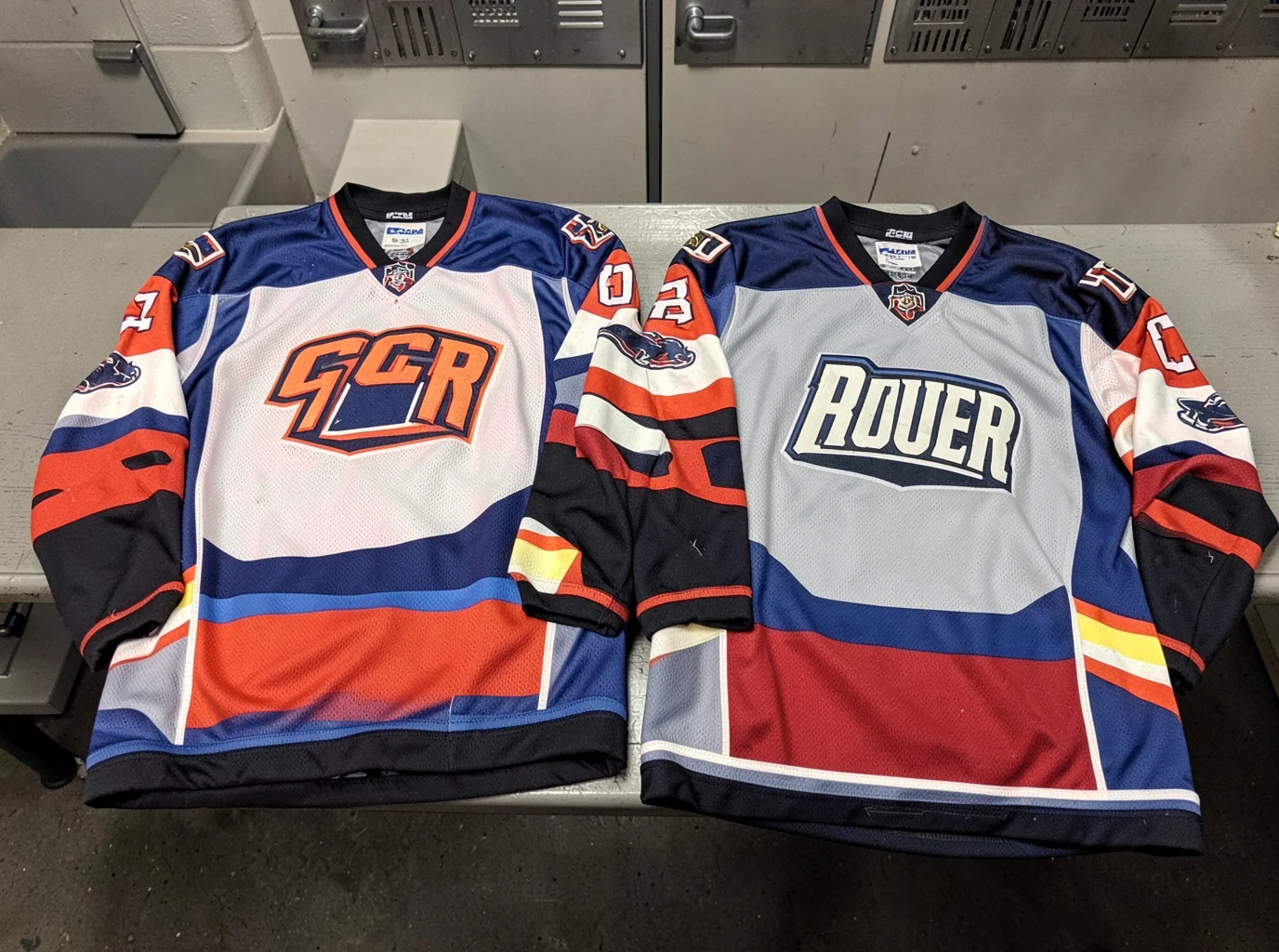
Here's the cheat sheet I wish someone had shoved into my hands before I burned three seasons and about $400 figuring this out the hard way.
Body type first. Narrow-shouldered players built for speed should lean Bauer. The tapered hockey fit hugs close, cuts drag, and keeps you from flapping around like a loose sail. Broader, thicker-built players, or anyone who takes hits along the boards, do better in CCM, because that extra room through the Quicklite cut means your shoulders aren't fighting the fabric every shift.
Budget second. Under $25 hockey jersey, grab the CCM Quicklite 5000 at $19.99 and stop overthinking it. Between $25 and $50, Bauer's Flex line gives you more mid-range options. Above $50, chasing neck protection or team-grade durability, it's a coin flip, since both brands land within a few dollars of each other.
Use case seals it. Speed and agility players, go Bauer. Comfort-first players, or anyone with a roomier build, go CCM. Team managers ordering forty jerseys at once should default to CCM's sublimation program, which is built for that headache.
Conclusion
The right jersey depends on your body, your budget, and how hard you plan to sling yourself into the boards. If you're lean and chasing speed, CCM Quicklite's stretch fights for you. If you're built like a fridge with a slap shot, Bauer Supreme's tougher mesh won't quit after three months of practice abuse. Under $100, CCM wins. At $200, if you don't blink at the price, Bauer delivers NHL-grade authenticity.
You already knew both brands were "pretty good"—that's a shrug. You needed permission to stop Googling and decide. So decide. And if you're outfitting an entire team instead of just your own stubborn torso, skip the group-chat debate and let Runhockeyapparel.com build your custom hockey jerseys correctly the first time.